







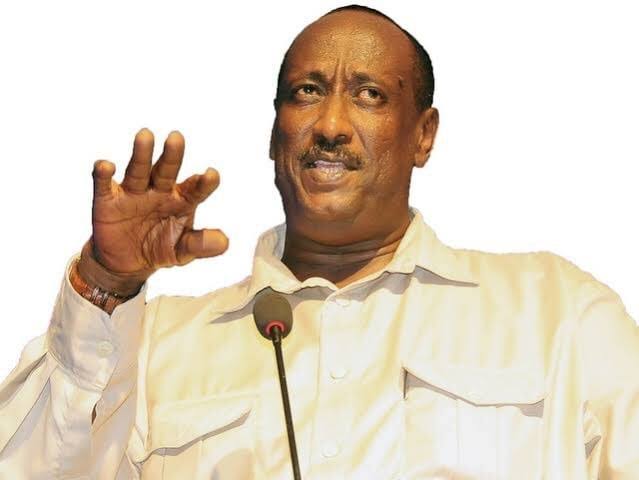
Uganda’s ambition to transform agriculture into a major engine of industrialization could be frustrated by land disputes that prevent farmers and investors from accessing land for production, Gen. Salim Saleh has warned, recounting an incident in Nebbi District where armed young men and women confronted tractor operators preparing farmland.
The confrontation unfolded in April 2020 as an agricultural mechanization programme sought to open up 30 acres of land in Mvura Parish, Kucwiny Sub-county, for cultivation, which had been hired from the Luiji Walendu family, but the arrangement soon ran into resistance from youths who disputed the family’s authority to lease the land out.
According to General Saleh’s account, the youths were armed with bows and arrows when they confronted the men who were operating the tractor, claiming that the land belonged to their customary family holdings. The confrontation was serious enough to require police intervention before the agricultural activities could proceed.
Saleh uses the Nebbi experience to demonstrate why land security must be treated as an important foundation for Uganda’s agricultural transformation, arguing that mechanization, investment and agricultural production cannot succeed where the land itself remains a source of conflict.
His concerns also speak directly to the ambitions of the Fourth National Development Plan (NDP IV), and places sustainable industrialization, agro-industrialization, increased agricultural productivity and value addition at the centre of the country’s economic transformation agenda.

The plan seeks to increase agricultural production and productivity, strengthen value addition and expand the capacity of agro-processing industries to create employment and wealth for the people of Uganda.

However, the Nebbi incident exposes a practical obstacle to achieving those ambitions. Government can promote tractorization, distribute agricultural inputs and encourage investors to establish processing facilities, but such interventions risk producing limited results when the land intended for production is inaccessible or contested.
Gen Saleh says agricultural mechanization must therefore go hand in hand with resolving land ownership disputes and organizing how land is accessed and utilized.
The argument is relevant to Museveni’s NDP IV agro-industrialization agenda, under which factories and processing facilities are expected to rely on increased supplies of locally produced agricultural raw materials.
Without reliable access to land, farmers may struggle to expand production, while processors risk facing inconsistent supplies that undermine their operations.
Salim Saleh’s proposed approach goes beyond deploying machinery and providing inputs. He advocates integrating land mediation, clarification of ownership rights and organized production so that communities can move from prolonged disagreements to productive economic activity.
The message in Saleh’s book is that Uganda’s industrialization ambitions can barely be achieved through factories and machinery alone. They also require peaceful communities, secure land arrangements and agricultural production systems capable of sustaining commercial investment.
The Nebbi experience demonstrates why resolving land conflicts should not be treated as a separate administrative exercise but as part of the country’s wider economic transformation strategy, according the NRA warrior. (For comments on this story, get back to us on 0705579994 [WhatsApp line], 0779411734 & 041 4674611 or email us at mulengeranews@gmail.com).