







By Aggrey Baba
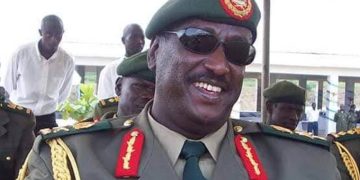
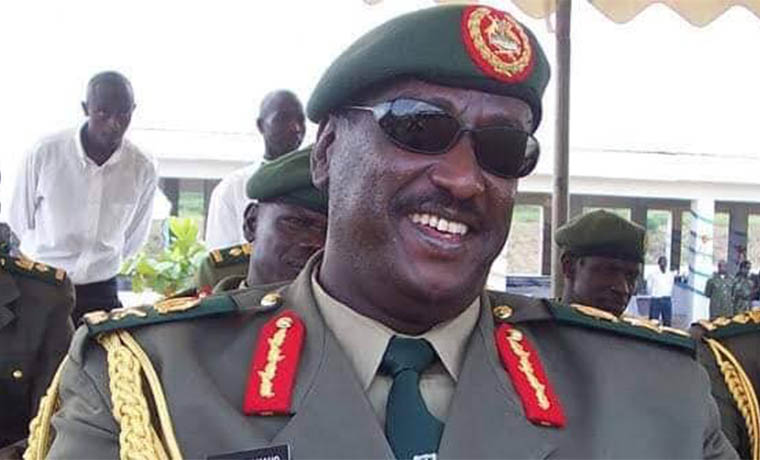
Operation Wealth Creation Coordinator and younger brother to president Yoweri Museveni, Gen. Salim Saleh is advocating a shift in how Uganda handles land conflicts, proposing a model in which resolving ownership disputes becomes the starting point for economic transformation rather than simply ending legal and administrative disagreements.
In his latest book, Organizing Land for National Economic Transformation, the retired decorated soldier argues that Uganda cannot achieve lasting peace in communities affected by land wrangles unless the settlements are followed by deliberate efforts to make the disputed land economically productive.
He observes that many land conflicts are rooted not only in competing ownership claims but also in poverty, unemployment, fragmented landholdings and the absence of organized economic opportunities for the people involved.

Consequently, Saleh proposes linking land dispute resolution to agricultural production, enterprise development and industrial supply chains, so that communities emerging from conflicts can begin benefiting economically from their land.

The proposal is discussed under Operation Harmony, an approach that seeks to integrate conflict mediation with organized economic activity, moving beyond the conventional practice of treating land disputes primarily as legal matters requiring court decisions, compensation or administrative intervention.
Under this thinking, Salim Saleh wants government interventions to go further than identifying rightful owners, demarcating boundaries and negotiating settlements. He suggests that once competing interests have been reconciled, attention should turn to how the land can support production, generate incomes, create employment and contribute to the wider economy.
The approach is particularly significant in areas where prolonged land wrangles have left large tracts of potentially productive land underutilized, while families and communities remain trapped in cycles of litigation, hostility and economic uncertainty.
The Namunkekera man and his co-author, Dr Pascal Wathum Odoch, propose that landowners should be encouraged to explore joint production arrangements, voluntary pooling of land and cooperative investment models that allow them to benefit from larger-scale economic activities without necessarily surrendering their individual ownership rights.
This would allow smallholder farmers and fragmented landowners to participate in organized commercial production, potentially giving them access to markets, agricultural inputs, technology and industrial buyers that might be difficult to secure individually.
An important aspect of the proposal is its attempt to separate land ownership from the question of how land can be jointly utilized for economic benefit. Rather than forcing communities to abandon individual claims in favour of collective ownership, Salim Saleh envisages arrangements in which people retain their rights while cooperating in production.
The economic argument is that people are more likely to protect peaceful settlements when those agreements begin delivering visible improvements to their livelihoods. Where land remains idle and households continue struggling economically after mediation, the original disagreements could easily resurface, undermining the gains made through conflict resolution.
By connecting land peace to commercial agriculture and rural industrialization, Gen Saleh is effectively proposing that land dispute resolution should become part of Uganda’s broader wealth creation and economic transformation agenda.
The model also presents an opportunity to address the challenge of converting land from a source of prolonged community confrontation into an asset that supports household incomes, local enterprise development and national production.
However, its success would depend on practical safeguards, including voluntary participation, transparent agreements, protection of individual land rights and fair distribution of benefits among participating landowners.
The central argument in Gen Saleh’s proposal is that the country should not measure success in land conflict resolution merely by the number of disputes settled, but also by whether the settlements create conditions for productive land use, economic cooperation and improved livelihoods.
Through Operation Harmony, he is therefore advancing the idea that lasting land peace must deliver an economic dividend to the people whose disagreements government and other stakeholders seek to resolve. (For comments on this story, get back to us on 0705579994 [WhatsApp line], 0779411734 & 041 4674611 or email us at mulengeranews@gmail.com).