







By Ssentamu Mukasa Ssewandagi, LLB (MUK)
Uganda is once again confronted with a fundamental constitutional question: how do we build a country in which no individual, political party, region or community permanently monopolizes national power?
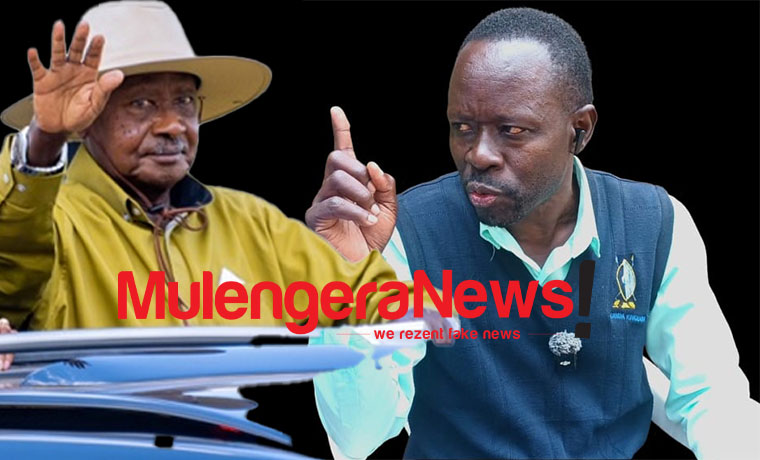
The recent proposal on consociational democracy associated with General Caleb Akandwanaho, popularly known as Gen. Salim Saleh, and Professor Ogenga Otunnu deserves serious national attention. Its attempt to confront sectarianism, exclusion, marginalisation and historical grievances is commendable.


The authors deserve credit for recognising that Uganda’s political problems cannot be resolved merely by changing political personalities. They require a deliberate effort to address the historical and institutional conditions that have repeatedly divided the country.
However, while I welcome the proposal, I believe it leaves one major constitutional question insufficiently answered: where should political power reside, and how should Uganda’s different constituent communities share in exercising it?
My argument is simple. Uganda needs both consociational democracy and fully fledged federalism. One should not be presented as a substitute for the other.
Dialogue is necessary, but it is not enough
Consociational democracy, as developed by political scientist Arend Lijphart, is designed for societies divided along political, cultural, religious or other significant lines. It encourages grand coalitions, proportional representation, mutual protection of vital interests and autonomy for constituent communities.
In simple terms, it seeks to ensure that governing a country does not become the exclusive privilege of whichever group happens to control the central government.
This is an important principle for Uganda.
But dialogue and cooperation alone cannot guarantee that principle. A political agreement may bring influential individuals around one table, but what happens when those individuals disagree? What happens when a new government comes into power? What prevents the central government from reversing an arrangement that has no firm constitutional protection?
A national settlement must be stronger than the goodwill of its participants. It must be anchored in enforceable constitutional institutions.
Federalism is not the enemy of national unity
There is a tendency in some Ugandan political discussions to treat federalism as though it were a threat to national unity. That is an unfortunate misunderstanding.
Federalism does not necessarily mean disintegration. It is a constitutional method of distributing governmental authority between a national government and constituent regional governments.
The central government retains responsibility for matters of common national interest, including defence, foreign affairs, citizenship and monetary policy. Constituent units exercise constitutionally protected authority over agreed regional matters.
The two levels of government are bound by one Constitution and one national citizenship.
Indeed, federalism can strengthen national unity by reducing the struggle to capture every instrument of political and administrative power at the centre.
When every important decision, resource and appointment is concentrated in the capital, political competition becomes a struggle for control of the entire state. Federalism can reduce that pressure by giving communities meaningful authority over their own affairs.
The lesson of Uganda’s regional-tier debate
Uganda’s experience with the regional-tier arrangement under Article 178 of the Constitution should not be ignored.
For many proponents of Buganda’s federal demand, the regional-tier model did not satisfy their understanding of federalism. There were concerns that the proposed arrangement could weaken or fragment Buganda’s historical territorial and institutional identity.
The disagreement was not simply about terminology. It concerned the substance of self-government.
A regional forum that discusses grievances is not the same thing as an elected regional government with constitutionally guaranteed legislative, executive and financial powers.
We must therefore distinguish between regional consultation, administrative decentralisation and genuine federal government.
If Uganda is serious about resolving this question, federalism proponents must be invited to negotiate the actual constitutional structure rather than being asked to abandon their demand in favour of consultative arrangements.
The leadership question cannot be postponed
There is another issue that any serious national settlement must confront: Uganda’s leadership and succession question.
A country cannot indefinitely rely on informal political understandings to guarantee peaceful transfers of power.
We need clear constitutional answers to difficult but necessary questions. Who exercises executive authority? How is the government formed? To whom is it accountable? What happens when a President becomes incapacitated, resigns or leaves office? How is a successor lawfully chosen? What role should Parliament and the courts play?
These questions must be answered before a political crisis, not during one.
One possible arrangement worth debating is a Federal Parliamentary Republic. Under such a system, a President could serve as Head of State, while a Prime Minister would lead government and remain accountable to Parliament.
An inclusive Cabinet could be formed in accordance with transparent parliamentary rules. A bicameral Parliament, comprising a National Assembly and a Federal Senate, could protect both the representation of citizens and the interests of constituent federal units.
This is not the only possible model. But Uganda must have the courage to debate alternatives openly and settle on a constitutional arrangement that can survive changes in leadership.
The military must remain under civilian constitutional authority. It should not become an arbiter of political succession.
Let us avoid replacing one form of exclusion with another
Consociational democracy also requires caution.
We should not create a system in which political positions become permanent entitlements of particular ethnic or cultural groups. That would risk constitutionalising the very divisions we are trying to overcome.
The objective should be inclusive citizenship, fair political representation, protection of minorities and meaningful territorial autonomy.
Cultural institutions, including the Buganda Kingdom, should be respected and protected under the Constitution. But cultural leadership should remain distinct from the authority of elected regional government.
The Kabaka’s cultural role and the political responsibilities of an elected Buganda regional administration are not the same thing. Both can exist within a constitutional framework that respects the rights of all residents.
Land and historical grievances must be handled fairly
No national reconciliation programme can afford to ignore Uganda’s land question.
Historical grievances relating to cultural institutions and property must be addressed. But the restoration of Kingdom property should not be confused with taking privately registered land from lawful owners.
Equally, protecting registered ownership must not mean ignoring lawful occupancy interests and other rights protected by the Constitution and the Land Act.
An independent mechanism should investigate historical claims, facilitate restitution where legally justified, provide compensation where appropriate and ensure that disputes are resolved through fair procedures.
Reconciliation must not become a licence for injustice against any category of citizen.
Let the people decide
The proposal by Gen. Saleh and Prof. Otunnu should be the beginning of a wider national conversation, not the final word on Uganda’s constitutional future.
An independent national constitutional settlement process should bring together political parties, federalism proponents, cultural institutions, religious leaders, local governments, civil society, professional associations, women, youth and ordinary citizens.
The proposals should be published, debated throughout the country and translated into precise constitutional reforms.
Any amendments must follow the procedures established under Articles 259–262 of the Constitution. No political agreement, however influential its sponsors, can replace the constitutional requirements for changing the supreme law of the land.
A settlement that outlives its authors
Uganda does not need another temporary political accommodation that depends on the personalities who negotiated it.
It needs institutions that will remain credible after today’s leaders have left office.
Consociational democracy can help us share national power. Federalism can help us distribute that power fairly. Constitutional democracy can ensure that both operate within the rule of law.
The three principles should reinforce one another.
My respectful appeal to Gen. Salim Saleh and Professor Ogenga Otunnu is that their important contribution should be expanded to engage directly with the federal question and the constitutional resolution of national leadership and succession.
Let us not reduce this debate to whether one political personality supports federalism or whether another fears it. The real question is what constitutional arrangement will give Ugandans confidence that their country belongs to all of them.
Uganda needs a settlement in which unity does not require uniformity, inclusion does not depend on political favour, and peaceful succession is guaranteed by the Constitution rather than negotiated in moments of uncertainty. That is the conversation we should now have. The author, Ssentamu Mukasa Ssewandagi, is a law student at Makerere University. (For comments on this story, get back to us on 0705579994 [WhatsApp line], 0779411734 & 041 4674611 or email us at mulengeranews@gmail.com).