






By Aggrey Baba
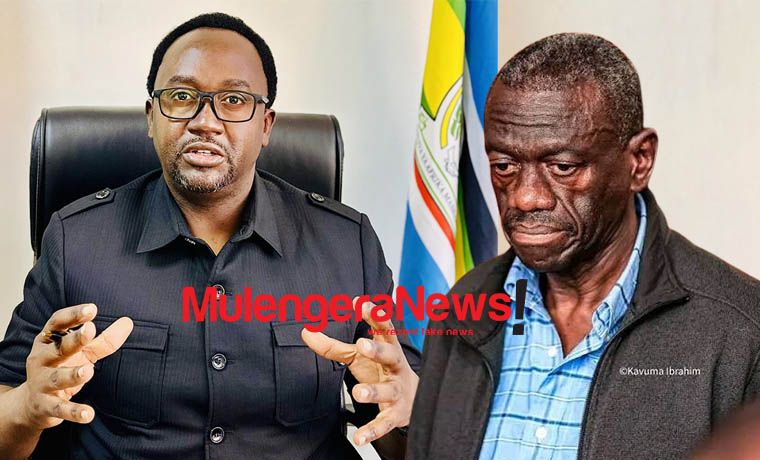
Uganda’s surviving liberation war historicals have been challenged to bury decades of political bitterness, reconcile and jointly prepare the country for a peaceful generational transition, with Dr Kizza Besigye’s continued incarceration bringing fresh attention to the unresolved divisions within President Yoweri Museveni’s old comrades.
Uganda Human Rights Commission (UHRC) member Crispin Kaheru argues that the men and women who fought together during the 1981-1986 liberation war should not allow their political disagreements to become the inheritance of the next generation to come after them.
In an opinion article titled “Here’s Why Comrades Should Sit Together and Hand Uganda a Whole Country”, the human rights activist makes a case for the surviving historicals to sit together, confront their differences and establish a common understanding of the country’s future.
His appeal comes at a particularly significant moment when one of Museveni’s most prominent former bush-war comrades, Dr Besigye, remains in state custody facing treason charges, while several other historicals who previously fell out with the President have, at different times, found their way back into political engagement with him.
The Besigye question has also entered the reconciliation conversation through an unexpected intervention by Museveni’s reputable brother Gen Salim Saleh, who is also fellow bush-war fighter.
On October 30, 2026, Saleh revealed that he had visited Besigye in prison and found him in a life-threatening condition, prompting him to arrange his transfer to the Joint Clinical Research Centre (JCRC) in Lubowa for specialized medical treatment.
Saleh said the intervention followed instructions that had been communicated through Chief of Defence Forces (CDF) Gen Muhoozi Kainerugaba, who had publicly indicated that Museveni had entrusted him with handling Besigye’s situation.
Recalling his encounter with the former comrade, Saleh said he had lost touch with Besigye because of politics but considered the assignment an off-ramp to reconnect with the veteran opposition leader.
The disclosure has introduced a deeply personal dimension to the political disagreements between the former NRA comrades, with Salim Saleh’s intervention demonstrating that old relationships can still provide an opening for engagement even after years of political hostility.
Besigye, who served as Museveni’s personal doctor during the bush-war period and later became one of his strongest political challengers, has been in state custody since November 2024 following his arrest in Nairobi, Kenya.
His continued detention on treason charges has remained a major point of contention between the government, his family and opposition supporters. He has denied the allegations against him.
For Kaheru, the broader question is how Uganda’s founding political generation can resolve its historical disagreements and ensure that the country does not enter its next chapter carrying the wounds of its past.
He writes: “Few nations have the opportunity to bring their founders together, confront their differences and shape their future while they can still look each other in the eye. Uganda should not waste this opportunity.”
Kaheru’s appeal is particularly interesting because Uganda has previously witnessed several attempts at reconciliation involving former comrades who had fallen out with Museveni.
One of the most striking examples was Gen David Sejusa, formerly known as Tinyefuza, whose disagreements with the President escalated in 2013 over allegations of a plot to eliminate senior government and military officials opposed to what he described as the Muhoozi succession project.
Sejusa subsequently fled to the United Kingdom, where he continued criticizing the Museveni’s government and questioning the direction of the Movement establishment.
However, after months of reported behind-the-scenes contacts, he returned to Uganda in December 2014.
Then Prime Minister Ruhakana Rugunda had publicly indicated that government was prepared to pursue reconciliation with the general, while reports at the time pointed to efforts involving senior government officials, including Saleh, to facilitate his return.
Sejusa’s return demonstrated that even bitter disagreements involving senior military historicals could create room for renewed engagement.
Another prominent example is former Prime Minister Amama Mbabazi, who was dismissed from the premiership in September 2014 following a bitter political fallout with his boss Museveni.
Mbabazi, a long-time bush-war associate and former NRM Secretary General, subsequently challenged Museveni in the 2016 presidential election under the Go Forward platform.
But the two eventually repaired their relationship.
In January 2021, Mbabazi publicly declared that he was working with Museveni and had never abandoned the NRM, despite having contested against its chairman.
In April 2024, Museveni publicly acknowledged their past disagreements while praising Mbabazi and his wife Jacqueline for their contribution to Uganda.
Museveni also recalled how he had reconciled with the late Eriya Kategaya, another childhood friend and liberation comrade who had opposed the removal of presidential term limits.
Kategaya had publicly fallen out with Museveni in 2003 over the third-term question but returned to government in 2006, eventually serving as First Deputy Prime Minister and Minister of East African Community Affairs until his death in 2013.
Former Vice President Prof Gilbert Bukenya also experienced a political separation and subsequent reunion with Museveni.
After being dropped from government in 2011, Bukenya moved closer to opposition forces and participated in efforts to challenge Museveni through The Democratic Alliance (TDA) ahead of the 2016 elections.
However, he later abandoned the opposition coalition and publicly renewed his association with Museveni in October 2015, eventually returning to the NRM political establishment.
Gen Henry Tumukunde provides another recent example of a former military historical whose political journey has included both confrontation and renewed engagement with Museveni.
Tumukunde fell out with Museveni after leaving the Security Ministry in 2018 and subsequently faced treason charges in 2020 after declaring his presidential ambitions.
He contested against Museveni in 2021 but returned to the NRM political arena in 2025, picking party nomination forms to contest for the Rukungiri Municipality parliamentary seat.
Interestingly, during his return to active politics, Tumukunde called upon Museveni to open dialogue with Besigye, arguing that national healing and political stability require engagement between leaders regardless of their past political rivalries.
These experiences provide an important historical background to Kaheru’s appeal.
They demonstrate that political disagreements among former comrades have not always resulted in permanent separation, with some returning to government, others rejoining the NRM and several maintaining personal relationships despite differences over political direction.
However, Besigye’s situation remains a particularly sensitive test of the broader reconciliation question because his case involves not only a political disagreement with former comrades but also criminal proceedings, contested questions of justice and his continued detention.
Kaheru traces the roots of these divisions to the broad-based political arrangement Museveni established after the NRA captured power in January 1986.
The arrangement brought together different political forces, including the Democratic Party (DP) associated with Paul Ssemogerere, Moses Ali’s Uganda National Rescue Front, Dr Andrew Kayira’s Uganda Freedom Movement, Dr David Lwanga’s Federal Democratic Movement of Uganda, as well as individuals from UPC, the Conservative Party and other political formations.
It was intended to promote national reconciliation after years of political violence and instability.
However, disagreements over governance, constitutional changes, leadership ambitions and succession gradually weakened the arrangement.
Ssemogerere’s 1995 resignation from government to challenge Museveni in the 1996 presidential election was one of the defining moments in the breakdown of the original broad-based arrangement.
Besigye’s November 1999 critique of the Movement government, followed by his departure from the army and presidential challenge in 2001, further exposed the growing divisions.
The removal of presidential term limits between 2003 and 2005 subsequently produced another major split, with historicals including Kategaya, Jaberi Bidandi Ssali, Miria Matembe, Amanya Mushega, Matthew Rukikaire and Augustine Ruzindana opposing the constitutional amendment.
Some later joined forces that established the Forum for Democratic Change (FDC) in 2004, while Bidandi established the People’s Progressive Party (PPP).
The succession question subsequently produced further disagreements involving Sejusa, Mbabazi and Tumukunde.
Kaheru now argues that the surviving historicals should honestly examine the decisions and disagreements that separated them, accept collective responsibility and establish a common national understanding before the liberation generation disappears.
His intervention also comes against the backdrop of the Consociational Democracy Agreement prepared by Professor Ogenga Otunnu and Gen Salim Saleh.
The document examines Uganda’s history of political exclusion, sectarianism and elite power-sharing, arguing that previous political arrangements repeatedly delivered temporary stability without adequately resolving the grievances of ordinary citizens.
It identifies the broad-based government established in 1986 as an important foundation for national reconciliation but argues that political accommodation must be strengthened through institutional reforms and wider public participation.
Kaheru similarly wants the liberation generation to recover the founding values of discipline, patriotism, sacrifice and collective responsibility, while ensuring that the next generation inherits a country united around a common national purpose.
He argues that the organizational discipline and collective purpose demonstrated during the liberation struggle should be carried into civilian governance, wealth creation, national mobilization and economic transformation.
His central concern is that Uganda should not be handed over to a new generation with the political wounds of its founders still unresolved.
“The liberation generation’s greatest legacy is the institutions, principles and national unity it leaves behind,” Kaheru writes.
He therefore wants the surviving NRA comrades to make reconciliation part of their final national assignment: handing over a united Uganda rather than passing on decades of political disagreements. (For comments on this story, get back to us on 0705579994 [WhatsApp line], 0779411734 & 041 4674611 or email us at mulengeranews@gmail.com).