


• Latest
  • Trending
FROM COLONIAL DIVIDE-AND-RULE TO M7’S POLITICAL DEALS! Salim Saleh Exposes How Uganda’s Sectarian Wounds Were Created, Exploited & Passed From One Regime to Another

FROM COLONIAL DIVIDE-AND-RULE TO M7’S POLITICAL DEALS! Salim Saleh Exposes How Uganda’s Sectarian Wounds Were Created, Exploited & Passed From One Regime to Another

11/05/2026
WHO WILL SAVE NRA COMRADES FROM THEMSELVES? Human Rights Official Kaheru Challenges M7’s Divided Old Guard to Reconcile Before Handing Over Uganda to Next Generation

WHO WILL SAVE NRA COMRADES FROM THEMSELVES? Human Rights Official Kaheru Challenges M7’s Divided Old Guard to Reconcile Before Handing Over Uganda to Next Generation

11/05/2026
UGANDA’S LAND WARS EXPOSED: Salim Saleh Proposes Nationwide Intervention in Landlord-Bibanja Conflicts

UGANDA’S LAND WARS EXPOSED: Salim Saleh Proposes Nationwide Intervention in Landlord-Bibanja Conflicts

11/05/2026
Minister Bahati Backs UDC’s Push to Cut Uganda’s UGX2 Trillion Packaging Import Bill as Pamoja Packaging Starts Construction

Minister Bahati Backs UDC’s Push to Cut Uganda’s UGX2 Trillion Packaging Import Bill as Pamoja Packaging Starts Construction

11/05/2026
Uganda’s Development Gap Exposed as M7’s Brother Demands Fair Share of Jobs, Services & Development for All Regions

Uganda’s Development Gap Exposed as M7’s Brother Demands Fair Share of Jobs, Services & Development for All Regions

11/05/2026
No Jobs, No Quality Education! Gen Saleh Warns Youth Anger Could Undermine Uganda’s Unity

No Jobs, No Quality Education! Gen Saleh Warns Youth Anger Could Undermine Uganda’s Unity

11/05/2026
At Pamoja Packaging Groundbreaking, Amelia Kyambadde Commends UDC’s Industrialisation Drive, Calls for Cold-Storage Investment to Boost Agriculture

At Pamoja Packaging Groundbreaking, Amelia Kyambadde Commends UDC’s Industrialisation Drive, Calls for Cold-Storage Investment to Boost Agriculture

11/05/2026
From 350 to 1,000 Students: How Equity Bank Is Financing the Growth Story of St. Peter’s High School Hoima

From 350 to 1,000 Students: How Equity Bank Is Financing the Growth Story of St. Peter’s High School Hoima

11/05/2026
Man Jailed Two Years, Fined Ugx 500,000 For Tampering With NWSC Works And Water Meter Theft

Man Jailed Two Years, Fined Ugx 500,000 For Tampering With NWSC Works And Water Meter Theft

11/05/2026
Akena Exposes NRM’s Betrayal of Opposition Dialogue, Reveals How M7’s Inner Circle Undermined Political Funding Deal

Akena Exposes NRM’s Betrayal of Opposition Dialogue, Reveals How M7’s Inner Circle Undermined Political Funding Deal

11/05/2026
M7-Mhoozi Succession Politics Eating Uganda Alive! Jimmy Akena Warns

M7-Mhoozi Succession Politics Eating Uganda Alive! Jimmy Akena Warns

11/05/2026

My Life Is in Danger but I Won’t Flee Uganda: Akena Fires Back at NRM’s Todwong, Says He Would Rather Die Fighting Than Run into Exile  

11/05/2026
Gov’t Needs UGX719,000 to Educate a Child but Provides Just UGX20,000! Akena Exposes Gap as He Warns Against Blaming Teachers for Poor Performance

Gov’t Needs UGX719,000 to Educate a Child but Provides Just UGX20,000! Akena Exposes Gap as He Warns Against Blaming Teachers for Poor Performance

11/05/2026
mulengeranews.com
  • Home
  • NEWS
    • GENERAL NEWS
    • MORNING BRIEFING
    • THE GIRAFFE
    • INVESTIGATIONS
    • INTERVIEWS
  • ECONOMY WATCH
    • BUSINESS NEWS
    • BUSINESS FEATURES
    • ENERGY
    • OIL & PETROLEUM
  • HEALTH & LIFESTYLE
  • GOSSIP
    • CORPORATE BUZZ
    • POLITICAL TRIVIA
    • CELEBRITY VIBE
    • CORPORATE EVENTS
  • UPCOUNTRY
    • UPCOUNTRY FEATURES
    • UPCOUNTRY NEWS
  • FLASHBACK
    • HISTORY-INSPIRED ARTICLES
    • POLITICAL SERIES
  • More
    • EDUCATION
    • MATTERS OF FAITH
    • CHRISTIAN FAITH
    • MUSLIM FAITH
    • P’PLE PROFILES
    • WEDDINGS & MARRIAGES
    • CONTACT US
No Result
View All Result
mulengeranews.com
No Result
View All Result
Home NEWS

FROM COLONIAL DIVIDE-AND-RULE TO M7’S POLITICAL DEALS! Salim Saleh Exposes How Uganda’s Sectarian Wounds Were Created, Exploited & Passed From One Regime to Another

by Mulengera News
3 hours ago
in NEWS
0 0
FROM COLONIAL DIVIDE-AND-RULE TO M7’S POLITICAL DEALS! Salim Saleh Exposes How Uganda’s Sectarian Wounds Were Created, Exploited & Passed From One Regime to Another
Share on FacebookShare on Twitter

By Aggrey Baba

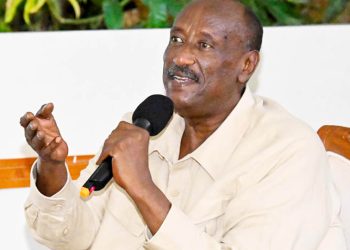
The bitter ethnic, religious and regional divisions in Uganda are not accidents of history, but a product of decades of political manipulation, power struggles and competition for national resources, a major political study authored by Professor Ogenga Otunnu in collaboration with Museveni’s brother Caleb Akandwanaho (Salim Saleh) has revealed.

The paper, which the two authors named Consociational Democracy Agreement: Addressing the Root Causes and Consequences of Sectarianism, Exclusion, Marginalization and Conflicts in Uganda, takes readers through a painful historical journey, tracing how divisions that began taking political shape in nineteenth-century Buganda were deepened by colonial rule, inherited by post-independence governments and repeatedly exploited by successive political regimes.

Its central argument is that Uganda’s political problem has never simply been its religion and ethnic diversity, but the repeated manipulation of that diversity by politicians competing for power, resources and opportunities.

The study traces the origins of some of Uganda’s most deeply rooted religious and political divisions to the mid-nineteenth century, when violent struggles for religious and political power triggered the rapid sectarianization of Buganda.

The British colonial administration did not heal these divisions. Instead, Saleh says through its institutions, leadership and political, economic and administrative policies, it created new fault lines, politicized existing ones and entrenched divisions that would later shape the country’s post-independence politics.

And when colonial rule ended, the new political order largely inherited the same divisive state structures and contradictions.

In the document, Gen Saleh examines how successive governments attempted to manage these divisions through political alliances, broad-based cabinets and negotiated cooperation, only for many of those arrangements to fall short of delivering lasting national integration.

It takes readers through the UPC-Kabaka Yekka alliance under Milton Obote, Idi Amin’s shifting political mobilization, the coalition born out of the Moshi Unity Conference that produced the Uganda National Liberation Front, and the broad-based governance arrangements and political cooperation pursued under President Yoweri Museveni.

But Gen Saleh identifies a recurring weakness running through these different political experiments, that leaders negotiated among themselves while ordinary members of the communities and political constituencies they claimed to represent remained outside the equation.

Some arrangements deliberately excluded particular groups, while others failed to translate political agreements into government policies, institutional reforms and properly funded programmes capable of confronting the grievances beneath the political divisions.

In effect, the country repeatedly changed political arrangements without fully dismantling the structures and grievances that kept producing exclusion.

The study is particularly critical of attempts to deal with sectarianism through suppression and administrative bans, arguing that such measures have historically failed to eliminate the divisions they were meant to address.

It cites the banning of Kabaka Yekka in 1964 and the proscription of religious organizations under Amin as examples of interventions that drove opposition underground and, in some cases, radicalized rather than resolved political differences.

Still in the document, Gen Saleh and his co-author, also hos personal assistant, make a distinction between Uganda’s diversity and the political weaponization of that diversity. Tribal, religious, linguistic and regional identities are not, in themselves, the enemy, but the danger arises when political actors turn those identities into instruments for fighting over state power, national resources and opportunities.

The paper nevertheless gives the Museveni administration credit for achievements it says have created a stronger foundation for a more inclusive political settlement than existed under his predecessors.

These include restoring security across much of the country, establishing grassroots democratic structures, introducing Universal Primary and Secondary Education, restoring cultural institutions, negotiating peace settlements with armed groups and rolling out socio-economic transformation programmes such as the Parish Development Model.

But Saleh is equally clear that these achievements have not eliminated the country’s structural problems.

Electoral credibility concerns, unresolved land grievances, youth unemployment, unequal access to quality education, poor public service delivery and the opacity of political cooperation arrangements remain among the challenges capable of sustaining exclusion and political resentment.

It is against this historical record that Saleh advances the proposed Consociational Democracy Agreement, arguing that Uganda must abandon the recurring practice of elite political accommodation that leaves ordinary citizens and their grievances outside the settlement.

The proposed arrangement is therefore presented not merely as another political deal among leaders, but as an attempt to confront the historical causes of sectarianism through wider participation, transparent cooperation, institutional reforms and practical socio-economic interventions.

Saleh warns that Uganda cannot keep recycling political alliances, changing the faces around the negotiating table and declaring national unity while leaving the same grievances untouched.

According to the paper, the answer is to confront the country’s historical wounds instead of allowing successive generations of politicians to inherit, exploit and reproduce them.


Views: 823

Related Posts

WHO WILL SAVE NRA COMRADES FROM THEMSELVES? Human Rights Official Kaheru Challenges M7’s Divided Old Guard to Reconcile Before Handing Over Uganda to Next Generation
NEWS

WHO WILL SAVE NRA COMRADES FROM THEMSELVES? Human Rights Official Kaheru Challenges M7’s Divided Old Guard to Reconcile Before Handing Over Uganda to Next Generation

2 hours ago
UGANDA’S LAND WARS EXPOSED: Salim Saleh Proposes Nationwide Intervention in Landlord-Bibanja Conflicts
NEWS

UGANDA’S LAND WARS EXPOSED: Salim Saleh Proposes Nationwide Intervention in Landlord-Bibanja Conflicts

2 hours ago
Minister Bahati Backs UDC’s Push to Cut Uganda’s UGX2 Trillion Packaging Import Bill as Pamoja Packaging Starts Construction
NEWS

Minister Bahati Backs UDC’s Push to Cut Uganda’s UGX2 Trillion Packaging Import Bill as Pamoja Packaging Starts Construction

3 hours ago
Uganda’s Development Gap Exposed as M7’s Brother Demands Fair Share of Jobs, Services & Development for All Regions
NEWS

Uganda’s Development Gap Exposed as M7’s Brother Demands Fair Share of Jobs, Services & Development for All Regions

4 hours ago
No Jobs, No Quality Education! Gen Saleh Warns Youth Anger Could Undermine Uganda’s Unity
NEWS

No Jobs, No Quality Education! Gen Saleh Warns Youth Anger Could Undermine Uganda’s Unity

4 hours ago
At Pamoja Packaging Groundbreaking, Amelia Kyambadde Commends UDC’s Industrialisation Drive, Calls for Cold-Storage Investment to Boost Agriculture
NEWS

At Pamoja Packaging Groundbreaking, Amelia Kyambadde Commends UDC’s Industrialisation Drive, Calls for Cold-Storage Investment to Boost Agriculture

4 hours ago

  • Contact
  • Home
  • Home
  • Homes

Copyright © 2025 All Rights Reserved by Mulengera News.

Welcome Back!

Login to your account below

Forgotten Password?

Retrieve your password

Please enter your username or email address to reset your password.

Log In

Add New Playlist

No Result
View All Result
  • Contact
  • Home
  • Home
  • Homes

Copyright © 2025 All Rights Reserved by Mulengera News.