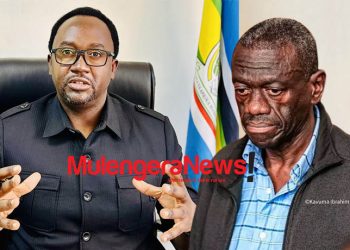








Akena said that the government’s education financing approach exposes a serious contradiction, where schools are expected to produce quality graduates even when the money allocated to educate individual pupils is nowhere near what government planning documents indicate is required.
He cited the Fourth National Development Plan (NDP IV), saying the indicative annual cost of educating one primary school child is estimated at UGX719,000.
However, he questioned how schools could possibly meet that standard when the actual government provision is reportedly only a fraction of the required amount.
“If your own math says you need [UGX]719,000 per student per year, and you give [UGX]20,000, and then you spend money to break the head of a head teacher for not delivering education. Who’s at fault?” he asked.
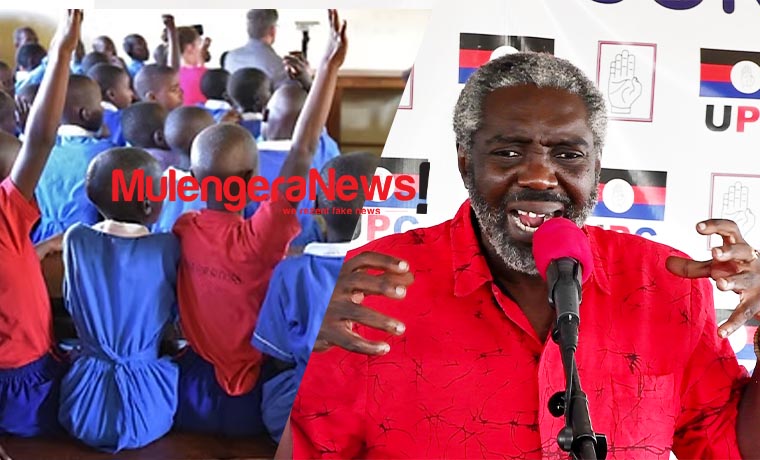
Akena made the remarks while addressing journalists at UPC headquarters, arguing that government cannot continue blaming teachers and school administrators for poor educational outcomes without taking responsibility for chronic underfunding.
He described the situation as an absurd arrangement in which those expected to deliver education are punished for failures arising partly from inadequate government funding.
The UPC president said the government should first examine its own contribution before holding teachers responsible for the deteriorating standards in government schools.
He questioned the rationale of expecting a school to provide quality teaching, learning materials and other essential services when the funding available cannot adequately support those responsibilities.
Akena warned that the consequences go beyond poor examination results, arguing that children who fail to receive quality education are being denied opportunities to compete economically and professionally with their counterparts elsewhere in the world.
“Education is the one thing which can change people’s lives,” he said, further maintaining that a child’s opportunity to receive quality education should not depend on the wealth of their parents or the geographical location of their school.
Akena also raised concerns about the number of children who disappear from the education system before reaching Primary Leaving Examinations (PLE), arguing that Uganda was losing more than half of the children who initially enrol in school before they reach PLE, questioning whether the country was adequately preparing its young population for the future.
The UPC leader further criticized the emphasis on introducing Kiswahili as a language of regional trade and integration when the education system is struggling to ensure that children acquire basic educational competencies.
He said regional integration would remain largely theoretical until Uganda prepares its children to participate effectively in the opportunities it promises.
Akena called for deliberate investment in teachers, schools and the wider education system, insisting that quality education must be treated as a national development priority.
He said that government should stop demanding results from schools while withholding the resources necessary to achieve them.
According to the UPC president, the country cannot build a competitive economy by neglecting the very children expected to drive it in future. (For comments on this story, get back to us on 0705579994 [WhatsApp line], 0779411734 & 041 4674611 or email us at mulengeranews@gmail.com).