







By Ben Musanje
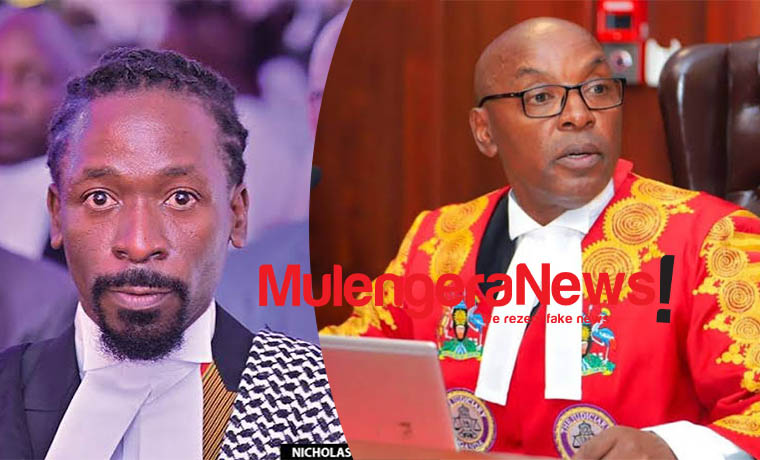
The Uganda Law Society (ULS), under the leadership of its President and Head of the Bar, Isaac K. Ssemakadde SC, has formally denounced the planned thanksgiving ceremony for Chief Justice Dr. Flavian Zeija, declaring him a “Global Judicial Pariah” and calling for a nationwide boycott of the event scheduled for November 21 in Rukungiri District.
In a strongly worded executive directive issued on November 2, 2026, Ssemakadde directed members of the legal profession, civil society organisations and citizens committed to judicial independence to withdraw their support from the ceremony, scheduled to take place at Karama Primary School Playground in Karama Village, Nyarushanje Sub-county.
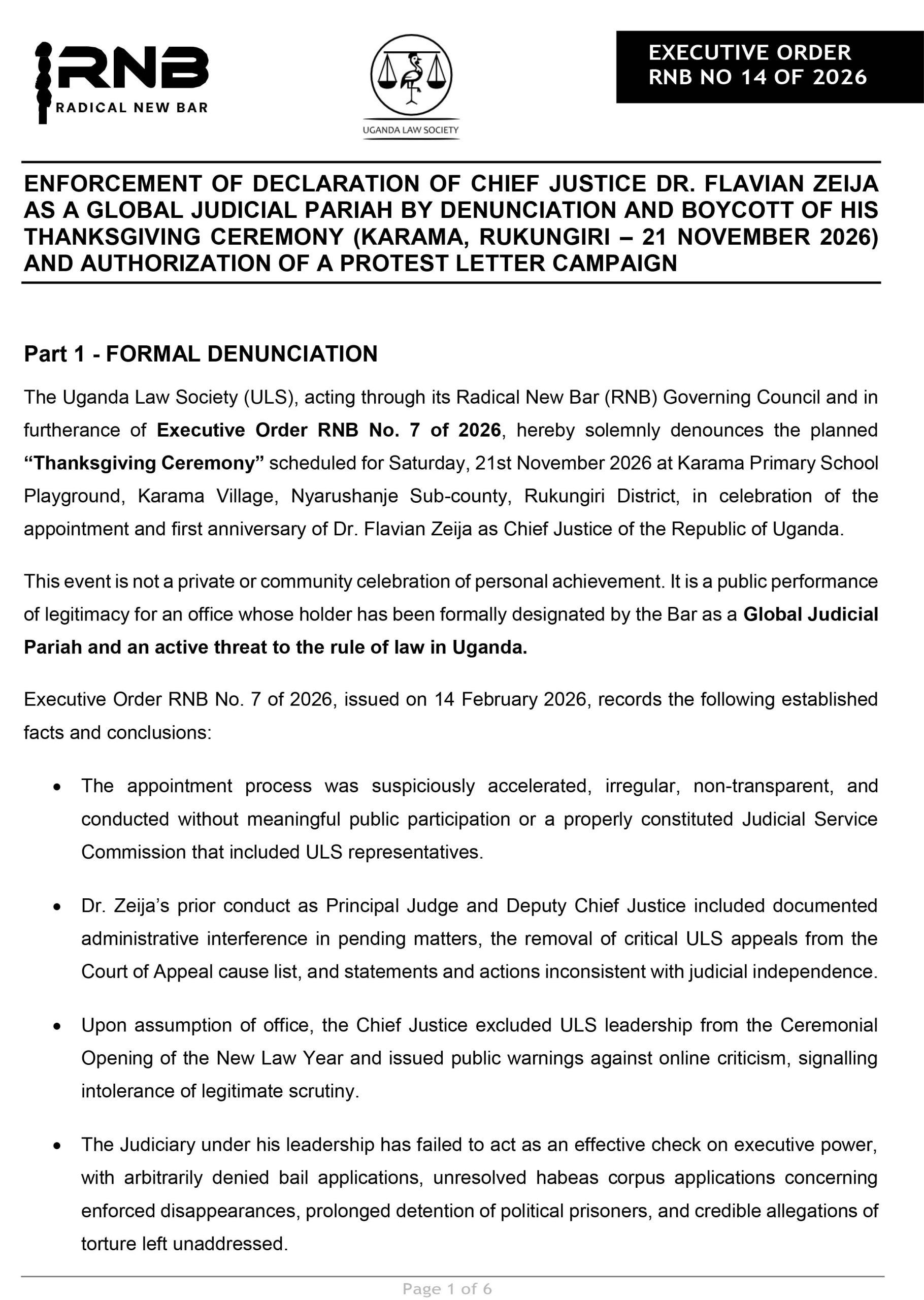
The directive, titled Enforcement of Declaration of Chief Justice Dr. Flavian Zeija as a Global Judicial Pariah by Denunciation and Boycott of His Thanksgiving Ceremony and Authorization of a Protest Letter Campaign, is issued pursuant to Executive Order RNB No. 7 of 2026, originally promulgated on February 14.

The Society argues that the proposed celebration, ostensibly organised to commemorate Zeija’s appointment and first anniversary as Chief Justice, risks conferring public legitimacy on a Judiciary whose independence and credibility it says have been seriously compromised.

“This is not personal animus. It is institutional duty,” Ssemakadde declares in the directive, framing the boycott as a professional and constitutional obligation to defend the rule of law.
ULS raises concerns over judicial independence
At the centre of the Society’s denunciation are allegations surrounding the circumstances of Zeija’s appointment, his previous administrative conduct and the Judiciary’s performance under his leadership.
According to the executive order, the appointment process was suspiciously accelerated, irregular and non-transparent, allegedly taking place without meaningful public participation or a properly constituted Judicial Service Commission incorporating ULS representation.
The Society further cites alleged administrative interference in pending judicial matters during Zeija’s previous tenure as Principal Judge and Deputy Chief Justice, including the removal of critical ULS appeals from the Court of Appeal cause list.
It also accuses the Chief Justice of contributing to an increasingly hostile environment for legitimate public scrutiny, pointing to the exclusion of ULS leadership from the Ceremonial Opening of the New Law Year and public warnings against online criticism.
More fundamentally, the Bar alleges that the Judiciary has failed to provide an effective institutional check on executive power, particularly regarding arbitrarily denied bail applications, unresolved habeas corpus applications involving alleged enforced disappearances, prolonged detention of political prisoners and allegations of torture.
These claims form the basis of the Society’s designation of Zeija as a Global Judicial Pariah, a position it says will remain in force until judicial autonomy and impartiality are independently and verifiably restored.
Rukungiri ceremony sparks controversy
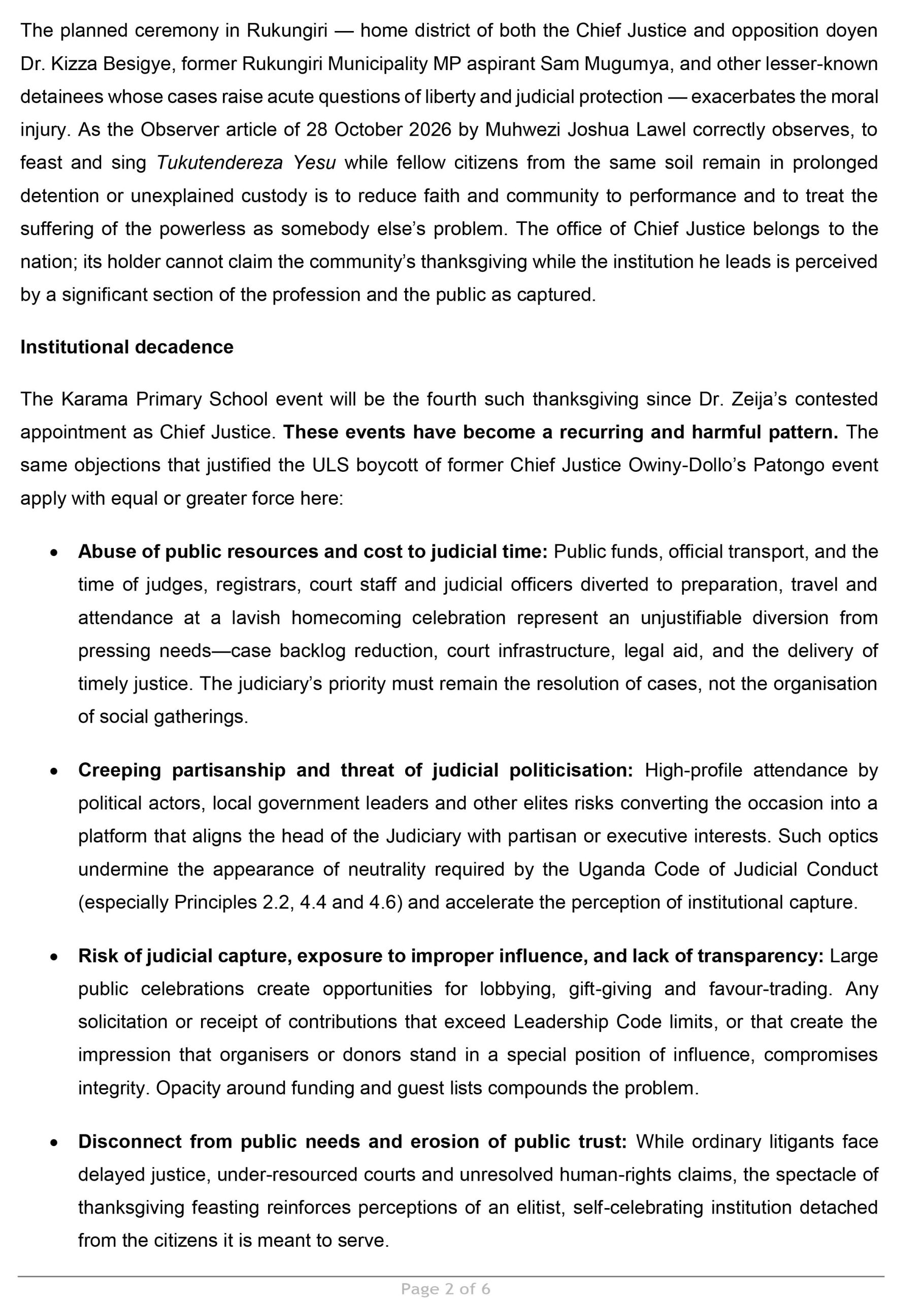
The choice of Rukungiri as the venue for the thanksgiving ceremony has attracted particular criticism from the Bar.
The district is home to several prominent individuals associated with unresolved questions of political detention and personal liberty, including opposition figure Dr. Kizza Besigye and former Rukungiri Municipality parliamentary aspirant Sam Mugumya.
The ULS argues that celebrating the head of the Judiciary in the same community while citizens face prolonged detention and unresolved questions concerning their liberty creates an uncomfortable moral contradiction.
The directive references an October 28 article by journalist Joshua Lawel Muhwezi in The Observer, which questioned the morality of religious celebrations and public feasting while fellow citizens remain in detention or unexplained custody.
The Society maintains that the office of Chief Justice belongs to the entire nation and cannot be reduced to a personal or communal celebration while public confidence in the institution remains contested.
It also notes that the Karama event will be the fourth thanksgiving celebration associated with Zeija since his contested appointment, describing the recurring ceremonies as an increasingly troubling institutional pattern.
Waste of public resources and alleged politicisation
The ULS identifies several reasons why judicial officers and legal practitioners should boycott the ceremony.
First, it questions the diversion of public funds, official transport and judicial officers’ working time towards what it describes as lavish homecoming celebrations, arguing that these resources should instead support backlog reduction, court infrastructure, legal aid and timely justice delivery.
Second, it warns that the participation of political leaders, local government officials and other influential personalities risks creating an appearance of partisan alignment between the Judiciary and the Executive.
The Society also raises concerns about possible improper influence through contributions, gift-giving and fundraising associated with the celebrations, particularly where transparency regarding funding and donors is lacking.
It argues that such practices could undermine the ethical obligations of judicial officers under the Uganda Code of Judicial Conduct, particularly the principles governing independence, integrity and the appearance of impartiality.
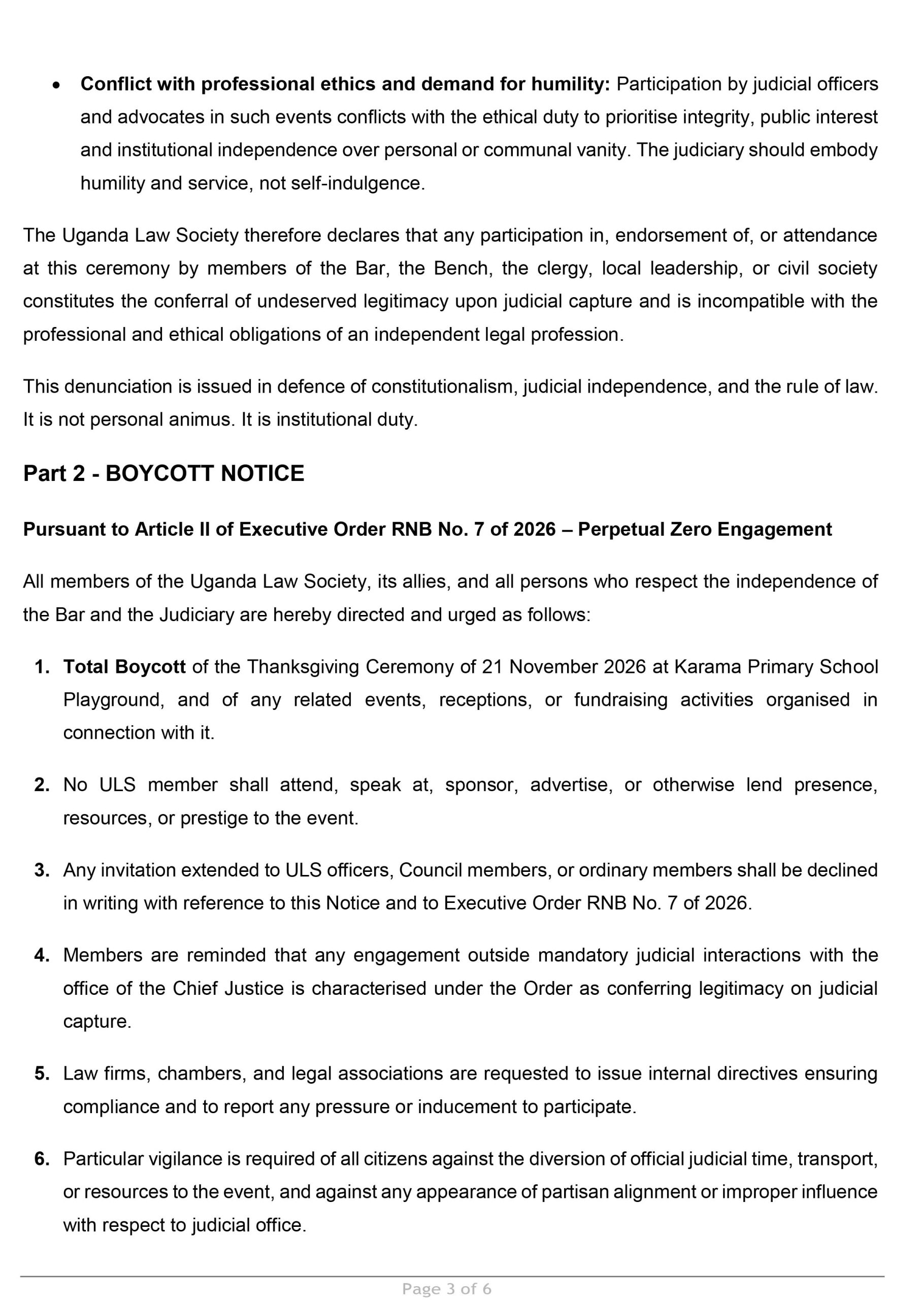
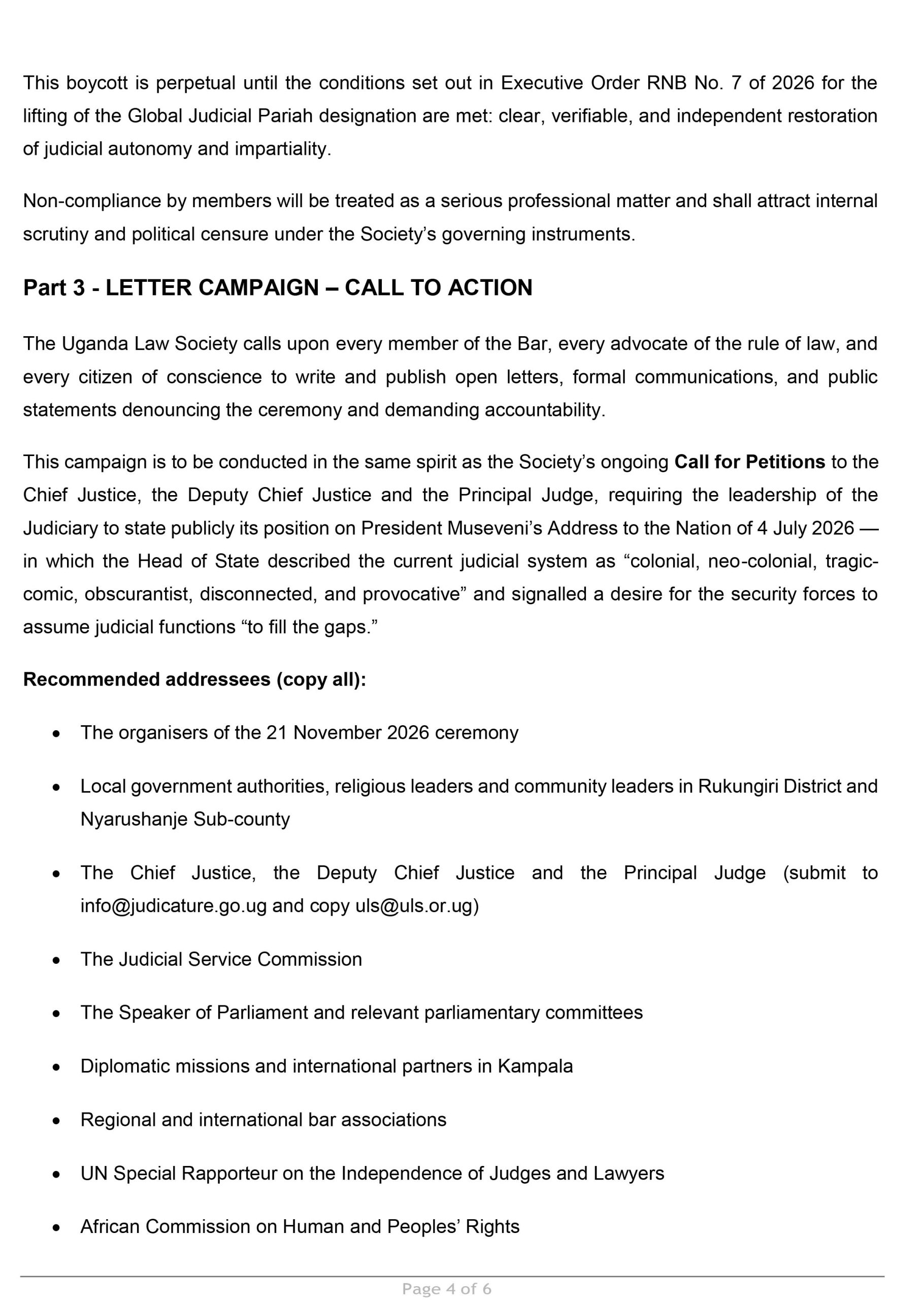
Under the boycott directive, ULS members are instructed not to attend, speak at, sponsor, advertise or otherwise lend their resources or professional standing to the November 21 ceremony.
Law firms, legal chambers and professional associations are also urged to issue internal compliance directives and report any pressure or inducement to participate.
The Society warns that non-compliance by its members could attract internal scrutiny and political censure under its governing instruments.
Chief Justice challenged over presidential attack on Judiciary
Beyond the thanksgiving ceremony, the executive order launches a broader campaign challenging what Ssemakadde describes as persistent failures of leadership within the Judiciary.
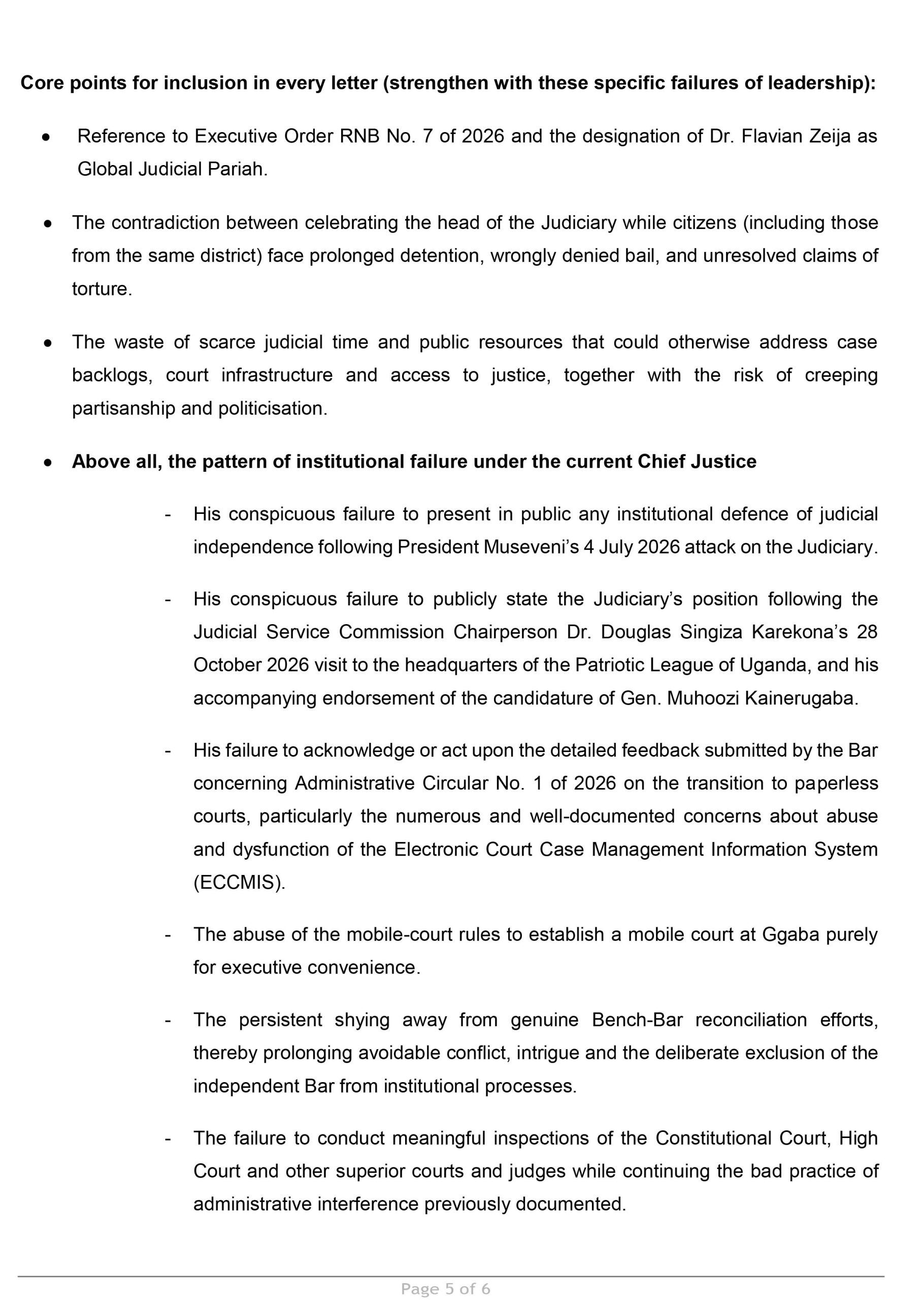
Among the principal complaints is Zeija’s alleged failure to publicly defend judicial independence following President Yoweri Museveni’s July 4, 2026, address to the nation.
During that address, the President reportedly described the judicial system as “colonial, neo-colonial, tragicomic, obscurantist, disconnected, and provocative”, while suggesting that security forces could assume certain judicial functions to fill perceived gaps.
The ULS questions why the Chief Justice has not publicly articulated the Judiciary’s institutional position in response to what it considers a direct attack on judicial independence.
The directive also demands an explanation following the October 28 visit by Judicial Service Commission Chairperson Dr. Douglas Singiza Karekona to the headquarters of the Patriotic League of Uganda, where he reportedly endorsed the candidature of Gen. Muhoozi Kainerugaba.
Other concerns include the alleged failure to address the Bar’s submissions regarding Administrative Circular No. 1 of 2026 on the transition to paperless courts, particularly concerns surrounding the Electronic Court Case Management Information System (ECCMIS).
The Society further questions the establishment of a mobile court at Ggaba, which it alleges was undertaken for executive convenience, and accuses the Judiciary’s leadership of neglecting meaningful Bench-Bar reconciliation and inspections of superior courts.
International protest campaign launched
As part of its response, the ULS has authorised a coordinated letter-writing and public protest campaign targeting the ceremony’s organisers, religious and community leaders, government authorities, diplomatic missions and international legal institutions.
Letters are also to be sent to the Chief Justice, Deputy Chief Justice, Principal Judge and Judicial Service Commission, alongside the Speaker of Parliament and relevant parliamentary committees.
International recipients include the United Nations Special Rapporteur on the Independence of Judges and Lawyers, the African Commission on Human and Peoples’ Rights and regional and international bar associations.
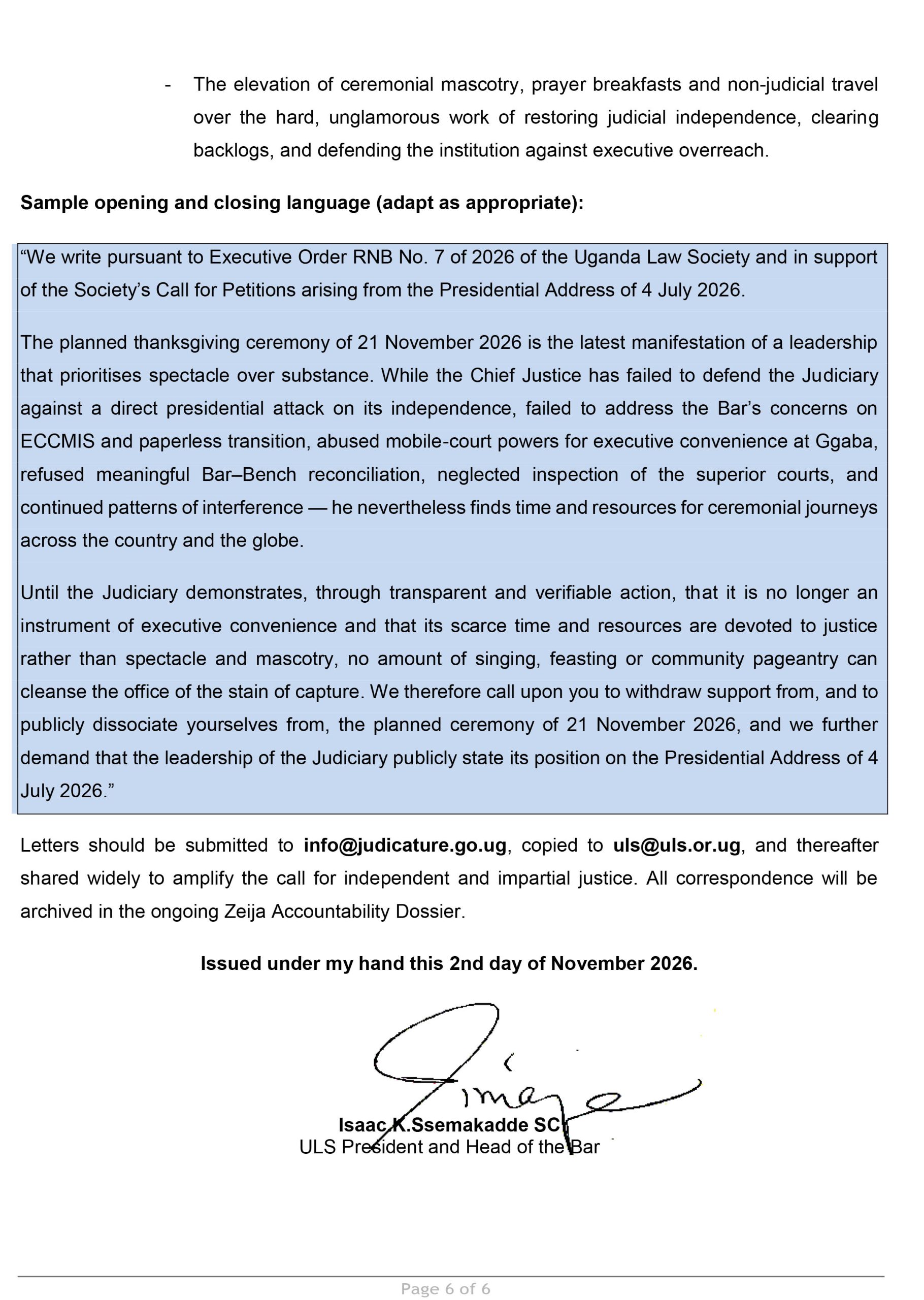
All correspondence addressed to the Judiciary is to be submitted through info@judicature.go.ug, with a copy to uls@uls.or.ug. The Society says the submissions will be archived in an ongoing Zeija Accountability Dossier.
The campaign seeks public accountability, particularly concerning judicial independence, political detention, court administration and the Judiciary’s relationship with the Executive.
In its concluding position, the ULS insists that the restoration of public confidence requires substantive institutional reforms rather than ceremonial celebrations.
Until independently verifiable action demonstrates that the Judiciary is autonomous, impartial and committed to delivering justice, Ssemakadde says, public participation in the thanksgiving ceremony would amount to legitimizing what the Society characterizes as judicial capture.
The November 21 gathering in Karama is therefore shaping up to be more than a religious and community celebration. It has become the focal point of an escalating confrontation between the leadership of the Uganda Law Society and the head of the country’s Judiciary over the meaning, independence and future of judicial authority in Uganda. (For comments on this story, get back to us on 0705579994 [WhatsApp line], 0779411734 & 041 4674611 or email us at mulengeranews@gmail.com).