








By Ben Musanje
Behind every safe medicine that reaches a Ugandan pharmacy, hospital or health centre is a critical scientific process designed to establish whether the product is safe, effective and meets the required quality standards.
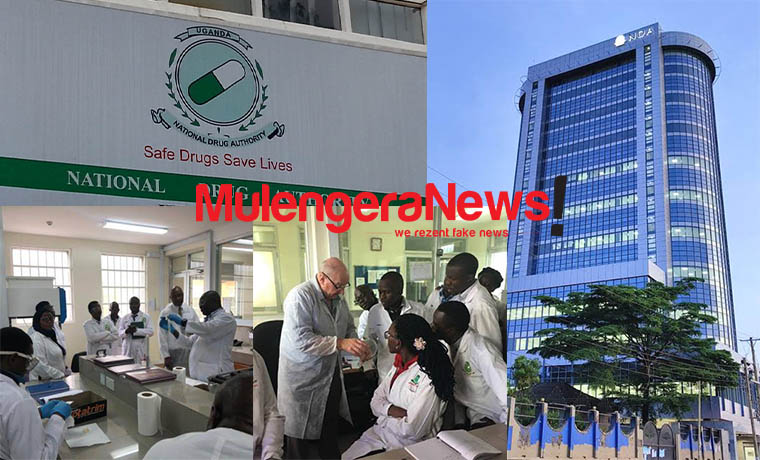
At the centre of this process is the National Drug Authority’s (NDA) Directorate of Laboratory Services (DLS), whose expanding scientific capabilities are playing an increasingly important role in protecting Ugandans from substandard and falsified medicines and unsafe medical products.
In its inaugural September 2026 edition of DLS Spectrum, the Directorate offers a glimpse into its scientific journey, technological advancements and the people working behind the scenes to ensure that medicines and medical devices available in Uganda meet established quality, safety and efficacy requirements.

The publication underscores the importance of the NDA’s Pharmaceutical Quality Control Laboratory as a central pillar in the country’s medicine regulatory system, highlighting how laboratory testing provides the scientific evidence needed to support regulatory decisions and safeguard public health.

For millions of Ugandans who depend on medicines to treat illnesses, manage chronic conditions and protect their families, the work of these laboratories represents an important line of defence against products that could otherwise compromise treatment outcomes.
From a university laboratory to an internationally recognised facility
The Directorate’s journey dates back to 1998, when medicine testing was conducted at Makerere University before the NDA procured its first laboratory equipment, including UV/Visible spectrophotometers, a pH meter, dissolution tester and analytical balance.
Established following the creation of the NDA in 1993 under the National Drug Policy and Authority Act, the National Drug Quality Control Laboratory was intended to operationalise the Authority’s legal mandate to scientifically examine and test medicines.
Over the years, the laboratory steadily expanded its testing capacity to respond to the growing complexity of pharmaceutical products and emerging public health challenges.
In 1999, mandatory testing of anti-malarial medicines commenced, while testing of condoms was introduced in 2006. The laboratory subsequently expanded its capacity to assess a wider range of medicines and medical products.
A major milestone came in 2015 when the laboratory attained World Health Organisation (WHO) prequalification status, followed by ISO/IEC 17025 accreditation in 2016, strengthening its international recognition and confidence in the reliability of its testing results.
In 2016, the NDA restructured the laboratory from a department into a Directorate of Laboratory Services, comprising the Laboratory Quality Management System Unit, Medicines Unit and Medical Devices Unit.
Further investments expanded its testing scope to include surgical masks, infusion sets, cannulas, catheters, vaccines and other health products. The establishment of advanced analytical facilities, including mass spectrometry technologies, further strengthened its ability to investigate complex pharmaceutical products.
Four specialised laboratories strengthening medicine safety
Today, the Medicines Unit operates four specialised laboratories covering conventional medicines, herbal medicines, pharmaceutical microbiology and biopharmaceuticals.
The Conventional Medicines Laboratory, the largest under the unit, is both WHO-prequalified and ISO 17025:2017-accredited. It conducts routine pharmaceutical quality control tests, including identification, assay, impurities, dissolution and uniformity of dosage units.
Its advanced equipment includes ultra-performance liquid chromatography systems, high-performance liquid chromatographs, gas chromatographs and infrared spectrophotometers, enabling scientists to assess whether medicines meet recognised pharmacopoeial standards.
For Uganda’s growing herbal medicine industry, the Herbal Medicines Laboratory provides another important layer of protection.
The laboratory assesses imported and locally manufactured herbal products, screens for adulterants, examines phytochemical composition and conducts safety tests for contaminants such as aflatoxins and heavy metals.
This is particularly important as herbal medicines continue to feature in the country’s healthcare landscape, making scientific verification essential to consumer safety.
Meanwhile, the Pharmaceutical Microbiology Laboratory conducts tests for bacterial endotoxins, microbial contamination, microbial identification and other potentially harmful microorganisms.
The laboratory operates in specialised clean-room facilities and uses automated systems to strengthen contamination control and improve testing reliability.
A further milestone was reached in January 2026 with the establishment of the Biopharmaceuticals Testing Laboratory, which is responsible for strengthening oversight of vaccines and other biological products through the national lot-release system.
Its developing capabilities include advanced technologies for identifying and quantifying protein-based and nucleic acid-based biopharmaceuticals, with plans to expand into cell-based assays.
Medical devices also under the microscope
Beyond medicines, the Directorate’s Medical Devices Unit has spent more than two decades building the capacity to assess products used daily in hospitals, health centres and other healthcare settings.
The unit conducts physical testing, chemical analysis and biological assessments to establish whether medical devices meet applicable quality, safety and performance requirements.
Its testing scope covers products such as condoms, gloves, surgical masks, gowns, syringes, needles, infusion sets, catheters and other medical devices.
Specialised equipment enables laboratory scientists to assess barrier integrity, resistance to fluid penetration, tensile strength, adhesive strength and other critical performance characteristics.
The unit’s ISO/IEC 17025:2017 accreditation further reinforces its commitment to internationally recognised laboratory standards.
These assessments are particularly significant because the safety of a medical product is not determined by its appearance alone, but also by its ability to perform as intended without exposing patients and healthcare workers to unnecessary risks.
Quality management: The foundation of public confidence
While sophisticated equipment and advanced testing technologies are essential, the Directorate says its effectiveness also depends on a strong quality management culture.
The Laboratory Quality Management System Unit ensures that laboratory operations adhere to recognised standards, including ISO/IEC 17025, while promoting consistency, accountability, scientific integrity and continuous improvement.
According to the Directorate, quality management goes beyond securing international accreditation. It builds confidence in laboratory results and, ultimately, in the regulatory decisions made to protect public health.
The September newsletter also responds to findings from the DLS 2024 Customer Satisfaction Survey, which highlighted the need to improve public awareness of the Directorate’s work and its contribution to health-product regulation. (For comments on this story, get back to us on 0705579994 [WhatsApp line], 0779411734 & 041 4674611 or email us at mulengeranews@gmail.com).