









By Aggrey Baba
Cabinet has approved Uganda’s national human rights report for submission to the United Nations (UN), days after veteran NRM politician Ofwono Opondo publicly challenged his own government over alleged abductions, torture and impunity by security agencies.
The Cabinet decision, announced by ICT Minister Kasule Lumumba on Tuesday, comes amid mounting questions about the whereabouts of missing persons and Parliament’s struggle to obtain a comprehensive government statement on alleged human rights violations.
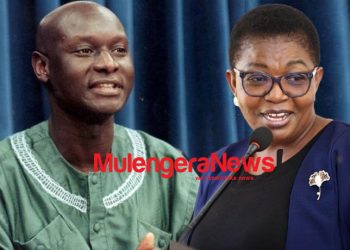
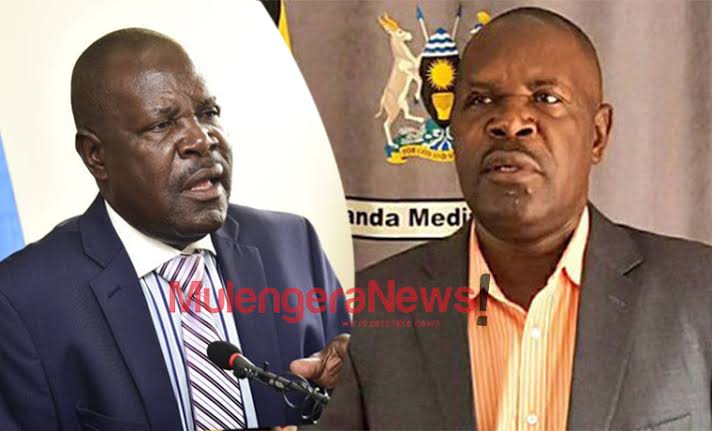
Ofwono Opondo, the MP representing Older Persons in Eastern Uganda and former government spokesperson, has emerged as one of the most outspoken voices within the yellow camp, demanding that authorities explain allegations of abuse instead of allowing security agencies to operate without accountability.
His intervention began in Parliament on October 22, when he questioned the circumstances surrounding the arrest of human rights activist Praise Aloikin Opoloje, who alleged that she was lured to a police station before being taken away by security operatives and assaulted.
Addressing Parliament, the MP questioned whether such methods of arrest had become acceptable under the government he has served for decades.
“Is this now the way to apprehend suspects, that they make a decoy, lure you into a police station, and then the military come and arrest? Is this the way?” he asked.
He called for explanations from the Ministers of Internal Affairs and Defence and the Attorney General, insisting that allegations involving security agencies could not simply be brushed aside.
“It is unacceptable for the NRM to preside over impunity and torturing citizens, particularly a young person, moreso a woman. It is unacceptable,” Opondo told Parliament.
The remarks were very significant because they came from within the NRM, whose government has faced repeated questions over abductions, unlawful detention and the treatment of political opponents and activists.
Opondo’s concerns also touched on Parliament’s failure to obtain the promised government statement on missing persons, an issue raised by Leader of the Opposition (LoP) Joel Ssenyonyi.
Ssenyonyi, who is also the MP for Nakawa West constituency, has demanded answers about people reportedly arrested by security agencies and not produced before courts, including Baba TV journalist Eria Jengo and opposition activist Sam Mugumya.
The debate exposed a growing demand within Parliament for the executive to account for the conduct of security agencies, irrespective of political affiliation.
Opondo carried his criticism beyond Parliament when he appeared on NBS Television’s The Frontline on Thursday evening, where he questioned the government’s inability to provide straightforward answers on matters involving Dr Kizza Besigye’s detention and welfare.
He expressed concern that ministers appeared reluctant to respond confidently to questions raised in Parliament about the opposition figure.
“When you enter Parliament, you feel that nobody is willing to demand a forthright answer, and none of the people from the front bench appears to be confident enough to answer the questions of Dr. Besigye. I think it’s not a good situation for the government,” Opondo said.
He also called for Besigye and former Lord Mayor Erias Lukwago to be allowed access to their immediate family members, lawyers and personal doctors so that their welfare could be independently assessed.
The remarks placed the spotlight on the government’s handling of sensitive detention cases and the difficulties Parliament faces in obtaining clear answers from the executive.
His intervention was notable given his long association with the NRM and his previous role as government spokesperson, through which he routinely defended government positions against criticism.
On Saturday, Opondo returned to the question of political tolerance during an appearance on Capital FM’s Capital Gang, arguing that anyone seeking to succeed Museveni must demonstrate greater tolerance and a stronger commitment to dialogue.
He said a future leader should be prepared to engage political opponents and handle disagreements without relying on what he described as crude power.
“Whoever wants to replace President Museveni must do more than he has done in terms of tolerance and verbal engagement, rather than using crude power,” Opondo said.
Although the remarks focused on leadership and political succession, they reinforced his recent public emphasis on tolerance, human rights, dialogue and how those in power respond to criticism.
Taken together, his interventions in Parliament and on the two media platforms have placed renewed attention on questions of accountability, security operations and the treatment of people detained by state agencies.
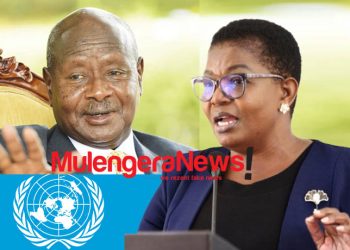
Against this backdrop, Hon Kasule Lumumba announced on Tuesday that Cabinet had approved Uganda’s national report for the fourth cycle of the United Nations Universal Periodic Review, a process through which countries examine one another’s human rights records.
The report will be submitted to the UN Human Rights Council through the Ministry of Foreign Affairs.
Lumumba said the document records progress in strengthening national human rights institutions, improving access to justice and protecting women and children. It also covers refugee protection, social protection, education, healthcare, business and human rights, and climate change management.
However, she acknowledged that the report also identifies challenges that remain unresolved.
“Approval of the report does not mean that every challenge has been resolved,” Lumumba said, explaining that the document presents both the country’s progress and areas requiring further action.
She added that Uganda’s responsibility was to build on the gains made while addressing the shortcomings identified in the report.
“Our responsibility is to build on the progress made and address the gaps that remain,” she said.
The Cabinet decision means government is preparing to present its account of Uganda’s human rights record for international scrutiny, including the challenges that still require attention.
Lumumba did not provide details of the specific shortcomings documented in the report during Tuesday’s briefing.
The Cabinet approval and Opondo’s interventions bring into focus two related but distinct issues, including Uganda’s formal reporting on its human rights obligations and the demand for immediate explanations over allegations involving security agencies. (For comments on this story, get back to us on 0705579994 [WhatsApp line], 0779411734 & 041 4674611 or email us at mulengeranews@gmail.com).