








By Aggrey Baba
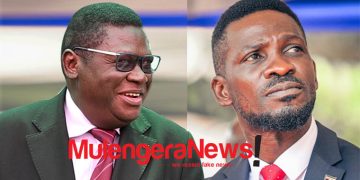
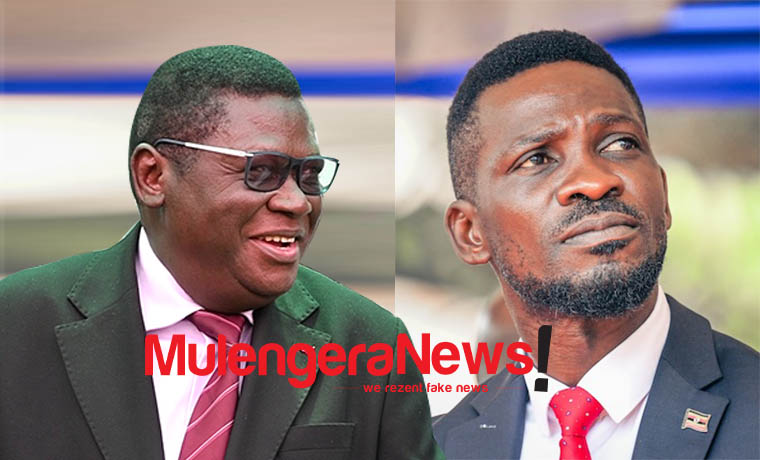
Democratic Party (DP) president Norbert Mao has revealed that his party played a central role in building the People Power movement and offered its youthful leader, Robert Kyagulanyi Ssentamu, an opportunity to grow under the DP umbrella before he went on to establish his own political party or even stood for presidency.
Mao said DP invested more than UGX400 million in building the People Power movement as part of efforts to unite Uganda’s opposition, only for disagreements with Kyagulanyi and his advisers to derail plans for a broader political alliance.
Speaking during the party’s weekly press conference after months of silence, Mao said DP had identified Kyagulanyi as a political superstar but believed he needed guidance in transitioning from a protest movement leader and a musician into the head of a structured political party capable of challenging Museveni’s NRM.
“We found a superstar in a young man called Bobi Wine. And we told him, come under the DP umbrella and learn how to lead a real political party, not a protest movement. There is a difference between a political party and a protest movement,” Mao said.
The Justice Minister claimed that DP had even been prepared to offer Kyagulanyi the opportunity to become its presidential candidate, but the proposal was rejected after the singer-turned-politician was reportedly advised that he could win the presidency without DP’s support.
Mao said he had warned Kyagulanyi that he was not yet ready to run for president, but the advice was ignored amid growing excitement surrounding his popularity among opposition supporters.
“We told him, you are not ready to run for president. We had the courage to tell him. He refused,” Mao said, accusing some opposition leaders, mostly those who came from DP, of becoming intoxicated by the cheers of their supporters instead of making sober political decisions.
According to Mao, DP’s investment in People Power was driven by the belief that opposition parties needed to cooperate to create a political environment in which democratic competition could thrive, rather than compete against one another for political relevance.
He further claimed that even after Kyagulanyi established the National Unity Platform (NUP), he personally met him in an attempt to salvage their working relationship and proposed a wider coalition of political parties.
Mao said the two held a private meeting at Protea Hotel, where he congratulated Kyagulanyi on establishing NUP but urged him to work with DP through a proposed People Power Alliance.
“I told him, you have formed the party, well done. But we still need to work together. Let us now form the People Power Alliance as a grand people’s alliance, a coalition of parties,” Mao added.
However, the proposal did not succeed, leaving the two political firebrands to pursue separate paths.
Mao’s account reflects his long-standing argument that popularity alone can’t substitute for party organization, political experience and grassroots mobilization.
He urged opposition leaders to resist the temptation of treating enthusiastic crowds as proof of electoral readiness, arguing that political leadership requires the ability to make difficult decisions even when they are unpopular.
“The cheers of crowds must never intoxicate you. You must remain who you are. And if that crowd is wrong, don’t follow it,” Mao said. (For comments on this story, get back to us on 0705579994 [WhatsApp line], 0779411734 & 041 4674611 or email us at mulengeranews@gmail.com).