







By Ben Musanje
The Government has distributed 9,419,610 kilograms of emergency relief food to 313,987 households across all 480 targeted parishes in the nine districts of the Karamoja sub-region, according to the Office of the Prime Minister.
The distribution, which began on July 20, 2026, was launched in response to a prolonged dry spell that disrupted agricultural production, depleted household food stocks and heightened food insecurity in the region.
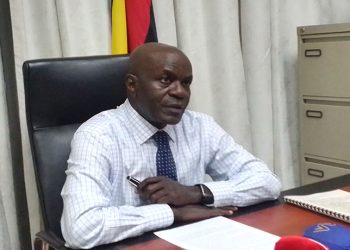
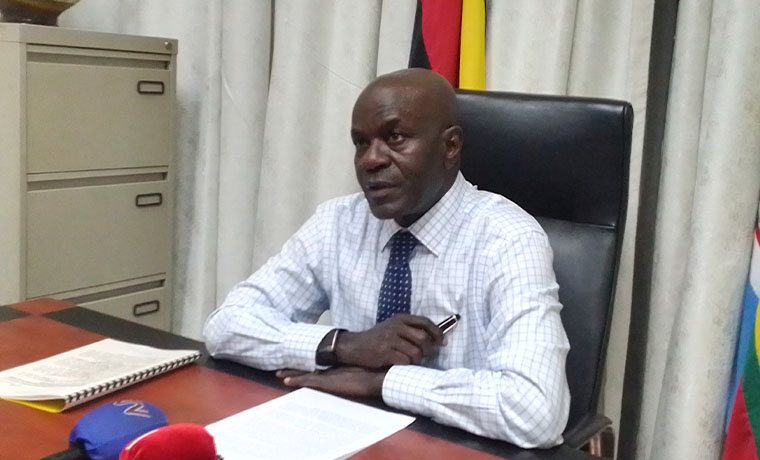
Permanent Secretary in the Office of the Prime Minister, Alex Kakooza, announced the completion of the exercise during a press conference at OPM in Kampala on Thursday.

The relief food was distributed across Kabong, Kotido, Moroto, Napak, Nabilatuk, Amudat, Nakapiripirit, Karenga and Abim, covering every parish targeted under the intervention.

The figures indicate that the government moved an average of about 30 kilograms of relief food per household, although the actual allocation would vary depending on the distribution arrangements and household needs.
Kakooza said the food was procured and delivered to beneficiaries in partnership with the National Enterprise Corporation (NEC), under the overall supervision of the Prime Minister.
The intervention involved several government institutions, including the Uganda People’s Defence Forces, Uganda Prisons Service, Uganda Police Force and local governments, which supported the distribution process.

Despite completing the planned distribution, Kakooza cautioned that the figures should not be interpreted as an end to food insecurity in Karamoja.
“We recognize that despite the successful completion of the planned interventions, there is still significant food security needs in the region,” he said.
According to the Permanent Secretary, some populations in Karamoja were not fully reached, while other parts of the country are also facing food insecurity linked to the prolonged dry season.
The scale of the intervention—nearly 9.42 million kilograms of food for almost 314,000 households—underscores the extent of the immediate food assistance required in the sub-region following the disruption of agricultural production.
Kakooza said the government would continue monitoring the food security situation in Karamoja and neighbouring districts while pursuing longer-term measures aimed at strengthening communities’ resilience to recurrent dry spells.
“The Office of the Prime Minister will continue to closely monitor the food security situation in Karamoja and neighbouring districts while coordinating both immediate humanitarian assistance and long-term resilience interventions,” Kakooza said.
He added that the government was engaging development partners to strengthen interventions aimed at protecting lives and livelihoods, guided by the recently approved Karamoja Regional Development Plan.
With the emergency distribution now complete, attention is expected to shift towards addressing the populations that were not fully reached and strengthening longer-term measures to reduce the region’s vulnerability to recurring drought and food shortages. (For comments on this story, get back to us on 0705579994 [WhatsApp line], 0779411734 & 041 4674611 or email us at mulengeranews@gmail.com).