







By Ben Musanje
A new road safety report has raised alarm over what experts describe as one of the country’s most overlooked causes of road crashes—unsafe tyres—warning that thousands of motorists continue to risk their lives by driving on worn-out, substandard and second-hand tyres amid weak regulation and limited public awareness.
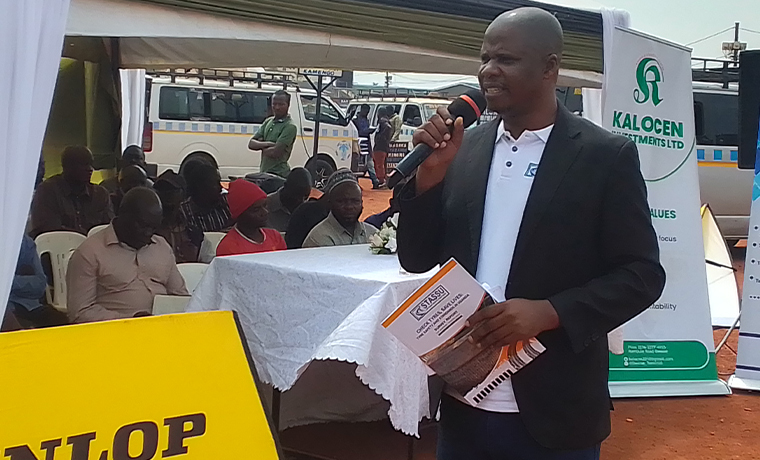
The findings were unveiled on Thursday by James Akena, Director and Founder of the Legacy Road Safety Initiative, during the launch of the 2025 Tyre Safety and Standards Report at Bwaise Transport Terminal in Kawempe division, Kampala
The report, produced by Safe Transport and Survivors Support Uganda (STASSU) with support from local and international road safety partners, paints a troubling picture of tyre safety across Uganda, revealing widespread knowledge gaps, growing dependence on second-hand tyres and a lack of reliable crash data that experts say is hampering efforts to save lives.

Presenting the report, Akena said tyre safety remains a neglected pillar of road safety despite tyres being the only point of contact between a vehicle and the road.

“Unsafe tyres are a silent but preventable threat. Every journey begins and ends with four points of contact between a vehicle and the road, yet tyre safety receives far less attention than speeding or reckless driving,” he said.
The report indicates that Uganda continues to experience an unacceptably high number of road crashes despite a decline in traffic offences.
According to police statistics cited in the report, Uganda recorded 24,635 road crashes in 2025, slightly lower than 25,107 crashes in 2024. Road casualties also declined marginally from 25,808 in 2024 to 25,112 in 2025.

However, traffic offences dropped by nearly three percent—from 426,432 cases in 2024 to 412,876 in 2025—continuing a downward trend from 528,025 offences recorded in 2023.
The report argues that this trend presents a worrying contradiction.
“Enforcement against traffic offences has improved, yet crashes and fatalities remain persistently high. This suggests that vehicle condition, particularly tyre safety and mechanical defects, is becoming an increasingly significant contributor to road crashes,” the report states.
Researchers also faulted changes in police reporting that have made it harder to determine the true extent of tyre-related crashes.
In 2023, police separately recorded 479 tyre-related crashes, including 353 tyre bursts and 126 crashes caused by defective tyres.
However, beginning in 2024, tyre-related crashes were merged into a broader category labelled dangerous vehicle conditions, which accounted for 1,722 crashes. The same reporting format was maintained in 2025.
According to the report, the change has effectively concealed tyre-specific risks and weakened evidence-based policymaking.
“Without disaggregated tyre data, policymakers cannot accurately measure the magnitude of the problem or develop targeted interventions,” Akena said.
The study surveyed 317 respondents, most of whom were boda boda operators, reflecting the group most exposed to daily road risks.
The survey found that 96 percent of respondents were male, highlighting the male-dominated nature of commercial transport in Uganda.
One of the strongest findings was the relationship between tyre type and crash involvement.
Vehicles using used tyres were significantly more likely to be involved in crashes than those fitted with new tyres.
Of the respondents using new tyres, only 10 out of 166 reported crash involvement, compared to 45 out of 151 motorists using second-hand tyres.
Researchers found the relationship to be statistically significant, concluding that the use of second-hand tyres substantially increases crash risk.
The report also uncovered a worrying gap in tyre safety knowledge.
Nearly 48 percent of respondents admitted having no meaningful knowledge about tyre safety, while only 31 percent demonstrated a good understanding of tyre maintenance and standards.
Another 21 percent said they had only heard about tyre safety but lacked detailed knowledge.
The findings become even more concerning when measured against legal standards.
Only six respondents—just two percent of those surveyed—were able to correctly identify Uganda’s legal tyre tread limit, while 71 percent admitted they did not know the legal minimum.
Researchers say this means most motorists are driving without understanding when a tyre becomes unsafe for use.
Despite these knowledge gaps, 94 percent of respondents claimed they inspect their vehicles daily.
The report, however, questions the quality of these inspections.
Researchers believe many motorists simply perform quick visual checks rather than properly examining tyre pressure, tread depth or structural damage.
“The inspections appear to focus on the general appearance of the vehicle rather than tyre condition. There is also evidence of social desirability bias where respondents may overstate safe behaviour,” the report notes.
The study also found that confidence among drivers did not necessarily translate into competence.
While 64 percent described themselves as “very confident” in checking tyre condition, the overwhelming majority could not identify legal safety requirements or correctly interpret tyre specifications.
Researchers warned that such overconfidence could itself become a road safety risk.
Further analysis revealed that respondents with previous crash experience consistently scored lower on tyre safety knowledge than those without crash histories.
Drivers who had never been involved in crashes achieved an average tyre knowledge score of 72.4 percent, compared to 58.3 percent among respondents who had previously been involved in crashes.
The report says this suggests that better tyre knowledge is closely associated with safer driving outcomes.
Speaking during the launch, Apollo Kashanku, Assistant Commissioner for Road Transport Regulation and Safety at the Ministry of Works and Transport, described the report as timely and critical.
“I think this is an extremely important report because it touches all our lives. None of us knows who will be the next victim of a road crash,” Kashanku said.
He noted that road crashes continue claiming lives at an alarming rate despite growing awareness campaigns.
According to Kashanku, Uganda loses an average of 14 people every day on its roads, with many of the victims being young people in their most productive years.
He said public transport also accounts for a significant proportion of fatalities, making improved vehicle maintenance an urgent priority.
“Mass transport has a very big role to play in improving road safety,” he said.
Kashanku also expressed concern over the increasing presence of counterfeit and poor-quality tyres on the Ugandan market.
“You go into shops and find tyres with names you have never heard of. You don’t know where they come from, yet people buy them because they are cheaper. Many of these tyres do not serve motorists well,” he said.
He called on the Uganda National Bureau of Standards (UNBS) to strengthen oversight of tyre imports and market surveillance to prevent fake products from reaching consumers.
Meanwhile, the Uganda Taxi Operators Federation (UTOFU) announced fresh efforts to eliminate mechanically defective vehicles from taxi operations.
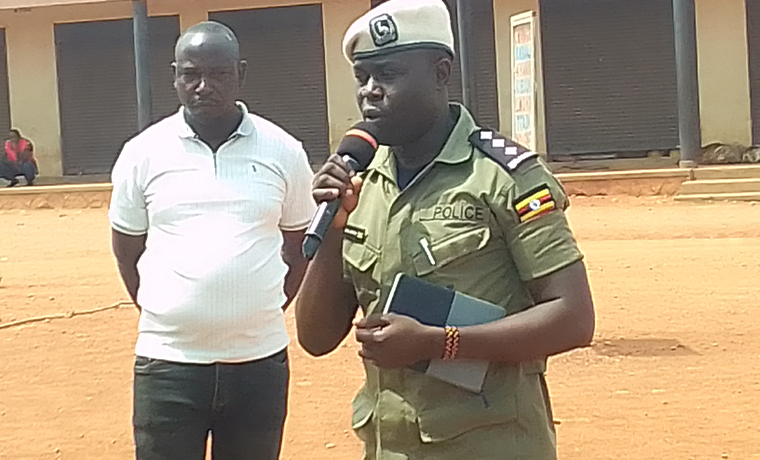
Speaking at the event, Aloysius Ddamulira, the federation’s head of security, said UTOFU had issued a one-month ultimatum to all taxi park managers to ensure vehicles with dangerous mechanical defects are repaired.
“We have written to all taxi park managements directing them to remove vehicles in dangerous mechanical condition. After one month, the Federation will begin operations to impound such vehicles before government enforcement agencies intervene,” Ddamulira said.
The report recommends restoring separate reporting of tyre-related crashes, strengthening regulation of tyre dealers, increasing public education on tyre maintenance and making quality tyres more affordable.
It also urges government agencies to integrate tyre inspections into routine roadside enforcement and periodic vehicle inspections.
Researchers further recommend targeted interventions for boda boda riders, including subsidised access to quality tyres, practical tyre safety training and regular safety clinics.
The report concludes that Uganda risks falling short of both national road safety targets and international commitments under the United Nations Decade of Action for Road Safety unless tyre safety is prioritised. (For comments on this story, get back to us on 0705579994 [WhatsApp line], 0779411734 & 041 4674611 or email us at mulengeranews@gmail.com).