








By Ben Musanje
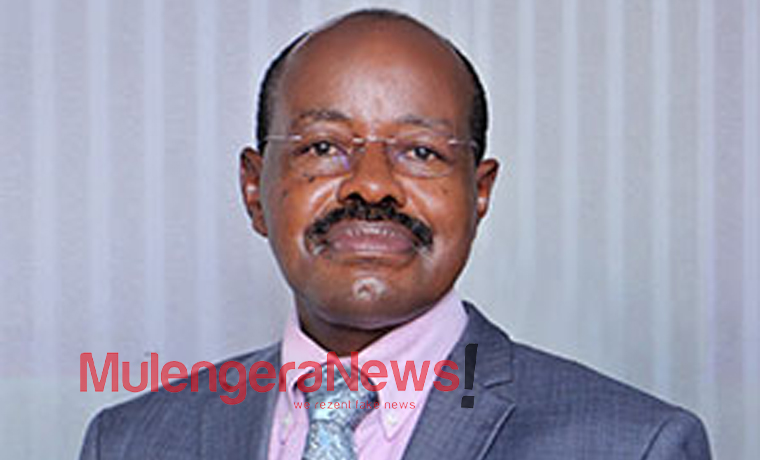
The State Minister for Finance, Planning and Economic Development, Amos Lugoloobi, has called for a deeper, value chain-driven approach to data utilization in Uganda’s aquaculture sector, warning that gaps in knowledge and high input costs could undermine the industry’s potential despite encouraging new statistics.
Lugoloobi made the remarks while officially launching the Uganda Aquaculture Census Report 2025 at Statistics House, where the Uganda Bureau of Statistics (UBOS) unveiled findings from the country’s first comprehensive aquaculture census.
The report highlights significant growth in the sector, recording 24,348 fish ponds nationwide, of which 17,108 are stocked. Total aquaculture production reached 65,444 metric tons between July 2024 and June 2025, while 273 hatcheries were documented, with an installed capacity of 200.1 million fish seed and actual production of 149.9 million.

Lugoloobi praised UBOS for addressing long-standing data gaps that previously hampered planning. He recalled challenges faced during the formulation of Uganda’s first National Development Plan, where policymakers struggled to access credible baseline data. “Now we are moving from data scarcity to abundance,” he said, noting that stakeholders may even feel “overwhelmed” by the volume of available statistics.

However, the minister cautioned that data alone is not enough. He emphasized the need for comprehensive analysis across the entire aquaculture value chain from production and inputs to processing and market access to guide effective policymaking.
“As a country, we are looking at complete value chains. The data should follow these value chains to make more meaning for planners,” Lugoloobi said, adding that the current report leaves critical gaps, particularly in identifying sector challenges and profitability metrics.
Drawing from personal experience in fish farming, the minister highlighted the risks posed by inadequate technical knowledge. He recounted a case where an investor lost billions of shillings after constructing a large fish pond for Nile perch farming based on poor advice, only to later abandon the venture. The site has since been repurposed for tourism.

“Knowledge is a major impediment in this sector. Many people do not know where to go for reliable guidance,” he said.
Lugoloobi also pointed to the high cost of fish feed as a major constraint. He explained that imported feed significantly raises production costs, often making it difficult for farmers to break even. “If we want to promote aquaculture, we must invest in feed production,” he stressed, noting that the government has already begun addressing this through new feed manufacturing plants.
The minister underscored aquaculture’s potential to drive socio-economic transformation, create jobs, boost household incomes, and improve food security in Uganda. He said the sector could also contribute to export earnings and support the country’s ambition to achieve upper middle-income status by 2040.
He further called for stronger collaboration between government agencies, researchers, and the private sector to enhance value addition, improve fish species, and expand market opportunities. Innovations such as improved fish processing technologies and better breed development, he said, could significantly increase competitiveness.
Lugoloobi also urged integration of aquaculture with other agricultural activities, such as rice farming, while ensuring environmental conservation, particularly of wetlands and water resources.
The minister encouraged stakeholders to use the census findings to inform investment decisions, particularly under government initiatives like the Parish Development Model, which aims to transition households from subsistence to commercial production.
“This report is a blueprint for the aquaculture industry,” he said. “If we use this evidence well, we shall plan better and improve the welfare of our people.”
He concluded by urging continued investment in data collection across other sectors, describing the aquaculture census as a “good beginning” that should be replicated to strengthen Uganda’s broader economic planning and transformation agenda. (For comments on this story, get back to us on 0705579994 [WhatsApp line], 0779411734 & 041 4674611 or email us at mulengeranews@gmail.com).