








By Ben Musanje
Uganda’s fight against human trafficking is revealing a troubling reality, where thousands of victims most of them children continue to fall into the hands of traffickers, often through systems that appear ordinary and trusted. New data shows that since 2020, the country has recorded 4,835 trafficking cases involving 7,581 victims, a number that reflects both the scale of the problem and its deep impact on communities.
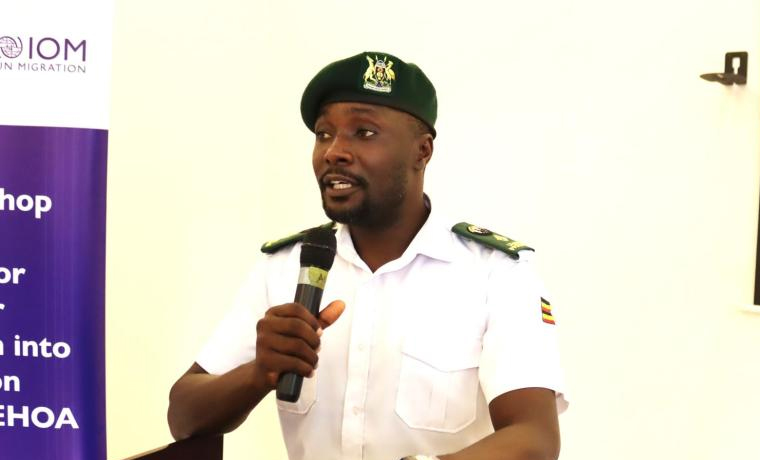
Speaking at weekly police press briefing in Naguru on April 20, 2026, Derek Basalirwa Kigenyi, National Deputy Coordinator of the Directorate of Prevention of Trafficking in Persons in the Ministry of Internal Affairs, said the figures point to a crisis that is heavily affecting young people. More than 80 percent of the victims are children below the age of 18, making them the most vulnerable group in this growing trend.
Each case, on average, involves at least two victims, showing that trafficking often happens in groups rather than in isolation. These victims are usually lured with promises of jobs, education, or better living conditions, only to find themselves in situations far different from what they were told.

One of the most concerning developments, according to Kigenyi, National Deputy Coordinator of the Directorate of Prevention of Trafficking in Persons in the Ministry of Internal Affairs, is the increasing role of local transport systems in facilitating movement. Boda boda riders have been identified as key players in moving victims, particularly through unofficial routes that bypass security checks and formal border points.

These movements often happen quietly. Victims are picked up from their communities and transported across districts or even toward border areas without raising suspicion. In many cases, the use of motorcycles allows traffickers to avoid detection, especially in regions with porous borders and limited surveillance.
Authorities say that while not all riders are involved, there is growing concern about those who knowingly or unknowingly become part of trafficking networks. Efforts are now being directed at increasing awareness within the transport sector and encouraging cooperation with security agencies to help detect and prevent suspicious movements.
A recent case in Nebbi District highlights how organized these operations have become. Five suspects were arrested after allegedly trafficking 21 young people from different parts of northern Uganda. The suspects reportedly posed as recruiters under informal company names, convincing victims that they were offering legitimate job opportunities.

Those recruited were required to pay fees ranging from 200,000 to 2.5 million Uganda shillings. Many families made significant sacrifices to raise this money, believing it would secure employment for their children. Instead, the victims were transported across regions, often without clear information about their destination or the work they were expected to do.
Among the 21 victims, nine were female, reinforcing concerns about the heightened vulnerability of women and girls. Traffickers often target individuals who are actively searching for opportunities, taking advantage of economic hardship and limited access to verified information.
Beyond internal trafficking, there are also ongoing concerns about cross-border movements. Some Ugandans are being lured to countries in Southeast Asia such as Myanmar, Cambodia, and Singapore with promises of well-paying jobs. In other cases, individuals are targeted for destinations in North Africa, including Libya, often without proper documentation or employment contracts.
Authorities have intercepted some of these attempts. In one instance, a group of young women was stopped at Entebbe International Airport after concerns were raised about their travel arrangements. Such interventions have helped prevent potential cases of exploitation.
Despite these challenges, Uganda has made progress in prosecuting trafficking-related crimes. Since 2020, 864 individuals have been convicted, reflecting efforts by law enforcement and prosecution teams to address the issue.
Support systems are also in place to assist victims. In the Nebbi case, all 21 individuals were successfully reunited with their families through coordinated efforts involving government agencies and partner organizations. However, reintegration remains a process that often requires additional support, including counseling and community assistance.
Derek Basalirwa Kigenyi, National Deputy Coordinator of the Directorate of Prevention of Trafficking in Persons in the Ministry of Internal Affairs, emphasized the importance of prevention, urging the public to verify job offers and confirm whether recruitment agencies are officially registered. He noted that simple steps, such as checking official platforms or reporting suspicious activity, can help reduce the risk of falling victim.
Communities have also been called upon to remain vigilant. Districts such as Apac, Kole, Oyam, and Lira have been identified as areas where recruitment activities have taken place, making local awareness a critical part of the response.
Uganda continues to be identified as a source, transit, and destination country for human trafficking, which means efforts to combat the crime must extend beyond national borders. Collaboration with regional and international partners remains essential.