






By Ben Musanje
The 2024–25 Uganda Malaria Indicator Survey (UMIS) was officially launched this week at Statistics House in Kampala, but no representatives from the Ministry of Health were present to attend the event.
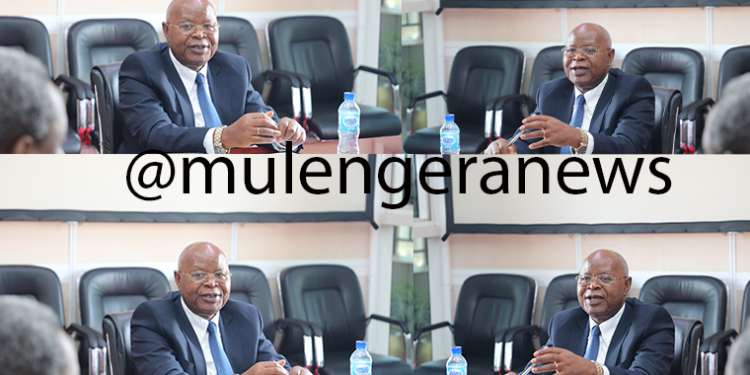
The launch was carried out by Minister of State for Planning, Amos Lugoloobi, alongside Dr. Chris Mukiza, Executive Director of the Uganda Bureau of Statistics (UBOS), who highlighted the significance of the survey in providing updated data on malaria trends in Uganda.
UBOS Public Relations Officer Didacus Okoth, acting as master of ceremonies, followed the program and formally invited officials from the Ministry of Health to address the audience. However, no Ministry representatives appeared, and the program continued with the next speakers.

Despite this absence, the speeches of Dr. Jane Ruth Aceng, Minister of Health, and Dr. Diana Atwine, Permanent Secretary, were included in the official UMIS booklet, offering the Ministry’s perspective and planned interventions.

The survey, conducted by UBOS in collaboration with the Ministry of Health, assessed malaria prevalence, prevention measures, and treatment practices across Uganda. Dr. Jane Ruth Aceng emphasized that malaria remains one of the country’s major public health problems. She outlined key government interventions, including long-lasting insecticide-treated nets (ITNs), malaria testing and treatment, intermittent preventive treatment in pregnancy, indoor residual spraying (IRS), seasonal malaria chemoprevention, and the rollout of the malaria vaccine. These interventions are part of a comprehensive effort to reduce malaria burden and move toward eventual elimination.
Dr. Aceng highlighted that the UMIS is essential for understanding how interventions are performing. The survey measures household ownership and usage of mosquito nets, the coverage of malaria prevention in pregnant women, treatment practices for children under five, knowledge and behaviour related to malaria, and the prevalence of malaria and anaemia among children aged 0–59 months.
She noted that previous surveys conducted in 2009, 2014–15, and 2018–19 recorded national parasite prevalence of 42 percent, 19 percent, and 9 percent, respectively. The current survey shows an increase in parasite prevalence, attributed to the 2022 malaria epidemic and post-COVID effects, signaling the need for renewed malaria control efforts.

Permanent Secretary Dr. Diana Atwine, in her statement, praised the coordination and implementation of the survey, thanking UBOS, the National Malaria Elimination Division (NMED), and technical partners including ICF, USAID’s President’s Malaria Initiative (PMI), the Global Fund, the Gates Foundation, and the World Health Organization (WHO).
She also acknowledged local institutions such as Mbarara University of Science and Technology (MUST) and other technical and civil society partners. According to Dr. Atwine, their contributions were critical to the successful collection, analysis, and reporting of data, which now provides a detailed picture of malaria prevalence, treatment, and prevention efforts across Uganda.
Both Dr. Aceng and Dr. Atwine outlined the government’s renewed malaria elimination strategy, which aims to achieve zero malaria deaths, reduce incidence in all districts, and eliminate malaria in 15 targeted districts by 2030. The UMIS included special sampling in refugee settlements and districts targeted for IRS in addition to the 15 sub regions, making the survey comprehensive. It also collected dried blood spot samples for molecular testing, which allows detection of low-density and submicroscopic infections that could otherwise be missed.
The survey findings paint a detailed picture of malaria trends in Uganda. While previous efforts led to reductions in parasitaemia and improvement in key indicators, the increase in parasite prevalence signals the continued risk posed by malaria. The data will guide policymakers, health officials, and partners in strengthening interventions, improving access to testing and treatment, and targeting high-risk areas, particularly among children under five, who remain most vulnerable.
Despite the absence of Ministry of Health officials at the launch, the inclusion of Minister Aceng and PS Atwine’s statements ensures that the Ministry’s position, priorities, and strategic plan for malaria elimination are clear. Experts emphasize that timely care, widespread use of insecticide-treated nets, indoor spraying, preventive treatment for pregnant women, and community engagement remain vital to reducing the impact of malaria in Uganda.
The launch of the 2024–25 UMIS at Statistics House, while marked by the Ministry’s absence, reinforces the importance of malaria surveillance and the need for continued collaboration among government bodies, technical partners, and communities to tackle one of Uganda’s most persistent public health challenges. (For comments on this story, get back to us on 0705579994 [WhatsApp line], 0779411734 & 041 4674611 or email us at mulengeranews@gmail.com).