







 By Mulengera Reporters
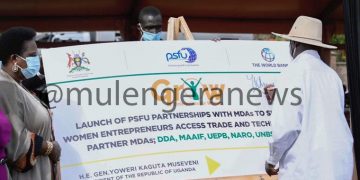
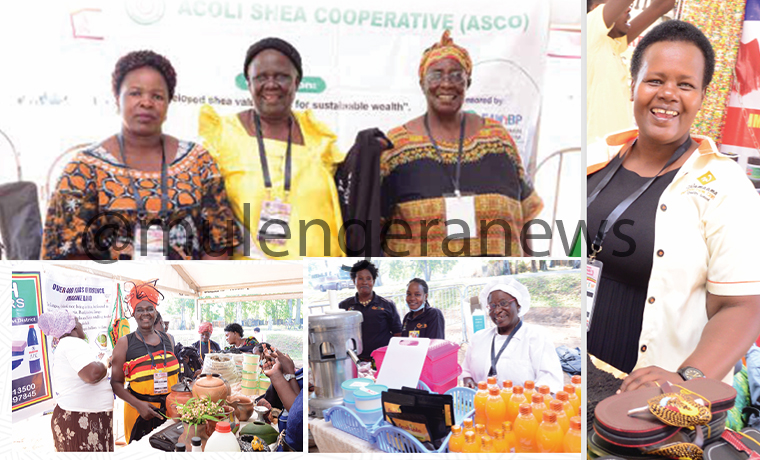
Leveraging up to $217m (roughly Shs813bn), the GoU through the Ministry of Gender, Labor & Social Development and Private Sector Foundation Uganda (PSFU) is continuing to implement the GROW Project intervention, which is aimed at strengthening and amplifying women-owned business enterprises in Uganda.
These have to strictly be micro scale or small scale business enterprises. This simply means an enterprise whose turnover is under Shs10m and has less than 5 employees (for the case of the micro enterprise) or those whose turnover ranges between Shs10m and Shs100m for small scale enterprises, which must be employing between 5 and 49 employees.
In order to emancipate women entrepreneurs and make their business enterprises durable, more successful and more sustainable, the GROW Project identifies barriers which historically have been constraining women-owned micro and small scale businesses from growing into medium enterprises-and proceeds to facilitate mitigational interventions, in order to make things easier for Uganda’s female entrepreneurs who dare dream at all.
These interventions and the intended deliverables under the GROW Project include the following products, outputs and basically things that are done under the project in order to make women-owned businesses sustainable and more resilient:

Through the GROW Project arrangement women business owners have been exposed to mentorship, networking and information-sharing opportunities. And at the district Local Government levels upcountry, this is enabled through the Women Entrepreneurships Platforms (WEPs) arrangement which is coordinated and enabled by the District Community Development Officers (CDOs) and District Labor Officers.

Dialogue platforms and sessions are organized in all districts of Uganda to facilitate direct interface between women entrepreneurs on one hand and their male counterparts and community leaders on the other. These sessions are used to discuss and agree on mitigation measures aimed at diminishing negative social and cultural beliefs and practices which, for generations, have negatively affected the economic emancipation of many would-be successful female entrepreneurs.
The GROW Project also implements a ten-module training package for women entrepreneurs and their employees working or employed in their respective micro or small scale business enterprises. It’s all skills-based training focusing on things like mindset change, personal development, digital marketing, product research, business management, financial literacy and generally how to circumvent cultural practices and beliefs that have always constrained women entrepreneurs’’ productivity and growth in the entrepreneurship space.
Women entrepreneurs have also been exposed to training sessions and modules that are trade and sector-specific. This covers areas like climate-smart agri-business activities, e-commerce, hotel management and tourism. This has opened eyes of hundreds of women entrepreneurs throughout the country.

Yet that isn’t all. Through the GROW Project intervention, trade facilitation services have been rendered to thousands of women entrepreneurs. These relate to things like product certification, business registration, product development and export promotion among others.
Several women entrepreneurs have benefited through work placement and apprenticeship arrangements which has enabled many of them to have the exposure to learn from and get to be inspired by the very best experts.
Even Muslim women entrepreneurs, who are prohibited from taking out loans with interest by their religion or faith, have been encouraged to benefit from other forms of business entrepreneurship support services that have been made available under the GROW Project.
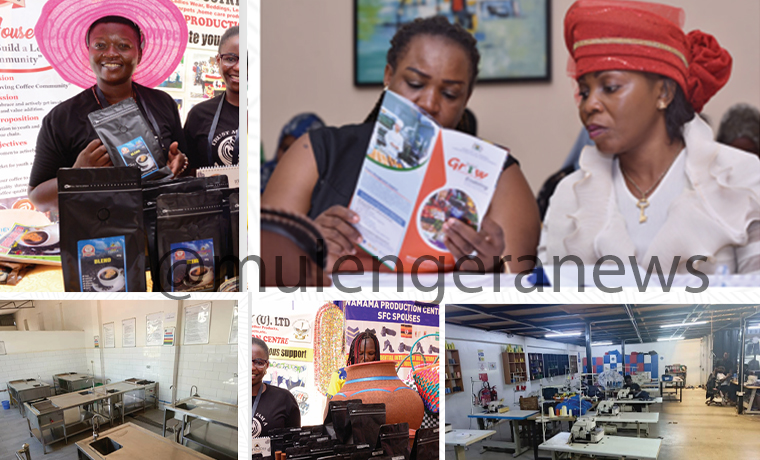
Other women entrepreneurs have benefited from GROW Project-delivered common user production facilities and children’s Early Learning Centers that have been established to specifically serve women entrepreneurs.
Non-state organizations like Uganda Women Entrepreneurs Association Ltd (UWEAL) have been engaged, under the GROW Project arrangement, to work with GROW Focal Point Officers in the Local Governments upcountry to conduct capacity building sessions through the Women Entrepreneurs Platforms (WEPs) arrangements that are everywhere and are well distributed in every district and City of Uganda.
Capacity building firms like UWEAL have also participated in mobilization, registration and preparation of women entrepreneurs to access GROW Project services. They also train them on the WEP communication and advocacy strategies.
Last but not least, those eligible have immensely benefited from the cheap capital that has affordably been made available through the selected six commercial banks and SACCOs. And gratefully, these opportunities have all been made available to women entrepreneurs in all districts of Uganda without exception. (For comments on this story, get back to us on 0705579994 [WhatsApp line], 0779411734 & 041 4674611 or email us at mulengeranews@gmail.com).