







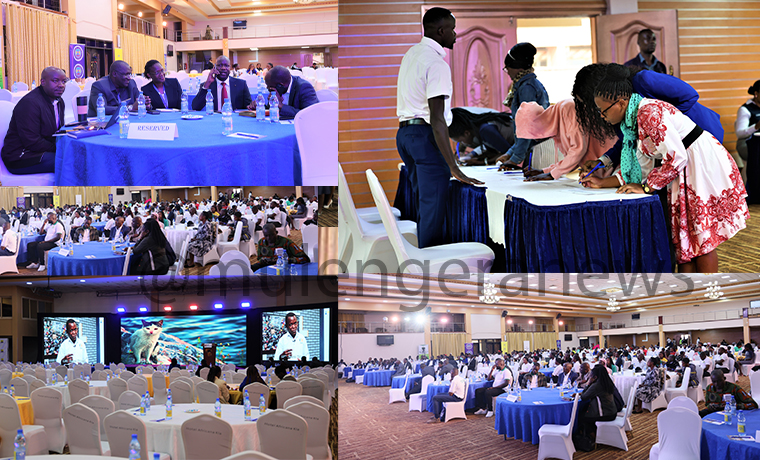
Uganda Revenue Authority (URA) and traders from across the country have agreed to hold structured and regular engagements aimed at resolving long-standing disputes and enhancing tax compliance.This decision was reached on Thursday, during the URA-Traders Dialogue held at Hotel Africana in Kampala, themed “Fostering Transparency in Trade Facilitation.”
For years, relations between URA and the business community have reportedly been marred by complaints of unfair tax assessments, harassment, and poor understanding of how different sectors operate,.and now the new engagements are meant to bridge these gaps.
“There have been misunderstandings between URA officers and traders for a long time,” said Phillip Kakembo, a textile trader from Kiyembe, who added that some of the tax assessments are not based on the actual value of goods but on guesswork. “That has hurt us,” he said.
The trader also said that they’re not running away from taxes, but they want the process to be fair and predictable. “If the cow gives you milk, don’t break its leg. All we ask for is fairness.”
Jane Naluggya, another trader, said that one wrong assessment can wipe out a small business. “You spend years building a shop, and one tax error pushes you into debt. This new relationship could protect us.”
During the meeting, URA’s Commissioner General John Rujoki Musinguzi admitted that part of the problem has been a lack of understanding on both sides.
“We have realised that in order to collect better, we must understand better. These engagements are not just about tax, they are about building a stronger business environment.”
Another issue raised during the engagement was the auctioning of impounded goods, where traders accused some corrupt officials of manipulating the process.
In response, Musinguzi said URA had digitised the entire auction system to reduce human interference and promote fairness.
“We know some people have been abusing the system. That is going to stop,” he assured the traders.
Charles Yiga, chairperson of Kampala Central Division Arcade Traders Cooperative Society, added his voice to the concerns, saying that the method of taxing goods based on weight instead of market value has caused serious losses.
“You find a trader with low-value goods paying more tax than someone with expensive items. This doesn’t make sense, and it’s killing our businesses.”
Also discussed were concerns around the groupage cargo system, where goods from several traders are packed into one container. Traders reported delays, inflated values, and exploitation by unregulated consolidators.
Musinguzi responded by urging traders to clear their goods individually where possible and to present valid invoices, TIN numbers and house bills to customs officers.
“We want to eliminate the middlemen who manipulate the process. Traders must know what documents are submitted on their behalf.”
Ronald Kwaligonza, the URA officer in charge of customs, encouraged traders to be more involved in their clearance process.
“Engage your agents. Know your TIN. Ask questions. A goat that follows the flock blindly may end up in the wrong kraal.”
In his final remarks, Musinguzi emphasised that the URA’s new strategy balances revenue collection with support for enterprise growth.
“A compliant, informed and empowered taxpayer helps the whole country grow,” he said.
Traders welcomed the move with cautious optimism, agreeing that continued dialogue and mutual respect could solve many of the problems they face.
As the country pushes towards its ambitious revenue goals for the next decade, partnerships like this may be the beginning of a fairer and more sustainable tax system. (For comments on this story, get back to us on 0705579994 [WhatsApp line], 0779411734 & 041 4674611 or email us at mulengeranews@gmail.com).