


By Mulengera Reporters
In a country where over 70% of the population survives on less than $2 a day, the idea of insurance is still seen by many as a luxury reserved for the rich. But Equity Bank Uganda is out to change that narrative, with a powerful and timely intervention.
With the launch of Equi-Life, a low-cost micro insurance product tailored for everyday Ugandans, the bank has thrown its weight behind the underprivileged who are constantly left out of mainstream financial safety nets.
According to the latest report from the Insurance Regulatory Authority (IRA), Uganda’s insurance sector is growing, gross written premiums rose from UGX 1.44 trillion in 2022 to UGX 1.6 trillion in 2023, marking an 11.29% increase.
But even with such growth, only about 4.5% of Ugandans are insured, and the majority still walk the financial tightrope with no fallback during emergencies.
“It’s time the ordinary Ugandan stopped living in fear of illness or death simply because they can’t afford insurance,” said James Sserumaga, Head of Bancassurance at Equity Bank Uganda.
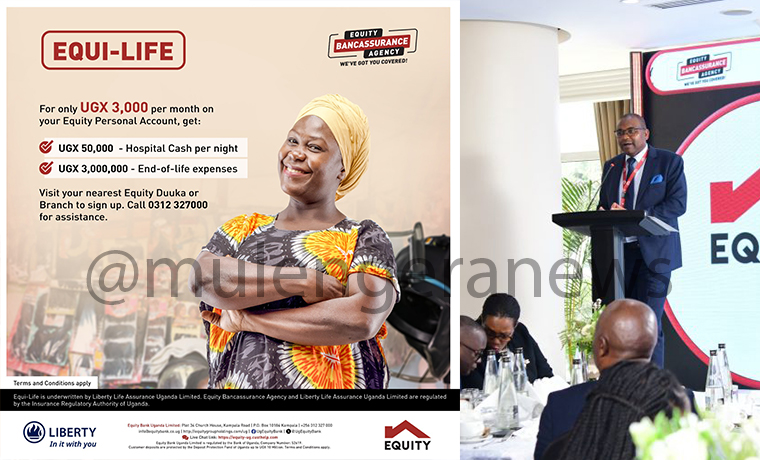
Equi-Life is designed to give peace of mind, offering a hospital cash benefit of UGX 50,000 per night (up to 20 nights a year), and a UGX 3 million end-of-life payout to the family in case of death, whether by illness, natural causes, or accident.
And the most unbelievable part is that it costs just UGX 3,000 a month.
Yes, for less than the price of a plate of food in most restaurants, any Ugandan between 18 and 75 years can now be protected, with premiums possibly paid monthly, quarterly, or yearly through standing orders from a customer’s Equity Bank account.
Equity Bank, together with Liberty Life Assurance and Turaco Micro insurance, has ensured that the entire process, from onboarding to claims, is simple, transparent, and fast.
Claims are promised to be processed and paid within just three working days.
Even better, the bank has leveraged its extensive Equi-Duuka agency network and branches to make this product available even in the most rural parts of the country.
“This isn’t just about business. This is about dignity,” Sserumaga continued. “When you walk into a hospital, you should focus on healing, not wondering how your family will afford the bills or the funeral if the worst happens.”
The claims process is straightforward, requiring basic documents such as a national ID, hospital discharge forms, or a death certificate from NIRA depending on the nature of the claim.
Exclusions do apply, such as injuries from political violence, self-harm, or unaccredited hospitals, but the coverage is broad enough to bring real relief to many.
By bringing insurance directly to the grassroots, Equity Bank is playing a vital role in shifting public perception and driving Uganda closer to true financial inclusion.
In a country where the poor are often ignored and left to fend for themselves, Equity Bank is walking the talk by protecting the vulnerable and giving them a fighting chance in times of crisis.





