






 By Mulengera Reporters
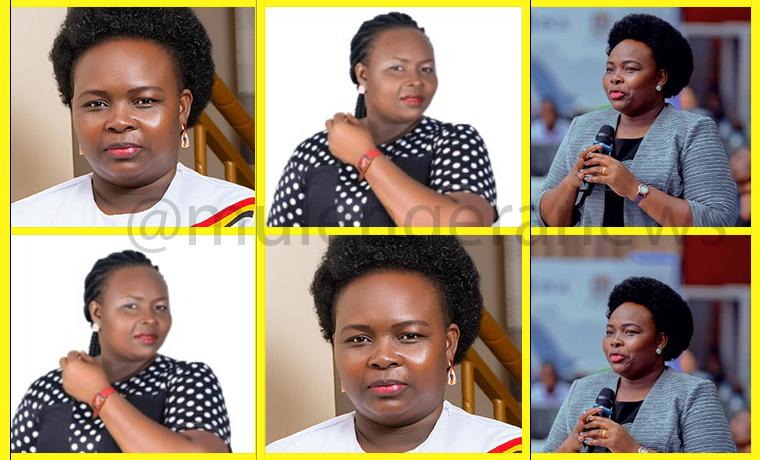
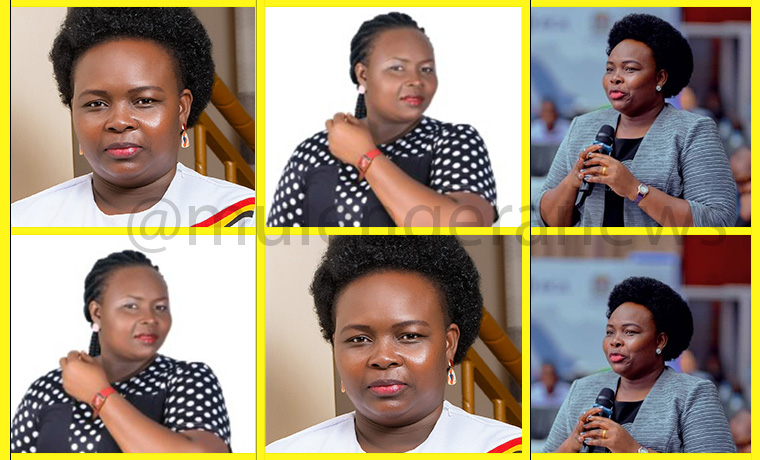
Taking advantage of the just-ended Kampala session, Jacqueline Amongin, who is one of the 9 politicians representing Uganda in the East African Legislative Assembly (EALA), called for action to sort out the problem of Female Genital Mutilation (FGM) once and for all.
She notified the Speaker of her intention to originate a private members bill (as provided for under Article 59(1) and Rule 64 of the Assembly’s Rules of Procedure) for the enactment of a regional law further prohibiting FGM for being a harmful practice and repugnant custom.
Her regional law will supplement on efforts by partner states to totally mitigate against the practice which she says has no benefit at all yet it causes physical harm to and dehumanization of women and the girl child in the region, contrary to global targets requiring FGM to be globally wiped out and stopped by the 2030, as is stipulated in the SDG.
Through this regional law, Amongin seeks to put in place a framework obliging the EAC to supplement on the partner states’ efforts to ensure that adequate medical, legal and emotional support is extended to young girls and women who continue to be victims of the FGM practice.

She also hopes that the regional law will complicate life for those continuing to propagate FGM under the guise of meeting cross border obligations and medicalization arrangements.

Reflecting on the fact that FGM has continued to be practiced and to threaten the rights and physical dignity of women aged 15-49 years and the girl child in almost all partner states (with the worst being Kenya and Somalia), Amongin told fellow EALA reps that there is need to act more urgently than many of them realize.
She asserted that the continued practicing of FGM is contrary to treaty provisions under Articles 49(1) & 51(1) plus Article 6(d) which demands gender equality among other human rights protection mechanisms. She also referred to obligations imposed under the African Charter for People’s & Human rights.
She also referred to global obligations further making FGM a prohibited practice. She also reminded members of the broader obligations the EAC has to work towards total elimination of FGM. She also referred to the Assembly’s Rule 26 as mandating her to take steps against FGM.

She also enumerated and commended partner states for enacting national laws that expressly prohibit FGM. These include the Sexual Offences Act in Tanzania; the Prohibition of FGM Act in Uganda besides the one of Kenya.
Amongin also referred to the South Sudan government which has clear provisions in its Penal Code Act that expressly prohibit FGM. She called on fellow EALA members to ride on the gender policy the Council of Ministers enacted in 2018 to expeditiously enact the regional law against FGM. She also referred to the 2016 process against FGM which has never been acted upon up to this day by the Council of Ministers. 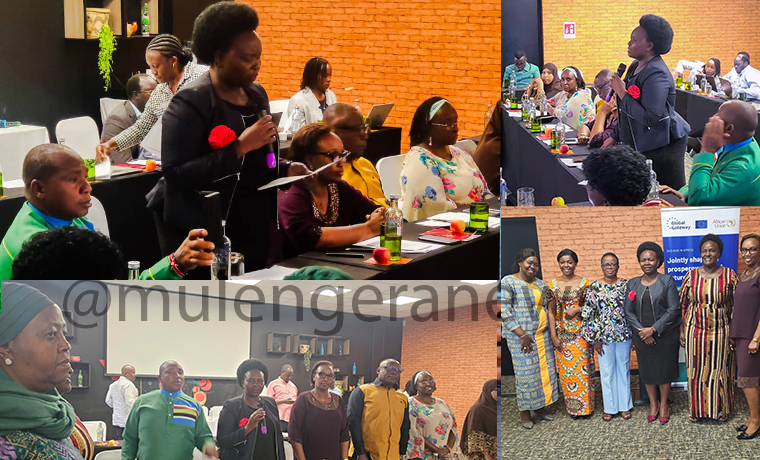
THE LARGER CASH CRISIS: Amongin’s anti-FGM activism is being undertaken at a time when the entire EAC and regional integration project is at cross roads due to the financial crisis facing all the EAC organs and establishments. You have the EAC Secretariat in Arusha that currently faces acute staff shortages amidst inability to remunerate even those it has already.
The cash squeeze, according to a source close to the Council of Ministers, is largely the result of some partner states defaulting on their annual budgetary obligations to the extent that currently roughly $30m is owed. It’s only Kenya and Tanzania and to an extent Uganda that have been able to promptly pay up. Kenya and Tanzania have paid up to $7m each and Uganda $6.9m/99% of its annual obligation.
The rest of the member states were in default as of end of March and thereby leaving Secretary General Veronica Nduva totally frustrated. Whereas EALA has had to call off sittings because of lack of money, the East African Court of Justice is chocking on backlog of cases because of inability to convene regularly.
According to EACJ President Nestor Kayobera, there are roughly 300 cases which are stuck and can’t be disposed because there is no money.
Members just convene to hear cases, whenever resources permit, as it’s only the Principal Judge and the Court President who are full time.
The court has both the first instance division and appellate division whose members convene only quarterly to handle the appeals though even this has lately been constrained. Yet the biggest challenge facing the EAC programs currently relates to staffing, with 150 slots remaining vacant.
This has resulted from the staff-hiring ban that was imposed last year due to funding gaps. Yet the staffing will even worsen in June this very year because roughly 40 very senior employees will clock retirement age and exit. There is no plan to immediately hire their replacements.
The EALA budget committee chairman Kennedy Mukulia is bitter and has been ranting about why some partner states can’t be sanctioned for failing to remit their budget contributions on time.
He believes this is why the EAC Secretariat is struggling to make ends meet. Each country annually has to pay $7m yet it’s only Kenya and Tanzania which had paid up to 100% as of end of March.
Rwanda, Burundi, South Sudan, Somalia and DRC had only paid 75%, 4%, 7%, 50% and 14% respectively.
This must be very frustrating for the Ugandan big man Yoweri Museveni who at some point had considered directing his Finance Ministry or State House Comptroller to pay up for defaulting partner states to avoid derailing the integration project.
Overall, only $31.5m (or 56%) of the anticipated $56m has been paid up so far, a thing that is greatly eroding the original enthusiasm there was in favor of the EAC project in the region’s capitals. Yet as of end of March, South Sudan was owing up to $15m implying the war torn nation had defaulted for two years.
Some EALA MPs have been demanding for regular sessions so that the Secretary General can be grilled and accorded a formal platform to respond to claims that the Secretariat hasn’t been pushing hard enough to have defaulters like South Sudan to pay up.
Some EALA reps are angry at the Council Ministers, currently headed by Kenya’s foreign affairs Minister Beatrice Askul, for directing the Secretary General to diminish the number of EALA sittings to avoid escalating the problem of unpaid sitting allowances.
Even the option of virtual EALA sessions was rejected on grounds that the Secretariat had no money to even provide data to enable such zoom meetings.
DRC has turned out to be a liability yet there was euphoria at first that her membership would boost trade within the region.
There is anger that even when its staff members and EALA representatives get fully remunerated monthly, DR Congo has only contributed $1m out of the required $7m since becoming EAC member.
It’s spokesman Patrick Muyaya says that DRC remains enthusiastic about the EAC project except that fighting in the East part of the country has drained their financial resources.
In Kinshasa, there are also concerns that prominent EAC members Kenya and Rwanda are unwilling to decisively condemn and denounce M23 rebels.
Burundi remains constrained and their FY commences in January and ends in December as opposed to running between July to 30th June of the subsequent year as is the case with other EAC partner states.
With donors out of the picture, the struggling EAC Secretariat currently can only afford to pay salaries for the 400 employees it has. These earn monthly salary without doing any productive work currently.
Senior level positions at level of head of department remain vacant and this is the case with departments like legal, communications, immigration, labor and finance. The SG Veronica Nvuda has had to improvise to keep the Secretariat going.
Some of the MPs from compliant countries like Kenya and Tanzania are mooting the idea of having staff contributed by defaulting countries begin missing out on their monthly salary and other benefits. (For comments on this story, get back to us on 0705579994 [WhatsApp line], 0779411734 & 041 4674611 or email us at mulengeranews@gmail.com).