




By Aggrey Baba
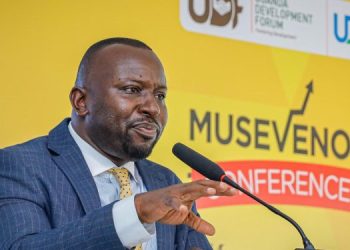
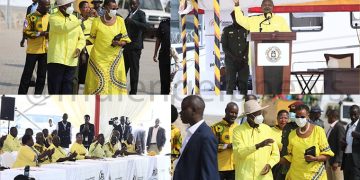
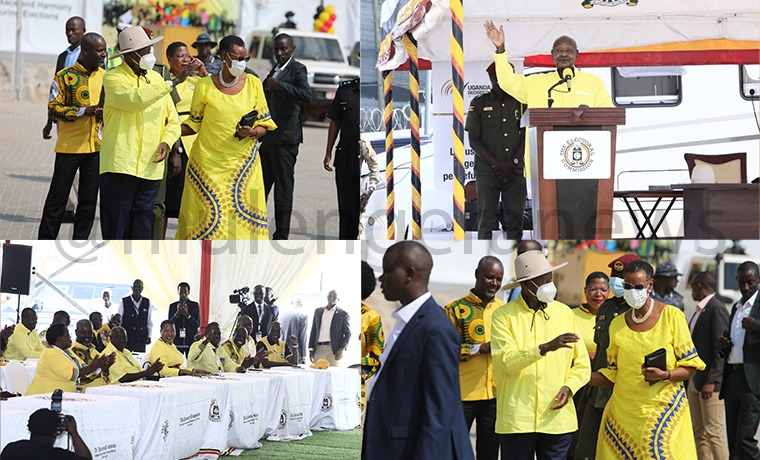
Addressing NRM supporters during his nomination rally at Kololo, on Tuesday, President Yoweri Museveni unveiled a strategic initiative aimed at integrating the remaining 32% of Ugandans into the formal money economy.
This plan, central to his 2026–2031 manifesto, seeks to elevate households from subsistence livelihoods to self-sustaining wealth through targeted empowerment programs.
Museveni emphasized that while Uganda has made notable progress in economic development, even achieving a middle income status, a substantial portion of Ugandans remains outside the money economy. He termed this as the “last mile” in the National Resistance Movement’s (NRM) mission to eradicate poverty and achieve household-level wealth creation.
The strategy focuses on elevating individuals from subsistence farming and informal trade into the formal economic sector.
Key components of the integration strategy include financial inclusion initiatives, skills development and vocational training, market access and infrastructure development, support for small and medium enterprises (SMEs), and promotion of digital literacy and e-government services, measures which aim to bridge existing gaps and provide the necessary tools for individuals to transition into the money economy.
While the plan is ambitious, it faces challenges such as limited infrastructure, low literacy rates in rural areas, and resistance to change among traditional communities. However, these obstacles present opportunities for targeted interventions, such as community sensitization programs and partnerships with non-governmental organizations (NGOs) to facilitate grassroots mobilization.
The President’s focus on integrating the remaining 32% into the money economy reflects a commitment to inclusive growth and sustainable development. If successfully implemented, this strategy could transform Uganda’s economic landscape, reducing poverty and fostering a more equitable society.