




By Aggrey Baba
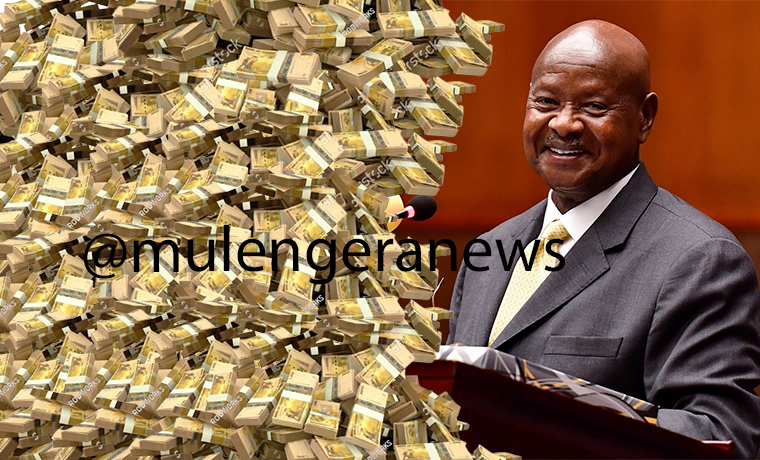
President Yoweri Museveni has proposed a substantial increase in government funding for political parties with MPs, aiming to reduce foreign interference in Uganda’s politics.
The proposal, which would see funding rise to Shs 200 million per MP annually starting in 2026, is part of a broader effort to bolster domestic political independence in anticipation of oil revenues.
As of today, the government allocates approximately UGX 100 million per MP per year to political parties represented in Parliament. Under the proposed plan, the total funding for political parties could rise to Shs 90 billion, up from the current Shs 44.9 billion, as the country prepares to tap into the wealth generated by oil exports.
This initiative is seen as a response to the president and NRM officials describe as the growing influence of foreign resources in Uganda’s political sphere.
By increasing funding for domestic political entities, Mzee aims to limit external financial influence, asserting that it’s time to “kick foreigners from our politics.”

“Uganda must be in control of its political future, and part of that control comes from ensuring our political parties are funded locally,” Museveni reportedly stated during a recent meeting with senior NRM leaders. The government’s hope is that, with the country’s anticipated oil revenues, it will be better equipped to support national priorities, including political stability and institutional development.
Under the current financial framework, the state disburses funds to the political parties based on their representation in Parliament, and in the most recent budget, the ruling NRM party received the lion’s share, of UGX 34.1 billion, while opposition parties, including the National Unity Platform (NUP) and the Forum for Democratic Change (FDC), received smaller portions. The Democratic Party (DP), Uganda People’s Congress (UPC), Justice Forum (JEEMA), and the People’s Progressive Party (PPP) also received varying amounts.
Should the proposal come into effect, the total funds available for distribution would likely increase significantly, and some analysts see this as a double-edged sword.
While it may provide more resources to smaller parties, critics argue that the NRM could use the funds to tighten its grip on political power. The fear is that the additional funding may not lead to a genuine pluralistic political system but rather serve as a mechanism to maintain control under the guise of diversity.
Opposition leaders have already voiced concerns, suggesting that this funding could be used to give an unfair advantage to parties aligned with the government, thereby undermining democratic integrity.
However, government officials counter that the proposal is about ensuring the sustainability and independence of political parties without relying on external donations, which are often tied to foreign agendas.
The NRM insists that boosting local party funding will allow Uganda’s political institutions to mature, free from the influence of foreign entities.
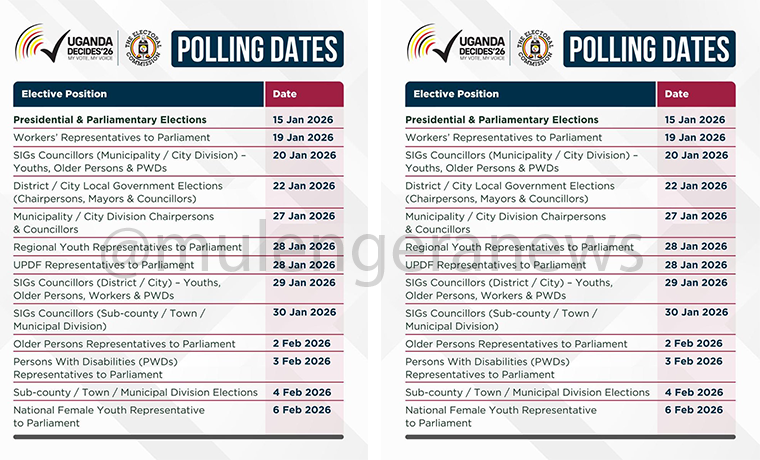
As discussions unfold, the debate over the balance between foreign and domestic influence in Uganda’s politics will undoubtedly intensify, but how this proposal will impact the 2026 elections, and Uganda’s political dynamics more broadly, remains to be seen. (For comments on this story, get back to us on 0705579994 [WhatsApp line], 0779411734 & 041 4674611 or email us at mulengeranews@gmail.com).