





By BM
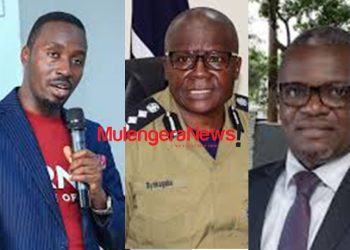
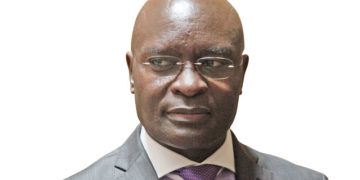
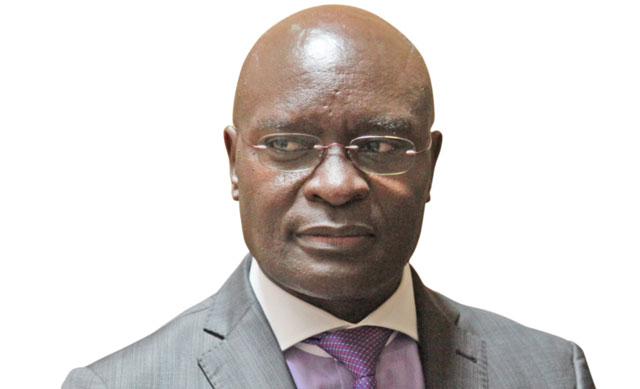
Justice Simon Byabakama, the Chairperson of the Electoral Commission, stunned a hall full of youth at the Nakawa-based United Nations African Institute for the Prevention of Crime and the Treatment of Offenders (UNAFRI) with a charged and emotional speech, slamming unruly presidential candidates and election lawbreakers.
Byabakama accused certain political aspirants of steering Uganda down a dangerous path of violence and lawlessness.


He said that such individuals could not be considered leaders, but rather destroyers who were indifferent to the wellbeing of ordinary Ugandans.
Referring to the 2020 elections, he recounted how one particular candidate behaved with outright disregard for the law allegedly blocking roads with convoys, and even going so far as to sit in the middle of the road as if the rest of the country existed only to serve him.

Byabakama emphasized that traffic laws applied to everyone, including presidential candidates, and that no one was above the law.
He recalled how, during the COVID-19 pandemic, the Electoral Commission had made it clear that mass rallies could not be held due to public health risks.
However, some candidates had outright defied this directive.
He said that one such candidate had challenged the existence of COVID-19 regulations, denying there was a relevant law, and dismissed the severity of the pandemic.
When the candidate was cautioned to follow the rules, Byabakama said he turned around and claimed he was being unjustly arrested and targeted by authorities.
The EC boss warned that the country could not tolerate this kind of behavior.
He noted that when enforcement agencies tried to intervene, some candidates and their supporters would resist and trigger chaos, knowing full well that a reaction would draw media attention.
He said this led to children crying, homes being disrupted, and communities thrown into turmoil.
Despite the political noise, Byabakama urged calm.
He reassured the audience that Uganda would continue to exist with or without certain individuals because its survival depended on divine providence, not political ego.
Justice Byabakama said that as long as the sun continued to rise and the country remained fertile, Uganda would endure.
He challenged the notion that money should determine political leadership.
Byabakama described scenarios where candidates arrived in regions like Mbarara with bags of cash, donated money to repair schools, and used this generosity to win support regardless of the source of the funds.
He expressed concern that the unchecked use of money in politics would result in corrupt and unfit leaders occupying positions of power.
In an animated moment, he asked why campaign finance laws hadn’t yet set limits on how much money an aspirant could use, saying that the origins of such campaign wealth should be made transparent.
He mocked the performative theatrics of some candidates mentioning how one came to his nomination dressed in a suit but without shoes, and questioned whether such stunts really met the standards for presidential qualification.
Byabakama concluded his remarks by encouraging young people to act with wisdom, stay within the bounds of the law, and not be swayed by political dramatics.
He reiterated that the Electoral Commission’s regulations were not meant to block candidates but to ensure peace and order throughout the election process.
In a rare moment of unfiltered truth, Justice Byabakama reminded Ugandans that democracy was not about lawlessness, drama, or deep pockets—but about integrity, discipline, and the rule of law. (For comments on this story, get back to us on 0705579994 [WhatsApp line], 0779411734 & 041 4674611 or email us at mulengeranews@gmail.com).