




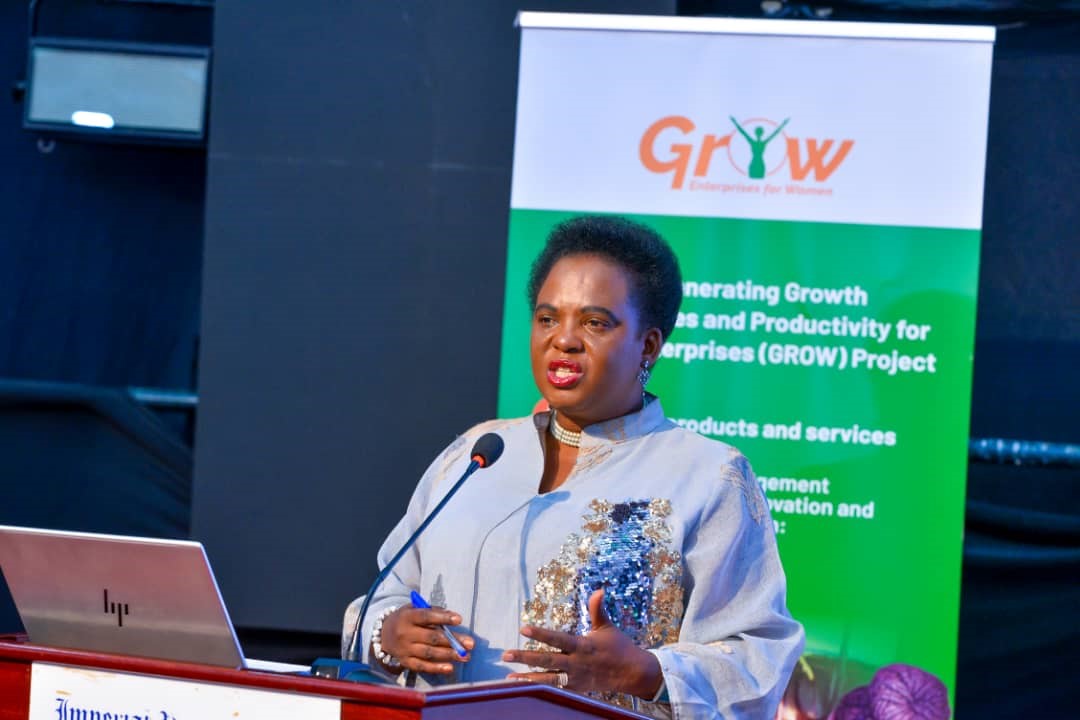
 By Mulengera Reporters
Funded with a World Bank grant of $217m (through the IDA), the project will run up to December 2027. The Gender Ministry and Private Sector Foundation Uganda (PSFU) will be the implementing agencies on GoU’s behalf.
Officially called “GROW enterprises for Women,” the project is meant to benefit women in all districts of Uganda through supporting their enterprises the very reason many have have continued perceiving or construing it as coming in to cure the imperfections and bottlenecks identified under UWEP which the same Gender Ministry used to implement before the money was taken away to strengthen the PDM.
To ensure inclusiveness, the project has had a unique component meant to emancipate women among the refugee community and their hosting communities.
The WB considered Uganda for this grant to be able to deepen access of struggling women to entrepreneurial services because of its fantastic statistics namely that-MSMEs started by women in the preceding 5 years managed to create 50% of the formal jobs we currently have in the country besides being a source of livelihood for not less than 3m people.
Uganda, which is also accepted as the globe’s most entrepreneurial country, also has the largest number of women-owned businesses on the African continent. This is according to the WB.

Yet that isn’t all as to why the WB found Uganda attractive and irresistible for this women entrepreneurs’ grant.
The 2020 Mastercard Global Index of Women Entrepreneurs established that 40% of business operations in Uganda are owned by females.
The challenge was that most of the women-led enterprises didn’t grow beyond the micro level yet male-owned business firms had twice higher chances to succeed.
It’s against this background that the WB offered to intervene to help mitigate against factors responsible for this saddening reality. The idea was and remains to enhance women entrepreneurs’ ability to effectively tap into available opportunities to do even better.
The identified barriers constraining women in the private sector businesses’ space were identified to include those related to gender discrimination when it comes to accessing credit financing, skills inequality, exclusion from tech-enabled opportunities, limited access to critical infrastructure such as childcare facilities and even markets.
The GROW project (which in full is Generating Growth Opportunities & Productivity for Women Enterprises) had to come in as an intervention to support women entrepreneurs to grow and transition their businesses from micro to small and eventually to medium size enterprises.
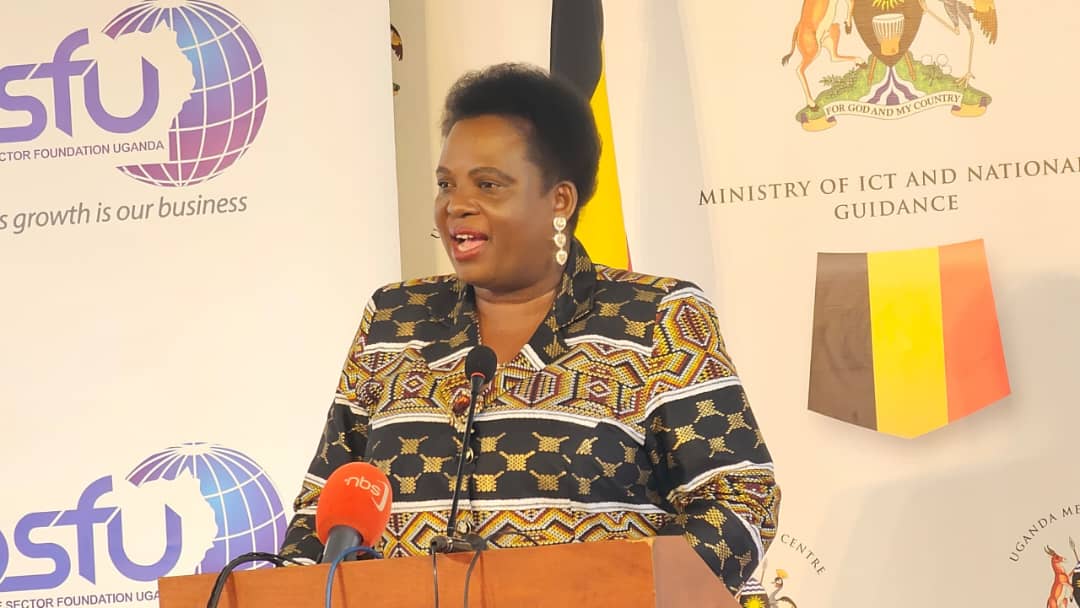
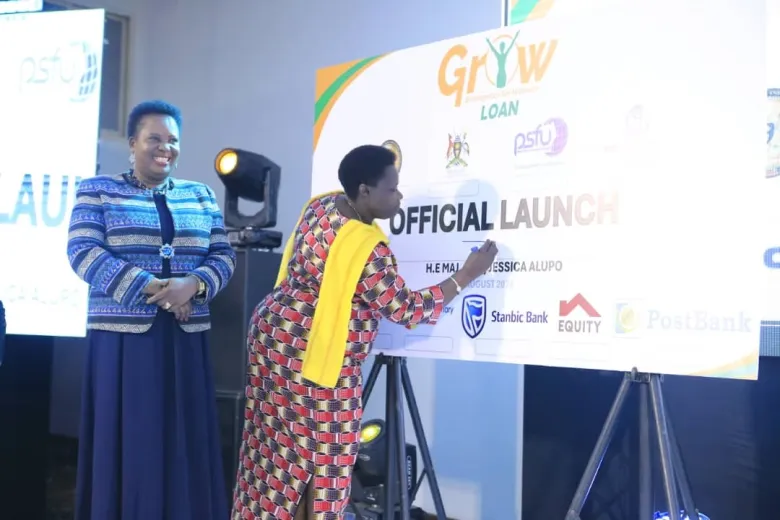
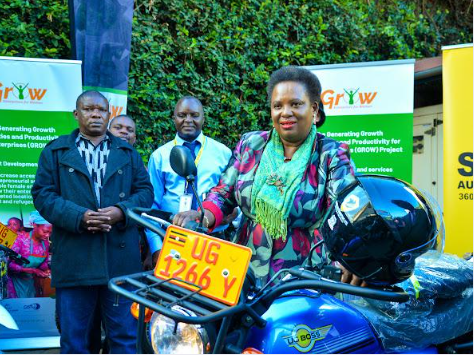
Gender Minister Amongi explained to the more than 100 government officials who assembled at Kololo for the intervention’s official launching ceremony that the project was aimed at accelerating the GoU’s long term development objectives as had been articulated in NDP III which specifically was about deepening women’s economic empowerment and meaningful involvement in leadership and decision-making processes.
This was to be amplified through involving women into spaces like business centers and entrepreneurship programs.
Through the GROW project intervention, the GoU (besides contributing $27.3m as counterpart funding) sought to be empowering or facilitating the country’s lower level women entrepreneurs to overcome barriers that had been constraining them in terms of financial inclusion, access to business development services and mindset change. The desired outcome was to have more and more such women entrepreneurs getting involved in the country’s development processes.
Taking up not less than $42m of the total grant money, Makerere University Business School (Mubs) was engaged to conduct trainings aimed at equipping women groups with technical and life-changing skills while leveraging on IT-enabled digitized way of doing things.
The women groups, in especially refugee-impacted communities, were to also be accessed onto business advisory services aimed at enhancing networking abilities among them besides value addition and market linkages.
The Mubs-spearheaded business advisory services also sought to effectively mitigate against negative cultural and social norms which frighten or discourage women not to engage in business activities.
The other project component relates to the $90m which had to go into increasing women entrepreneurs’ access to credit financing which is very critical for the sustainability of their business activities. The idea was to grow or transition these business operations from micro, to small and eventually medium enterprises.
This continues to be a welcome intervention because access to credit finance has for long been a major constraint to women entrepreneurs seeking to expand their business operations.
Another $70m had to go into expanding the availability of and access to common user facilities (like childcare infrastructure) whose absence had for long been slowing down economic growth and participation by especially young mothers of the economically very productive age. The Gender Ministry described this to be the badly-needed supportive economic and social infrastructure which had to be the game-changer for many economically active young mothers.
The fourth component related to the $15m which had to go into management, research and innovation-related activities to ultimately guide on evidence-generation for future interventions and policy-making.
The same project also sought to enable the GoU develop a template to facilitate up scaling of productivity in women-led and owned business enterprises. The WB offered to mobilize other partners to support capacity building interventions for both the Ministry of Gender and PSFU.
During the launching ceremony at Kololo, besides Amongi, other speakers included PSFU Vice Chairperson Sarah Kagingo, Dr. Aisha Kasolo Biyinzika and others. (For comments on this story, get back to us on 0705579994 [WhatsApp line], 0779411734 & 041 4674611 or email us at mulengeranews@gmail.com).