








 By Aggrey Baba
Hon. Beti Kamya, the Inspector General of Government (IGG) has sounded a fresh alarm over Uganda’s growing corruption crisis, revealing how top officials have mastered the art of stealing public funds without leaving a trace.
Kamya said, according to today’s Newvision that the biggest problem in fighting corruption lies in how senior government officials use junior staff to do their dirty work, making it nearly impossible to hold the real masterminds accountable.
“Most of the time, when we investigate corruption cases, we only catch the small fish,” Kamya said. The real thieves are the bosses. They never sign anything. They issue verbal orders and leave their subordinates to take the fall.”
During last year’s anti-corruption coalition event held at Four Points Hotel in Kampala, Kamya revealed that Uganda loses more than UGX 9 trillion to corruption every year. Yet, despite the staggering loss, the real culprits often walk free because their names never appear in any official transactions.
She noted that many senior officials are now hiding their stolen wealth under the names of workers like shamba boys and drivers, adding that a minister can embezzle billions and construct a shopping mall in Kampala, but when we follow the paperwork, it belongs to a shamba boy. “So how do you prosecute that?”

In her keynote speech, Kamya also pointed to the growing number of luxurious buildings in Wakiso and Mukono, which she said are allegedly owned by high-ranking officials, but registered in the names of other people, making it difficult for authorities to prove ownership.

She advised junior public servants to demand written instructions for any questionable transactions and to report any threats or coercion to the IGG’s office.
“Even if your boss is powerful, come to us. We will protect you,” she said, adding that it’s hard to fire a civil servant, so they should use that to stand up for what is right.
The IGG emphasized the need for a bottom-up approach to tracking corruption, starting with small irregular financial flows and following them up to the top offices. “We are following the money, step by step. Sooner or later, we will connect the dots,” she said.


Despite the introduction of the lifestyle audit campaign in 2021, Kamya admitted that no major arrests have been made yet. But she insisted that investigations are ongoing and the net is tightening. “We are getting closer. And when we catch them, it will be big,” she said.
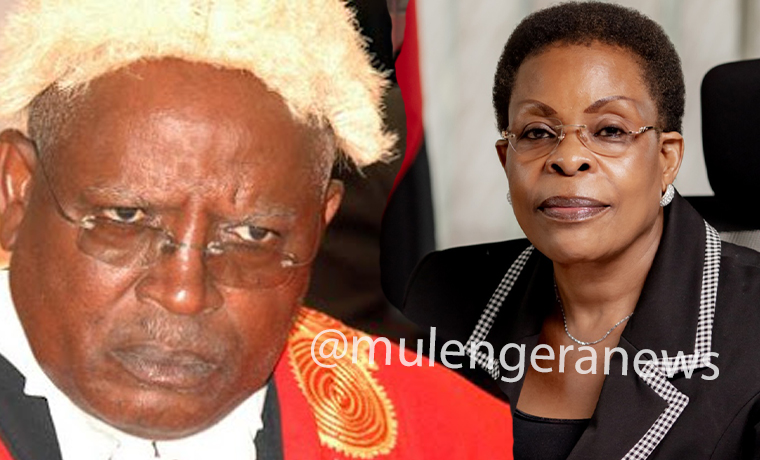
Her comments echo those of retired High Court judge John Bosco Katutsi, who once led the Anti-Corruption Court. He described corruption in Uganda as “a bushfire” protected by powerful individuals with godfathers and deep pockets.
Civil society leaders, including Marlon Agaba from the Centre for Constitutional Governance, have also criticized the system, saying the law continues to shield the big fish while junior officers become scapegoats.
According to Kamya, Uganda’s corruption fight must focus on the top, not just the bottom. And the public must help expose the truth, no matter how dangerous it may seem. (For comments on this story, get back to us on 0705579994 [WhatsApp line], 0779411734 & 041 4674611 or email us at mulengeranews@gmail.com).