





By Ben Musanje
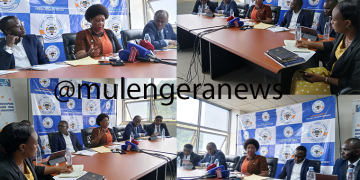
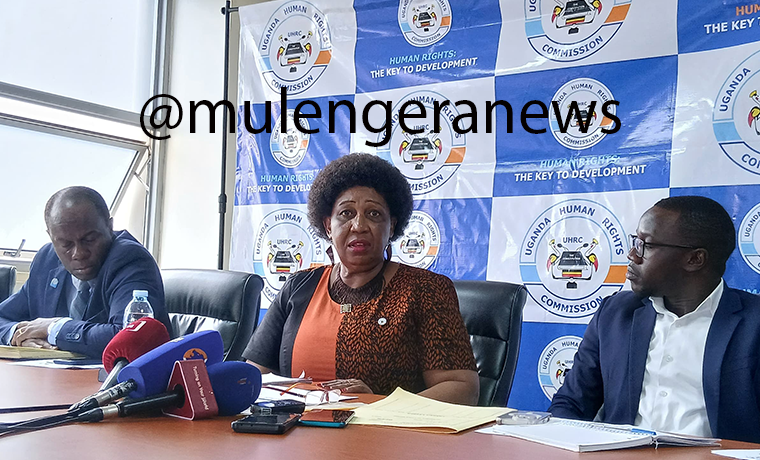
The Uganda Human Rights Commission headquarters on Lumumba Avenue turned into a moment of raw truth on Friday as Chairperson Mariam Fauzat Wangadya openly confessed something no one expected from a national leader: she believes she is the most unliked chairperson the Commission has ever had since its creation nearly 30 years ago.
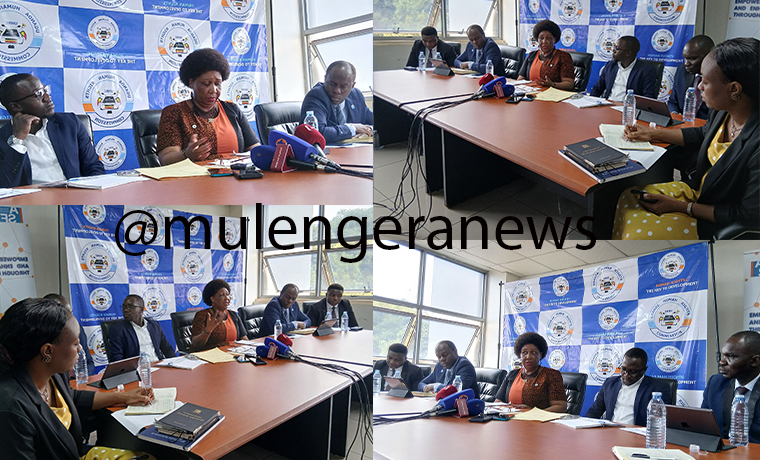
Speaking during a joint press conference to commemorate International Human Rights Day 2025, Wangadya abandoned the usual polished official tone. Instead, she delivered a deeply emotional, brutally honest explanation of the heavy criticism, hostile attacks, and public pressure that she says have made her job almost unbearable.
“We condemn acts of violence against police, but we don’t go deep enough the way we do when condemning violence against civilians,” she admitted. “I must confess this is out of fear. I think Maria Wangadya is perhaps the most unpopular chairperson since this commission was established in 1996.” Looking at the journalists in the room, she added, “You are listening to the most unpopular chairperson ever, and you, as journalists, you know this.”

Wangadya said she has been widely perceived as being biased in favor of the police, a claim she strongly denies but says has affected her deeply.

She explained how newspapers, especially cartoons, have targeted her for years. “There is one of the daily publications where every cartoon about me is very negative,” she said. “I’m drawn dressed in yellow everything. I’m shown talking about human rights while sitting on a heap of torture complaint files, doing nothing about them.”
Wabgadya revealed that the attacks have not been limited to the media. “One time, a group calling themselves Torture Survivors of Uganda physically wanted to throw me out of office,” she stated. “They surrounded my office and demanded that I must vacate because I am biased.”
Soon after, another group of women identifying themselves as widows of missing NUP supporters stormed the same building and issued the same demand. “With time, it works on you,” she confessed. “You fear to go deep enough.”

Wangadya described how she has seen shocking cases where policemen were beaten, lynched, and even killed while performing their duties. She mentioned incidents in districts like Uganda and Dokolo, where officers were murdered while enforcing the law. “It’s not true that we have not condemned atrocities against the police,” she said. “But we are also intimidated.”
She added that even simple statements now require great courage. “To say that sometimes the police are pelted with stones, I know it is a fact, but I needed a lot of courage to say it.”
Her voice softened as she spoke about how the pressure follows her home. “Those cartoons, the articles, the editorials aimed at me… sometimes they cut very deep,” she said. “When your son tells you, ‘Mum, why don’t you quit this position?’ that goes deep.” She described how journalists and the public sometimes press her so hard that her “tough skin” begins to wear thin. “I suffer a lot of tongue-lashing,” she said. “Sometimes it really works on you.”
She also highlighted a major imbalance in the types of complaints received by the Commission. “They criticize the police even for minor infractions,” she said. “And maybe that partly explains why 99.99% of complaints we receive are from civilians, not from police.”
As a pioneer member of the Commission, she said she could count only two or three complaints ever brought by police officers in all her years of service, compared to the thousands filed by civilians.
Her emotional confession came at a symbolic moment for the Uganda Human Rights Commission. Established in 1995 under the new Constitution and operationalized by the 1997 Human Rights Act, the institution will celebrate 30 years of existence with a mega ceremony organized in October next year (2026).
Over those three decades, it has had only three chairpersons: Margaret Sekaggya as the pioneer leader, Meddie Ssozi Kaggwa who served until his death in 2019, and Mariam Fauzat Wangadya, appointed on 29 September 2021 to fill the vacancy.
As she concluded her response to the journalist’s question, Wangadya looked exhausted yet relieved, as though releasing a burden she had carried for years. “I think I have answered your question,” she said softly. But the room knew she had given far more. She had shown Uganda the emotional weight of being its most criticized human rights boss at a time when the Commission stands on the brink of its 30th anniversary, a milestone overshadowed by the storm of public judgment swirling around its leader. (For comments on this story, get back to us on 0705579994 [WhatsApp line], 0779411734 & 041 4674611 or email us at mulengeranews@gmail.com).