





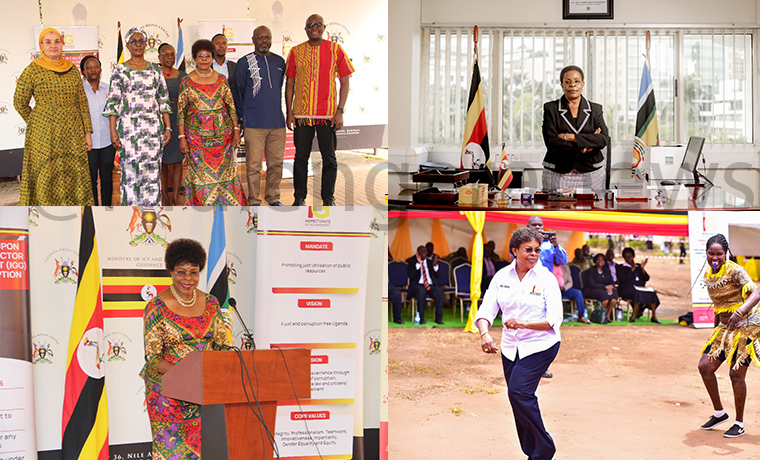
The Inspectorate of Government (IG) has reported notable progress in Uganda’s fight against corruption, with over 2,200 cases investigated and billions of shillings recovered last year.
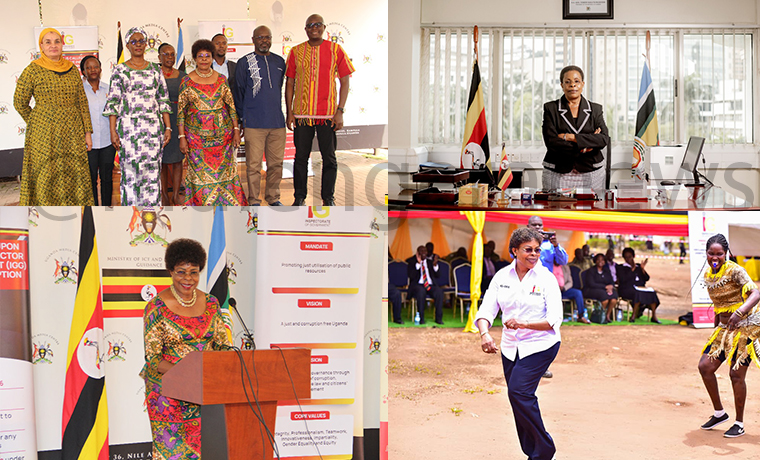
The announcement was made by the Inspector General of Government (IGG), Beti Olive Kamya, while addressing journalists on Friday as Uganda joined the rest of Africa to mark Africa Anti-Corruption Day.
Held annually on July 11, the day commemorates 22 years since the African Union adopted the Anti-Corruption Convention in Maputo. However, Kamya said Uganda (and Africa at large) still has a long way to go before corruption can be truly defeated.
She painted a picture of Africa’s losses to graft, revealing that Africa loses about $140 billion (UGX 532 trillion) every year to corruption. Uganda’s share of that loss stands at $2.7 billion — roughly UGX 10 trillion.
The IGG said that if such resources were recovered and invested through government programs like the Parish Development Model (PDM), each of Uganda’s 10,000 parishes could receive UGX 1 billion a year. This, she argued, would amount to about UGX 2 million per person every year, enough to transform livelihoods at the grassroots.
She decried the irony of Africa’s wealth, holding 40% of the world’s gold and 65% of fertile land, against its continued poverty, vulnerability, and exploitation. Kamya blamed this largely on systemic corruption.
Uganda’s Corruption Perception Index in 2024 stood at 27%, well below regional performers like Rwanda and Botswana, each at 57%. Despite the statistics, Kamya expressed hope, citing growing public awareness and willingness among Ugandans to confront corruption.
A key shift in strategy, she explained, is taking the anti-corruption campaign directly to the public, by mobilising ordinary citizens to see themselves not just as victims, but as active fighters against the vice.
“We are taking this war to the people,” Kamya said. “We want Ugandans to stop admiring ill-gotten wealth and instead ask them to explain how they acquired that money.”
She said increasing numbers of citizens are reporting suspected cases, helping authorities uncover major corruption schemes. The IGG commended whistleblowers, noting that several significant cases were triggered by public tips.
Kamya also lauded President Yoweri Kaguta Museveni for his ongoing support in the anti-corruption fight, and credited First Lady Janet Museveni for using her 77th birthday to reignite the national conversation on integrity.
From January to December 2024, the inspectorate registered strong performance across key areas, with a total of 2,218 corruption-related cases investigated and concluded. These led to administrative actions (including interdiction and dismissal) against 1,204 public officials across ministries, agencies, and local governments.
Financially, the IGG’s interventions resulted in the recovery of nearly UGX 7 billion from corrupt transactions, with UGX 13.3 billion ordered for payment to rightful individuals, and a further UGX 3.3 billion recovered through the IG’s board actions.
The IGG also recommended 16 public officers for prosecution at the Anti-Corruption Court, and referred 37 cases to the Leadership Code Tribunal for disciplinary action. Both institutions recorded a combined conviction rate of over 94%.
Kamya also revealed that the Inspectorate carried out inspections on over 1,200 government projects and conducted 53 unannounced spot checks, helping to promote transparency and ensure value for money in public spending.
One of the biggest challenges, the IGG said, is tackling syndicated corruption, where organized networks of public officials are involved in misappropriation of funds, especially at lower and mid-levels of government.
She urged the public to report such cases and stop protecting officials who flaunt sudden wealth.
Kamya said the inspectorate is working closely with the media and civil society to expand its public education campaigns, adding that citizens, especially the youth, will be empowered as anti-corruption ambassadors in their communities.
She also highlighted Uganda’s growing influence in the regional and international fight against corruption, including her Institution’s role in the Inter-Agency Forum that brings together all national anti-corruption agencies, and Uganda’s current leadership of the East African Association of Anti-Corruption Authorities.
Kamya described the anti-corruption fight as “a people’s war” and urged every Ugandan to take part, saying that lasting change would only come when citizens everywhere stand up against abuse of public resources.
“If we all fight corruption in our own spaces like in schools, hospitals, offices, and markets, we shall not only defeat the vice, but also improve services and grow our country,” she said. (For comments on this story, get back to us on 0705579994 [WhatsApp line], 0779411734 & 041 4674611 or email us at mulengeranews@gmail.com).