







By BM
The Government of Uganda has issued a loud and clear call to all stakeholders in the postal and logistics sector to join forces in building a resilient, innovative, and digitally empowered postal ecosystem that will drive national development and economic transformation.
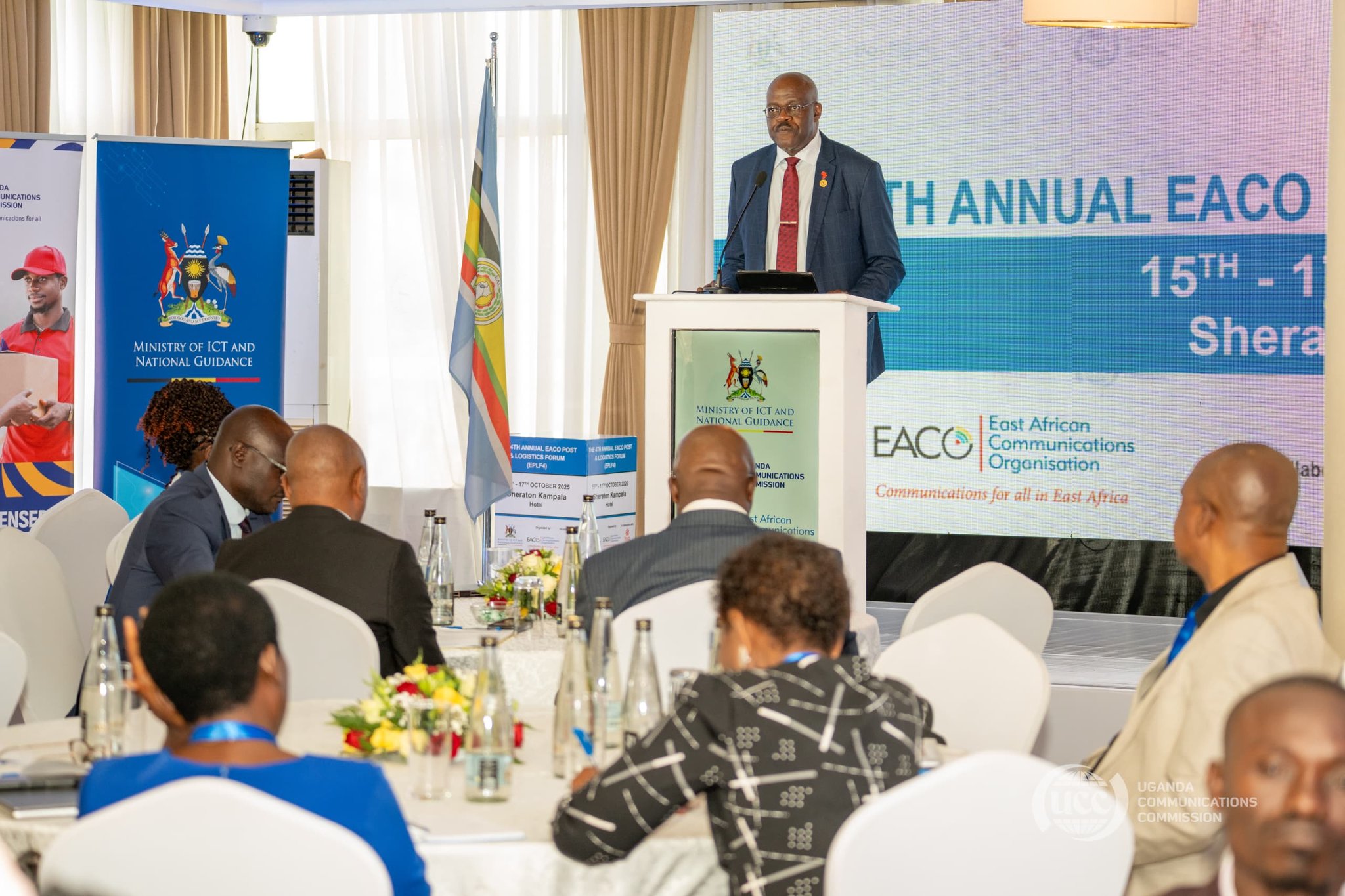
Speaking at the 4th East African Communications Organization (EACO) Post and Logistics Forum (EPLF 4) at Sheraton Kampala Hotel, Engineer Godfrey Agoi, Commissioner for ICT Infrastructure Development in the Ministry of ICT and National Guidance and a member of the Uganda Communications Commission (UCC) Board, represented the Permanent Secretary and urged collective action to modernize the sector.

Agoi told delegates that the postal sector is no longer merely about delivering letters and parcels but has become a critical enabler of trade, connectivity, and financial inclusion, particularly in remote and underserved communities.

He highlighted Uganda’s recent election to the Universal Postal Union (UPU) Council of Administration as a major milestone, reflecting global confidence in the country’s leadership and positioning Uganda to shape policies that address both national and regional postal challenges.

“The postal sector connects people, powers businesses, and drives Uganda’s digital future,” Agoi said. “We call upon all regulators, operators, private sector players, and development partners to collaborate with renewed energy to build a resilient and innovative postal ecosystem.”
The government has already embarked on key reforms to modernize the industry.
Licensing frameworks are being updated to foster innovation and fair competition, while new standards for e-commerce logistics aim to improve parcel security, traceability, and service reliability.
Digital transformation is at the heart of these efforts, with nationwide addressing and geolocation systems being rolled out, ICT integration for track-and-trace and analytics being implemented, and digital financial services being expanded through postal networks. Capacity building for postal staff in digital competencies is also a major priority.
Agoi emphasized that public-private partnerships are vital to the sector’s future.
Strategic collaborations with private couriers, fintech firms, and logistics innovators are being pursued to expand infrastructure, improve service delivery, and drive innovation.
Incentives and regulatory support mechanisms are being considered to attract investment in postal modernization, warehousing, and e-commerce logistics.
Uganda’s engagement with regional and global bodies, including PAPU, EACO, and UPU, ensures that the sector aligns with international standards, harmonizes cross-border services, and benefits from global best practices.
The government’s vision is to transform Uganda’s postal network into a trusted digital intermediary that supports e-government, e-commerce, and last-mile logistics across the country.
Agoi stressed that while the sector faces challenges such as fragmented logistics systems, infrastructure gaps, and low uptake of digital services, there are also unprecedented opportunities.
The rapid growth of e-commerce, deeper regional integration, and full embrace of digital transformation can propel Uganda’s postal sector into a new era of efficiency, inclusivity, and innovation.
“Together, we have the opportunity to shape a postal sector that does far more than deliver mail and parcels. It can connect people, power businesses, and drive Uganda’s digital future,” he concluded, urging all stakeholders to work collectively to realize this vision.
The 3-day forum, running from 15–17 October, convenes regional leaders to exchange knowledge, strengthen partnerships, and chart a roadmap for a modern, digitally transformed, and inclusive postal industry in Uganda and beyond.