







By Mulengera Reporters
Living standards among several Ugandans will soon improve following the country’s eligibility to participate in the global carbon market trade, experts reveal. The government in May 2025 launched Uganda’s National Climate Change (Climate Change Mechanisms) Regulations, 2025 ─ one of the tools required for a country to qualify to trade in global carbon markets. Popularly known as carbon markets, the regulation tackles aspects of compliance, cooperation, and voluntary mechanisms, among the key considerations to enable carbon trade.
“Uganda now meets all basic requirements to participate in carbon markets. For example, we have a Nationally Determined Contribution (NDC), which is being updated, a functional National Greenhouse Gas Inventory (NGGI), a National Designated Authority (NDA -Ministry of Water and Environment), the National Climate Change (NCC) Act (CAP-182), and now the Carbon Regulations.
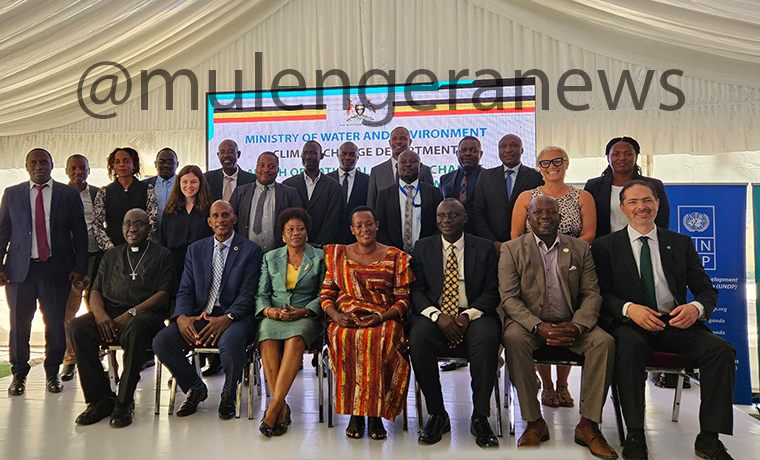
Government has already approved 13 Clean Development Mechanisms projects for transition to Article 6.4 mechanism of the Paris Agreement, demonstrating our readiness and commitment to leveraging international carbon markets,” said Dr Alfred Okidi, the Permanent Secretary, Ministry of Water and Environment (MWE).
The milestone represents Uganda’s readiness to participate in the market mechanisms in line with the National Climate Change (CCA) Act, Cap 182, and Article 6 of the Paris Agreement. The development casts a ray of hope to communities whose livelihoods are entirely dependent on natural resources.

How climate change regulation can facilitate carbon trade?
The regulations will facilitate coordination and enforcement of Uganda’s response to climate change, support implementation of Environment and Social Safeguards (ESS), monitoring and evaluation systems, registration and tracking of carbon credit projects. The regulation provides for MWE as the National Designated Authority (NDA) on climate change issues in the country. Therefore, potential project developers can now make initial requests to the NDA for approval.
The NDA reviews the projects to ensure they meet the requirements, after which, will issue a ‘Letter of No Objection’ permitting the developer to conduct a feasibility study, finalise the project design, and develop a benefits sharing plan- (which outlines how economic, social, and environmental benefits from carbon trade projects will be equitably shared among stakeholders). Subsequently, the developer will apply for final approval from NDA, subject to verification against a specific carbon standard (e.g., Verra’s Verified Carbon Standard) by a third party. Once successful, carbon credits are then issued, which can then be traded in the carbon market.
Carbon credits are generated through controlling the volume of carbon emissions released into the atmosphere. Restoration of degraded wetlands and forests is one way Uganda could reduce carbon emissions. The more credits a country generates, the more potential to attract financial gains. Uganda’s market is considered to be a potential frontrunner in the African continent’s carbon market, with a portfolio of over 33 million carbon credits.


According to global statistics, wetlands, especially peatlands, store more carbon as compared to forests. Uganda’s peatlands alone are estimated to cover 6878Km2 with a carbon stock of 192Mtons. Uganda’s forests are currently estimated to store between 1.1 and 2.4 billion tonnes of carbon, depending on the forest type and degradation level. Forests sequester between 3.75 to 5.5 million tonnes of carbon per year. In 2018, a carbon sequestration survey was conducted, which estimated that Uganda’s forests sequestered about 8 million tonnes of carbon dioxide equivalents. The country has been using these results to search for buyers who can pay for these credits and use the proceeds to increase investment in the forest sector as well as strengthen restoration and conservation efforts.
Potential benefits from carbon projects
Conservation/government funds: Carbon projects provide an opportunity for the government to have access to innovative carbon financing mechanisms, and the resulting financial incentives can have impacts on communities economically, socially, and environmentally. While their primary aim is to reduce greenhouse gas emissions, these projects often deliver direct and indirect benefits to the people who live in or around the project area, including supporting sustainable land use, community conservation initiatives, ecosystem rehabilitation and alternative livelihood options. Local communities can benefit from carbon projects by receiving a share of proceeds from the sale of carbon credits. Some of the projects can support job creation, in areas of forest and wetland monitoring, clean energy production and renewable energy projects.
Communities/benefit sharing
Tree farmers and forest users may be paid to protect or restore natural ecosystems. Some projects use carbon revenues to invest in community development, such as building schools, health centres, boreholes, and roads, support enhanced access to clean water and energy and capacity building in climate change awareness, tree nursery management, stove manufacturing, apiary and other livelihood options. These projects also support participation of local communities in project design, implementation, and benefit sharing, as well as creating opportunities for communities, especially indigenous and vulnerable persons, to raise their concerns, propose solutions, or resolve disputes through grievance redress mechanisms. Communities can participate in generating carbon credits through conserving forests, restoring degraded lands, or planting indigenous species, leading to results-based payments (RBP).
With the policy in place, the tides are simply expected to shoot higher, as noted by the Acting Director, Environmental Affairs (DEA) at the MWE, Mr. David Okurut, who also doubles as the Commissioner for the Wetland Management Department (WMD). According to Mr. Okurut, the regulations are instrumental in enhancing conservation efforts since they attract incentives that will spur behaviour change among Ugandan communities. “It provides a framework for carbon crediting based on ecosystem services, giving a strong legal basis for restoring degraded ecosystems. In addition, the revenue from carbon projects stimulates and diversifies alternative livelihoods. For example, biodiversity monitoring, apiary, eco-tourism, and sustainable harvesting of papyrus and reeds, all of which will empower our women, youth and vulnerable persons, enabling community-driven enterprises without destroying ecosystems,” Okurut said.
Carbon mechanisms are further critical to supporting hydrological functionality, which then improves water retention in catchments, ensuring year-round water for irrigation, household use and livestock. Farmers occupying the Mpologoma sub-catchment and similar basins are already witnessing dramatic increases in harvest yields due to restored water systems following one of the government interventions supported under the Green Climate Fund (GCF),” Okurut adds. Forest-dependent communities are already benefiting from programs such as REDD+ (Reducing Emissions from Deforestation and Forest Degradation), afforestation/reforestation carbon credits, agroforestry and community-managed forestry projects.
Uganda is part of AFR100 (African Forest Landscape Restoration Initiative), which aims to restore 2.5 million hectares of degraded landscapes by 2030. The new regulations will facilitate tapping into climate financing mechanisms to scale restoration, monetise carbon from reforested and agroforestry systems, and link tree planting campaigns (e.g., the ROOTs campaign) to market mechanisms.
The mechanisms will also come in handy in supporting the implementation of Uganda’s ten-year Environment and Natural Resources (ENR) program, which focuses on sustainable management of natural resources and climate resilience. Ensuring adequate water resources, increasing forest and wetland coverage, strengthening land management, and promoting low-emission development. It also seeks to reduce disaster risks and boost incomes through sustainable resource use.
It is expected that the regulations will strengthen land and carbon rights, giving voice and agency to local custodians; protect ecosystem services essential for food, water, and energy security and support adaptation to climate change while contributing to Uganda’s emission reduction goals. The Climate Change Regulations, therefore, provide a framework for adapting and mitigating climate change impacts, especially among vulnerable communities, guide the development of National Adaptation Plans (NAPs) and local adaptation strategies and support mobilisation of funds to fund community-based adaptation. (For comments on this story, get back to us on 0705579994 [WhatsApp line], 0779411734 & 041 4674611 or email us at mulengeranews@gmail.com).