





By Ben Musanje
In a major step forward in the fight against HIV, Government of Uganda is set to roll out a revolutionary new injectable HIV prevention treatment in 2026.
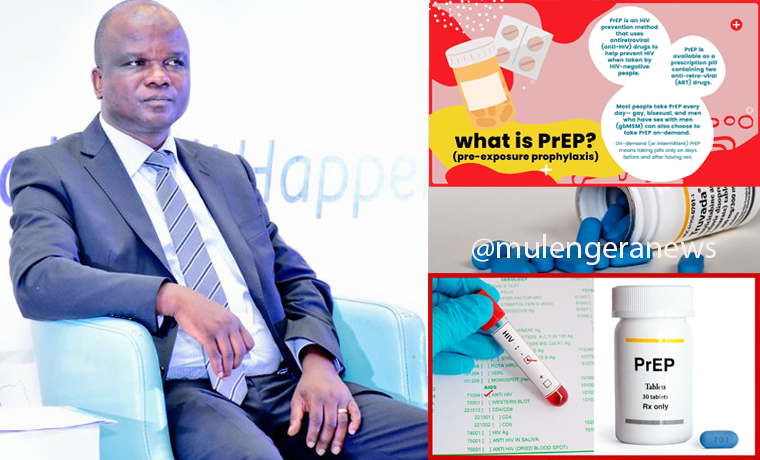
The drug, Lenacapavir, offers long-acting protection with a single injection that lasts for up to six months.
This new treatment represents a breakthrough in HIV prevention, particularly for high-risk individuals who struggle with adherence to daily medication.

The Uganda AIDS Commission (UAC) announced that Lenacapavir will be made available in six months from now, after Uganda’s participation in international clinical trials.

The approval of this long-acting injectable option marks a pivotal moment in the country’s HIV prevention efforts, especially for vulnerable populations such as sex workers, long-distance truck drivers, and young women who face a disproportionately high risk of HIV.
Dr. Nelson Musoba, the Director General of UAC, emphasized that the new injectable drug is expected to be a game-changer in preventing new HIV infections.
“For individuals at high risk of HIV, Lenacapavir provides an effective and convenient alternative to daily oral PrEP (Pre-Exposure Prophylaxis),” he said. “This treatment is a significant advancement in our efforts to end the AIDS epidemic by 2030. With this new tool, we are giving people the opportunity to stay protected without the burden of daily medication.”
While Lenacapavir will not be available until 2026, it has already been enrolled in the national treatment program, with guidelines being developed for its use.
The UAC expects the injection to become a vital part of the country’s HIV prevention strategy.
For those at high risk, it will be available at government health centers and through private pharmacies for individuals who want to self-administer.
Alongside this exciting development, the Uganda AIDS Commission has teamed up with Village Journey Africa, a national association of bikers, to launch a nationwide awareness campaign aimed at raising HIV awareness and promoting HIV testing.
The partnership between UAC and the bikers seeks to tap into the popularity of motorbikes, Uganda’s most common form of transport, to engage young people, especially those in rural areas.
Dr. Musoba explained the rationale behind the collaboration: “Motorbikes are not only a popular mode of transport in Uganda, but they also provide an excellent way to reach young people who are most at risk of HIV. In 2024, 37,000 new HIV infections were reported in Uganda, and over 70% of those infections were among young people aged 15 to 25. What’s even more concerning is that 80% of these new infections were in young women.”
The bikers, who are known for their energy and vibrancy, will travel to key locations across Uganda, including Mbale, Gulu, Masaka, Mbarara, and finally Buchen, where the World AIDS Day commemoration will take place on December 1, 2025.
Throughout their journey, the bikers will carry a symbolic torch, representing hope and the ongoing fight against HIV.
They will also deliver key messages about HIV prevention, testing, and treatment, including the new injectable PrEP.
“By collaborating with Village Journey Africa, we are able to communicate our messages in a fresh and innovative way,” Dr. Musoba said. “Bikers are young, dynamic, and influential, making them perfect messengers for this campaign. They will be able to reach communities across Uganda, raising awareness about HIV prevention and the new prevention tools we are introducing.”
The campaign will serve as a prelude to the World AIDS Day celebrations in December 2025, where President Yoweri Kaguta Museveni is expected to be the chief guest.
In the lead-up to the commemoration, the bikers will play a critical role in encouraging people to get tested for HIV, seek treatment, and learn about the various prevention options available, including the new injectable PrEP.
The UAC’s combination prevention approach includes multiple methods for HIV prevention, such as regular testing, condom use, male circumcision, and access to treatment.
Dr. Musoba stressed the importance of taking a holistic approach to combat the epidemic: “Prevention must be multifaceted. Whether it’s through regular testing, using protection, or taking PrEP, we need to ensure that individuals at risk are equipped with the tools to protect themselves.”
Lenacapavir, the new long-acting injectable HIV prevention treatment, is seen as a key addition to Uganda’s HIV arsenal.
For people at high risk, it will provide up to six months of protection with a single injection, eliminating the daily burden of taking oral medication.
The UAC believes this injectable option will dramatically increase uptake among individuals who might otherwise struggle with daily adherence.
With new tools like injectable PrEP and ongoing efforts to raise awareness, Uganda remains committed to achieving the goal of ending AIDS by 2030. “The road ahead is challenging, but with innovations like Lenacapavir and initiatives like this nationwide campaign, we are on the right path,” Dr. Musoba concluded. “The fight against HIV is far from over, but with collective action, we can make it a thing of the past.”
As the bikers embark on their journey across Uganda, the message to the public remains clear: HIV is preventable, testing is crucial, and protection is key.
Through education, innovation, and collaboration, Uganda is making significant strides toward a future without HIV. (For comments on this story, get back to us on 0705579994 [WhatsApp line], 0779411734 & 041 4674611 or email us at mulengeranews@gmail.com).