







By BM
Regional communications regulators have vowed to bring order to the growing informal courier and border boda industry across East Africa, citing security concerns, unregulated movement of goods, and the need for standardized postal and logistics services.
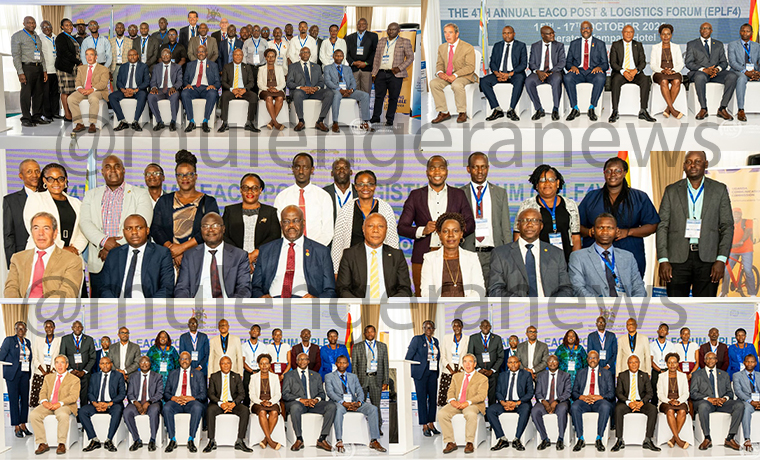
The commitment was made during the opening of the 4th East African Communications Organization (EACO) Post and Logistics Forum (EPLF4), hosted by the Uganda Communications Commission (UCC) at the Sheraton Hotel in Kampala.
Uganda: From Awareness to Action
Bayusuf Katyokori from UCC’s Department of Economic Regulations, Content and Consumer Affairs highlighted Uganda’s ongoing efforts to license and organize border boda operators—motorcycle couriers operating informally across the country.

“We are carrying out awareness campaigns across all courier stakeholders, including border associations, to convince them to be licensed,” said Katyokori. “SafeBoda, once unlicensed, is now fully compliant following our interventions.”

Katyokori revealed that SafeBoda, one of the largest digital transport platforms in Uganda, currently oversees over 4,028 licensed border boda riders, a small portion of the estimated 1.2 million riders in the country.
“The aim is to organize these operators under associations, making it easier to regulate them and integrate them into the national courier ecosystem,” he added.
Kenya: Regulation Through Innovation

Representing Kenya, Patricia Kerretts-Kemei, Deputy Director of Administration at the Communications Authority of Kenya, noted that the country faces a similar challenge, with an estimated 2.5 million border boda riders.
“We’ve introduced a new license category for independent courier operators and are conducting a market review of the postal sector,” she said.
Kerretts-Kemei explained that new policies will require boda boda operators to get a sticker from the Communications Authority, alongside their insurance tag—at a fee of KSh 500 for application and KSh 1,000 for annual renewal, allowing them to legally carry goods.
“We’ve opened public consultations on this framework, and the feedback period ends next week,” she noted, adding that public education campaigns will also encourage the use of licensed boda boda riders.
South Sudan: Challenges and Aspirations
In a candid presentation, Dr. Margaret Mathya Labanya, Director of Corporate Affairs at South Sudan’s National Communication Authority (NCA), acknowledged the country’s ongoing struggles in building a functioning postal and courier system.
“Our postal services are still in deep sleep,” Dr. Labanya remarked humorously, “We don’t have postal codes, and most border boda operators are not registered.”
She noted that South Sudan’s courier needs are largely met by tuku-tukus—three-wheeled vehicles commonly used to ferry passengers and goods.
Ironically, the majority of courier border bodas operating in South Sudan are Ugandans.
“They carry our matoke, onions, and tomatoes. They know our homes better than we do,” she said, drawing laughter from the audience.
Despite the challenges, Dr. Labanya remained optimistic, noting that traffic authorities had recently mandated registration and insurance for border boda operators.
“We are slow but sure. Very soon, we’ll be there,” she affirmed.
Looking Ahead
The EACO Post and Logistics Forum serves as a platform for regional cooperation in streamlining communication and logistics services.
With growing cross-border trade and e-commerce, East African regulators agree that formalizing the informal courier sector is a critical step toward improving safety, efficiency, and economic inclusion.
As the region’s population and urban centers grow, so too does the need for an agile, regulated, and inclusive logistics infrastructure—powered not just by innovation, but also by strategic regulation and collaboration.