





 By BM
By BMThe Uganda Communications Commission (UCC) has announced a tough new stance on the licensing of radio and television stations, warning that broadcasters who fail to pay their employees’ salaries will not have their licenses renewed.
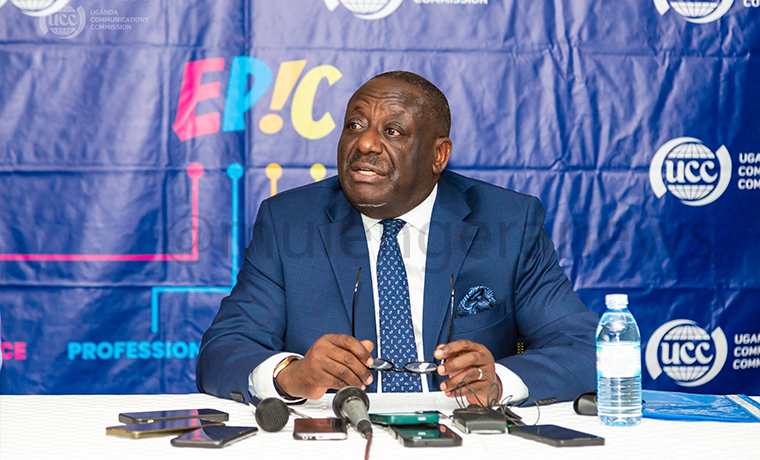
Hon. Nyombi Tembo, Executive Director of UCC speaking on behalf of the Commission, said the focus in recent years has largely been on technical aspects such as modulation, frequency management, and equipment quality.
However, this approach is now shifting to prioritize ethical standards, employee welfare, and responsible content.
Nyombi stated that it will no longer be business as usual for media houses seeking to renew their licenses.
Stations that fail to meet the new requirements particularly those that neglect staff welfare, risk being taken off the air.
He explained that many journalists and presenters, left unpaid for months, have resorted to unethical behavior such as extorting money from the public in exchange for coverage.
He stressed that such practices undermine the integrity of the media and must be addressed at the source: poor management and failure to pay salaries.
The Commission plans to carry out quarterly follow-ups to ensure that radio and television stations are complying with the new standards.
In addition to financial accountability, the behavior of presenters and the nature of program content are also under scrutiny.
Nyombi expressed concern over a growing trend where intoxicated or armed individuals are allowed to appear on air, creating a threatening and chaotic environment.
He mentioned disturbing reports of media operators entering studios drunk or carrying weapons like knives and pangas.
This kind of conduct, he said, will no longer be tolerated.
Nyombi criticized media owners for abandoning their responsibility and leaving operations in the hands of unprofessional and irresponsible individuals.
He cited cases where guests have physically fought or exchanged abusive language live on air, which has become increasingly common.
According to him, such behavior not only tarnishes the image of the media industry but also poses a threat to public order.
The UCC is also taking a firm stand against programs that promote content deemed harmful to the public.
This includes shows that violate people’s rights, promote witchcraft, incite violence, or use vulgar and abusive language.
Stations found broadcasting such content will face serious consequences, including license denial.
Before any licenses are renewed, the Commission intends to conduct a public survey to gather feedback on how each media house is perceived in terms of professionalism and community service.
Nyombi said this will help guide the Commission’s decisions on whether a particular station should continue operating.
Additionally, the UCC will hold meetings with media owners to explain the new guidelines and initiate a countrywide review of all media operator contracts.
He concluded by reiterating that stations employing drunken or mentally unstable presenters must take immediate corrective action.
Failure to do so will result in the denial of their license renewals.
The Commission’s new approach, he said, aims to restore dignity, responsibility, and professionalism in Uganda’s broadcast media industry.