






By Ben Musanje
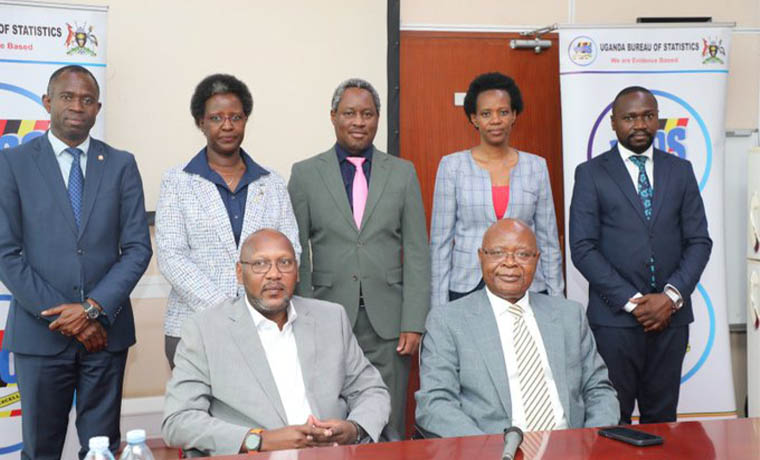
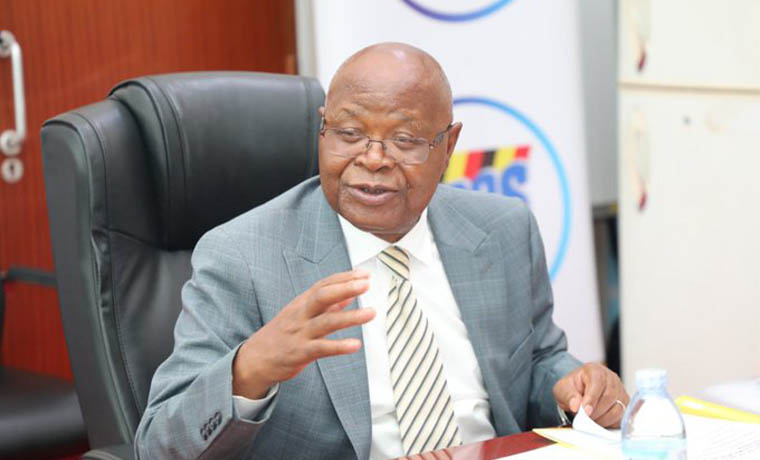
What looked like a routine visit at Statistics House in Kampala quickly turned into a bold turning point for how Uganda understands its people, as Uganda Bureau of Statistics (UBOS) and Tooro Kingdom moved to build a powerful grassroots data alliance driven by the Bureau’s Executive Director Dr. Chris N. Mukiza and Kingdom’s Prime Minister Rt. Hon. Calvin Armstrong Rwomiire Akiiki.
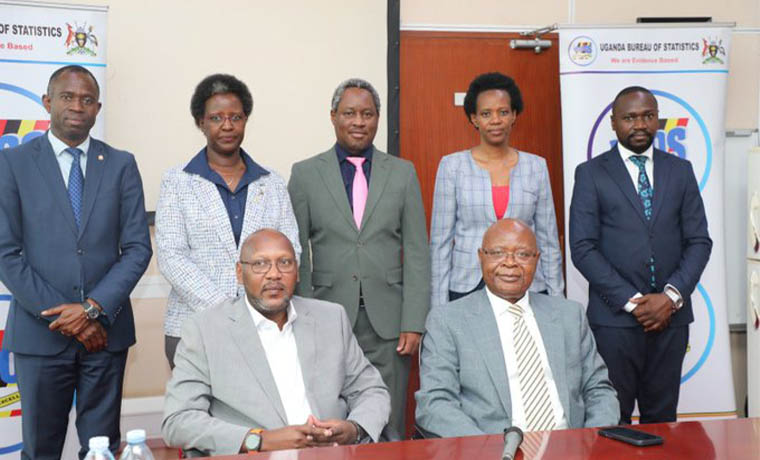
On Wednesday evening, Dr Mukiza, UBOS’s chief statistician, welcomed Akiiki and his delegation, including Tooro Kingdom’s Minikster for Lands and Housing Vincent Agaba Araali, in a meeting that carried a clear message—data must leave government offices and return to the people who generate it every day.
For years, statistics in Uganda have largely been collected from the top, with teams dispatched across the country to gather information. But Dr. Mukiza is now pushing a different vision, one where kingdoms, cultural institutions, and communities themselves take charge of producing and managing their own data.

At the heart of this shift is trust and proximity. Dr. Mukiza highlighted that people are far more open and responsive when approached by familiar local structures rather than distant officials. He pointed to Tooro Kingdom’s performance during the 2024 National Population and Housing Census, where its enumerators were among the most disciplined in the country, making the exercise smoother and more effective.

That experience appears to have laid the foundation for what is now unfolding, a formal partnership that will soon be sealed through a memorandum of understanding. The agreement will define roles, but more importantly, it will unlock a new system where data is generated, understood, and used at the grassroots.
Akiiki arrived with urgency and clarity. After earlier delays caused by leadership changes and internal restructuring, he signaled that Tooro Kingdom is now fully prepared to move forward. The kingdom wants to use data not just for records, but as a tool to confront real challenges facing its people.
From land use to housing, from economic activity to social services, the kingdom sees statistics as the missing link in measuring problems and tracking solutions. Without accurate data, planning remains guesswork. With it, leaders can act with precision.


The partnership will see the creation of a statistics committee within Tooro Kingdom, followed by a fully operational statistics unit. This unit will be managed by the kingdom itself, with UBOS providing technical support, training, and guidance, especially in digitization.
Dr. Mukiza’s vision goes beyond Tooro. He revealed that similar structures are being rolled out across other cultural institutions in Uganda, as part of a broader shift to decentralize data systems. The goal is to build a national network where information flows from the grassroots to a central database, while still remaining useful at the local level where decisions are made daily.
The impact could be transformative. Instead of waiting for national reports, local leaders will have real-time insights into their communities. They will know where services are lacking, where interventions are failing, and where opportunities exist.
At the same time, UBOS will benefit from more accurate, timely, and cost-effective data. Dr. Mukiza emphasized that partnerships like this do not increase government spending—in fact, they reduce costs by cutting down on logistics and improving efficiency through digital systems.
There is also a deeper shift taking shape. By empowering communities to own their data, the process becomes more than technical, it becomes personal. People are no longer just subjects of surveys; they become active participants in shaping their future.
The meeting ended with optimism, but also a sense of momentum. Timelines for signing the agreement are expected to follow, alongside efforts to operationalize structures both at the kingdom headquarters in Fort Portal and at the grassroots level.
What is emerging is not just cooperation between an institution and a kingdom. It is a reimagining of how a country counts, plans, and grows—one village, one dataset, one decision at a time.
And if the plan succeeds, the numbers will no longer sit quietly in reports—they will speak loudly from the ground where they matter most. (For comments on this story, get back to us on 0705579994 [WhatsApp line], 0779411734 & 041 4674611 or email us at mulengeranews@gmail.com).