





 By Aggrey Baba
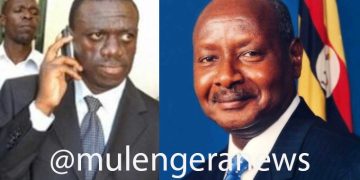
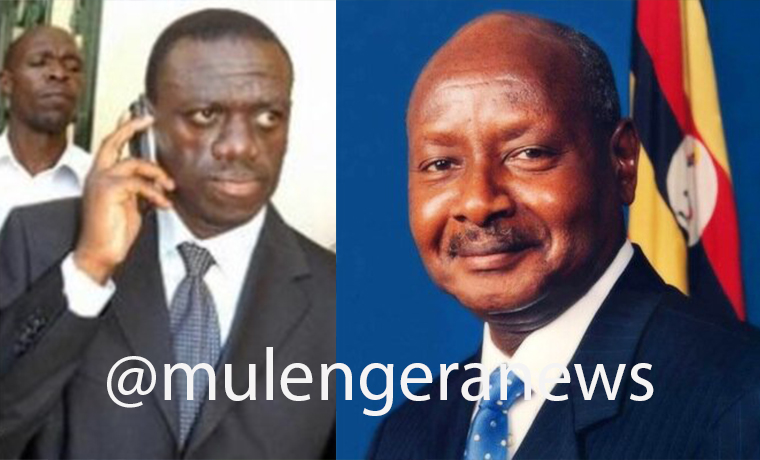
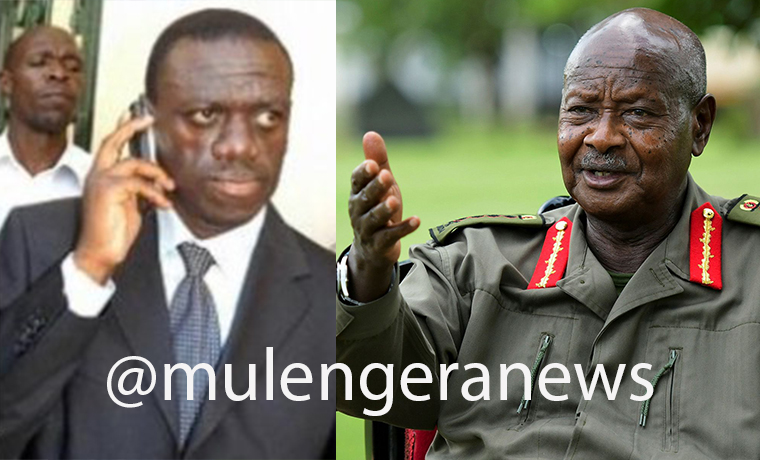
A tree with deep roots fears no storm, but when Dr. Kizza Besigye declared his intention to challenge President Yoweri M7 in the 2001 elections, it sent tremors through Uganda’s political landscape.
What followed was a dramatic fallout between two former allies, one that reshaped Uganda’s political trajectory and set the stage for an enduring political rivalry.
Dr. Besigye was not just another opposition politician, but a man who had fought alongside Museveni in the Bush War that brought the National Resistance Movement (NRM) to power in 1986. As a military doctor, Besigye had been a trusted member of the struggle, a confidant within the NRM system, and a key figure in the post-war government.
However, as the years passed, he became increasingly disillusioned with the direction of the government. Besigye accused the NRM of betraying its original promises of democracy, accountability, and national unity.

By the late 1990s, he was openly critical of Museveni’s leadership, claiming that the government had become intolerant of dissent, corrupt, and unwilling to transition into a true multi-party democracy.

The first major sign of a definitive split came in February 1998 when Besigye, then a Colonel in the Uganda People’s Defence Forces (UPDF) and serving as Chief of Logistics and Engineering, was removed from his position. The move was widely interpreted as an effort to sideline him from the inner circles of power.
By 1999, tensions between Besigye and the establishment had deepened. That same year, he penned a controversial document outlining what he described as the failures of the NRM government, accusing it of suppressing political competition and personalizing state institutions.
His critique did not go unnoticed, as he was placed under surveillance. His movements were restricted, and there were whispers within military and political circles that he was being watched as a potential “enemy within.”
Despite mounting pressure, Besigye did not back down. In October 2000, he officially resigned from the army and, just days later, announced his presidential candidacy.
The 2001 election campaign was unlike any Uganda had seen before. M7, who had ruled for 15 years by that point, was facing his first serious challenge from a former ally who knew the workings of the system inside out.
Besigye’s campaign message resonated with a population that was beginning to show signs of fatigue with Museveni’s rule. He promised reforms, an end to corruption, and a departure from what he described as an increasingly authoritarian government.
His rallies drew large crowds, particularly among the youth and urban voters who felt marginalized by the government.
Museveni, on the other hand, went on the offensive. He accused Besigye of indiscipline, betrayal, and of working with unnamed foreign forces to destabilize Uganda. The President framed the election as a struggle between stability (which he claimed to represent) and chaos (which he argued Besigye would bring).
The campaign was allegedly marred by reports of violence, intimidation, and electoral irregularities. Besigye’s supporters were, reportedly, harassed, and in some instances, his rallies were blocked by security forces. Its alleged that the state machinery was fully deployed to ensure M7’s victory, and government-controlled media gave extensive airtime to the President’s accusations against Besigye.
The elections were held on March 12, 2001. The official results gave Museveni 69% of the vote, while Besigye secured 27%. However, the opposition immediately cried foul, citing widespread rigging, voter intimidation, and ballot stuffing. International observers noted irregularities, with some calling the process flawed.
Besigye rejected the results and challenged the election in court. The Supreme Court ruled in favor of M7 but acknowledged that there had been electoral malpractices. In the face of increasing threats, Besigye decided to leave the country, fearing for his safety. In August 2001, he fled to exile in South Africa.
Besigye’s departure did not mark the end of his political fight. From exile, he continued to criticize the M7 government, staying engaged with Ugandan politics.
His absence, however, created a leadership vacuum in the opposition, one that M7, must have exploited to consolidate his hold on power.
In 2005, after four years in exile, Besigye returned to Uganda, announcing his intention to challenge M7 again in the 2006 elections. Allegedly, his return was met with immediate hostility, as he was arrested and charged with treason and rape in what many saw as a politically motivated attempt to derail his candidacy. Despite being in prison during much of the campaign period, he remained a formidable opponent.
The 2006 election was again marred by allegations of fraud, with M7 winning 59% of the vote and Besigye securing 37%. The opposition once again challenged the results in court, but M7 remained in power.
The events of 2001 had far-reaching consequences for Uganda’s politics. The election established Besigye as the face of opposition politics in Uganda, setting off a two-decade-long battle between him and M7.
Besigye’s challenge to M7 also played a role in shaping Uganda’s political landscape by galvanizing opposition movements, inspiring younger politicians like Robert Kyagulanyi (Bobi Wine) to later take up the mantle of resistence.
Looking back, the 2001 election was more than just a political contest, but a defining moment in Uganda’s political evolution. It transformed Besigye from a former military officer into the country’s leading opposition figure, while reinforcing M7’s determination to maintain power at all costs.
More than two decades later, the rivalry between M7 and Besigye remains one of the most defining features of Ugandan politics.
The echoes of that first challenge in 2001 still reverberate in every subsequent election, shaping the country’s democratic struggles and its uncertain political future. (For comments on this story, get back to us on 0705579994 [WhatsApp line], 0779411734 & 041 4674611 or email us at mulengeranews@gmail.com).