





By Aggrey Baba
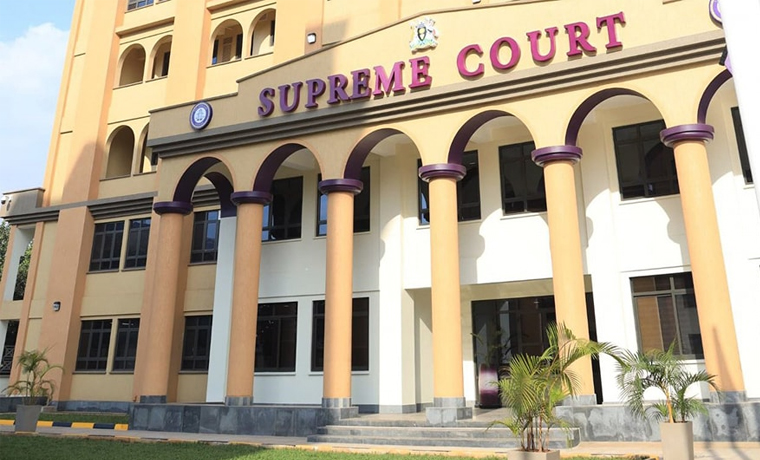
Uganda’s upreme Court is set to determine whether life imprisonment in Uganda means 20 years or a convict’s entire life, during a planned two-day constitutional session from Tuesday, March 31 to April 1 of 2026.
The case stems from a December 2nd 2022 ruling by the Constitutional Court of Uganda, which redefined life imprisonment as a fixed term of 20 years, departing from the long-held position that it meant incarceration for the remainder of a convict’s life.
The decision followed a 2019 petition filed by over 500 inmates at Luzira Prison, challenging the legality of prolonged prison terms, some ranging between 21 and 73 years, arguing that such sentences lacked clear legal backing and violated constitutional protections.
They cited provisions of the Prisons Act 2006 and the Constitution of Uganda 1995, particularly on the right to a fair trial and protection from unlawful punishment, contending that sentencing guidelines had effectively introduced penalties not expressly provided for in law.
In a unanimous judgment, a panel of five justices held that imprisonment beyond 20 years without explicit enabling legislation was unconstitutional, with court ruled that sentences exceeding 20 years were null and void, effectively capping life imprisonment at 20yrs.
The ruling triggered heated legal debates and raised questions about the fate of convicts serving long-term and life sentences, many of whom became eligible to seek sentence review.
Government, through the Attorney General (AG), Kiwanika Kilyowa, appealed the decision, arguing that the interpretation undermines the gravity of serious offences and departs from established legal meaning. The appeal, AG versus Sundya Muhamudu and others, now places the matter before the Supreme Court for final determination.
The outcome is expected to clarify Uganda’s sentencing law and set a binding precedent for lower courts, with potential implications for prisoners currently serving life terms.
The constitutional session will be presided over by panels led by CJ Flavian Zaija, alongside a full bench of senior justices. A total of 10 constitutional petitions are scheduled for hearing.
Among them is a case questioning whether judicial officers can hold non-judicial public offices, such as positions in the prosecution arm of government, without resigning from the Judiciary. Another petition challenges the appointment of High Court judges in acting capacity by the Judicial Service Commission.
Other matters filed by civil society organisations (CSOs), including the Centre for Public Interest Law and the Initiative for Social and Economic Rights, also feature on the cause list, covering broader constitutional and governance issues. (For comments on this story, get back to us on 0705579994 [WhatsApp line], 0779411734 & 041 4674611 or email us at mulengeranews@gmail.com).