










By Ben Musanje
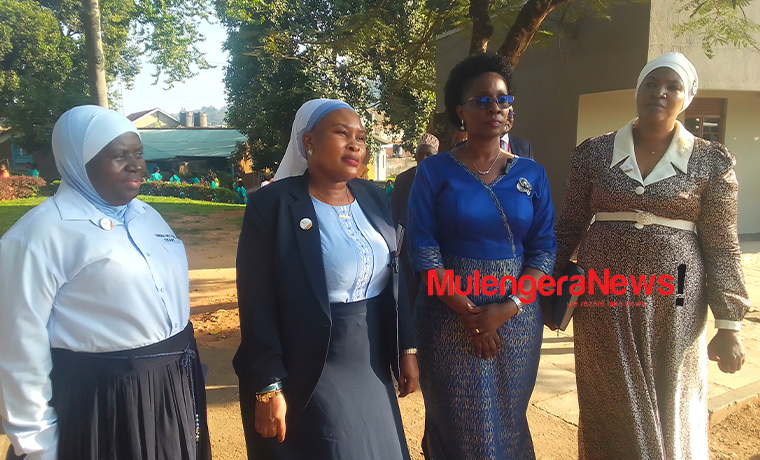
A tense and eye-opening moment unfolded at Nabisunsa Girls’ School on Monday when bold students openly accused the government of corruption, forcing Deputy Inspector General of Government Ann Twinomugisha Muhairwe to respond with a strong warning that corruption is real but blaming the entire leadership is dangerous and unfair.
The charged exchange happened during the launch of the Integrity Ambassadors Club at the prestigious girls’ school, an event meant to inspire young leaders to fight corruption and promote honesty in Uganda. But as the discussion progressed, the conversation quickly turned intense when students began raising concerns about the widespread corruption they see in the country.
Some of the students did not hold back. They openly pointed fingers at government institutions and even mentioned powerful officials they had seen in the media being linked to corruption scandals. Their frustration was clear. Many of them argued that corruption appears deeply rooted in the system and questioned whether leaders were truly serious about stopping it.

The atmosphere inside the hall shifted as the young girls confronted the reality they believe exists in the country. For a moment, it felt like the next generation was putting the nation’s leadership on trial.

Standing before them, Ann Twinomugisha Muhairwe listened carefully before responding with a firm but thoughtful message. She acknowledged that corruption exists and that many people across different sectors have been involved in it, but she quickly pushed back against the sweeping claims that the entire government is corrupt.
According to Twinomugisha, corruption should never be treated as a blanket label for everyone in leadership. She explained that corruption is a personal choice made by individuals, not a condition that automatically defines every government official.
She told the students that while some leaders may betray public trust, many others are honest and working hard to serve the country. Painting everyone with the same brush, she warned, can discourage those who are trying to do the right thing.


Her message was direct and challenging for the students in the room. She asked them to think carefully before condemning entire institutions, reminding them that integrity also means being fair in judgment.
Twinomugisha stressed that corruption begins with personal decisions. In her view, every individual, whether a leader, a civil servant or an ordinary citizen, chooses whether to be honest or dishonest.
She warned that simply blaming leaders while ignoring the role of ordinary citizens in corruption allows the problem to continue growing.
During the discussion, the Deputy IGG also explained how key government positions are filled, including the process of appointing the Chief Justice. She described how the Judicial Service Commission conducts interviews before recommending candidates to the President, who then appoints one of them. The explanation was meant to show students that many public offices follow constitutional procedures rather than being handed out arbitrarily.
But even as she defended institutions, Ann Twinomugisha Muhairwe did not deny the seriousness of corruption. Instead, she urged the students to focus their energy on supporting good leaders and rejecting bad ones rather than attacking every person in authority.
She warned the girls that people who fight wrongdoing often face resistance and criticism from those benefiting from corruption. According to her, anyone who stands up against injustice must be prepared for a difficult journey.
Her message to the students was clear: integrity demands courage.
The event itself was meant to empower young people to become ambassadors of honesty in their schools and communities. The Integrity Ambassadors Club aims to nurture students who will challenge corruption and promote ethical leadership from an early age.
Yet the exchange between the students and the Deputy IGG revealed something deeper — a growing frustration among young Ugandans who are increasingly aware of corruption stories dominating national headlines.
Some of the girls openly admitted that much of what shapes their opinions about leaders comes from what they see and hear in the media. They spoke about corruption scandals involving powerful figures and questioned whether accountability truly exists.
Rather than dismiss their concerns, Ann Twinomugisha Muhairwe encouraged them to channel their anger into constructive action. She urged them to develop integrity in their own lives and become the kind of leaders who refuse to engage in corruption when their time to lead arrives.
She reminded them that Uganda’s future leadership will emerge from classrooms like the one they were sitting in.
By the end of the event, the mood had shifted from confrontation to reflection. The students who had boldly challenged the system were now being challenged in return to become part of the solution.
The launch of the Integrity Ambassadors Club was supposed to be a ceremony about values, but it ended up exposing a powerful reality: the next generation is watching closely, asking difficult questions, and demanding answers from those in power. (For comments on this story, get back to us on 0705579994 [WhatsApp line], 0779411734 & 041 4674611 or email us at mulengeranews@gmail.com).