




By Aggrey Baba
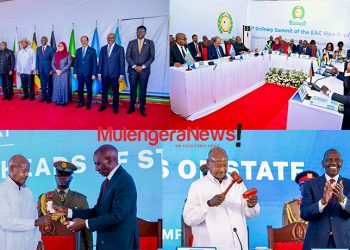
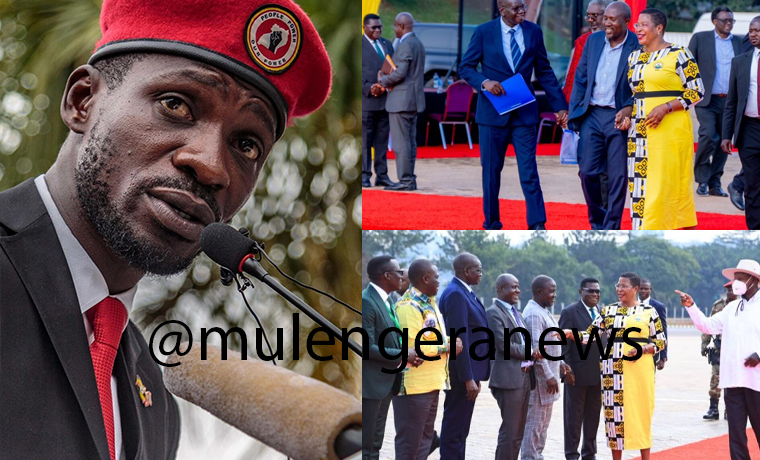
Despite commanding the 2nd biggest numbers in parliament, behind the NRM, National Unity Platform (NUP), Uganda’s leading opposition party was absent from yesterday’s 2025 IPOD summit at Kololo Independence Grounds, excluded for refusing to sign the organisation’s memorandum of understanding.
It’s absence carries tangible consequences, because under the new law, parties must belong to IPOD to access government funding, leaving the Electoral Commission (EC) holding UGX 11.2 billion (Part of over UGX 45B meant for each party with representation in Parliament) in limbo, like water trapped behind a dam with no open exit.
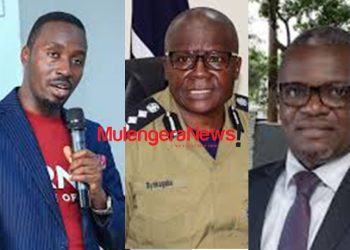
For Robert Kyagulanyi’s NUP, the dilemma is sharp and unavoidable, as joining IPOD would unlock both funding and a seat at the big boys’ table, but could be portrayed by supporters and critics as compromising the party’s independence, while remaining outside preserves its outsider image, yet risks financial starvation and diminished operational capacity ahead of the 2026 elections. A third option is a legal or political challenge, a path already signaled by it’s genetal secretary David Lewis Rubongoya, who denounced the exclusion as illegal and urged the EC, led by Justice Simon Byabakama to intervene to safeguard inclusive dialogue.
Each choice carries weight, forcing the party to balance principle against pragmatism, like walking a tightrope over a river of uncertainty.
For small parties like JEEMA, the People’s Progressive Party (PPP), haviving the least representation in Parliament, IPOD membership is less about pride and more about survival. Without it, they would struggle to run offices, field candidates, or maintain visibility. To them, the platform is a lifeboat in a stormy lake dominated by larger parties, a shelter against being swept aside by political currents beyond their control.
The summit also brought sharp reminders of past abuses and the importance of restraint, with FDC’s Patrick Amuriat recounting the brutality he personally suffered during the 2021 campaigns at the hands of the Police and army, urging the outgoing chair of the organisation, Museveni to ensure that all presidential candidates in 2026 are treated with conciliation.

He also called for clemency for political prisoners, highlighting that the President bears a higher obligation than other leaders to safeguard peace and prevent violence from repeating.
JEEMA’s Asuman Basalirwa echoed the call for accountability, recalling that since IPOD’s founding in 2009, he has warned against rising impunity, citing long detentions without trial, including some Muslim Sheikhs held in Luzira for 15 years.
PPP’s Saddam Gayira, contrasted by citing his three decades in opposition, noting that neither he nor his party members had ever been arrested. Gayira argued that abuses could be avoided if political leaders refrained from using inflammatory language that might provoke supporters into violence, emphasizing the role of responsibility in safeguarding democracy.

Inside Kololo, leaders painted dialogue as a necessary balm for Uganda’s political ailments, Museveni likening leadership to medicine, warning that a wrong diagnosis produces chaos, while correct understanding fosters stability. Mao, assuming IPOD leadership, promised to “attack problems, not people,” while Amuriat, Basalirwa, Akena, and Gayira reinforced the importance of consensus and reconciliation.
Yet outside the summit, the frozen UGX 11.2 billion remains a reminder that dialogue alone can’t sustain political survival, since access to resources has become a decisive factor in who can participate meaningfully in Uganda’s multiparty system.
NUP now faces a paradox, as Joining IPOD could secure funding but risk accusations of compromise, remaining outside preserves principle but may weaken its operational capacity, while mounting a legal challenge could protect its rights but leave it exposed while the case unfolds.
Meanwhile, smaller parties cling to IPOD for survival, illustrating a political reality in which principle and pragmatism collide like taxis and boda-bodas in the jammed streets of Kampala.
A single piece of a broom can be broken easily, but the whole broom is hard to break. A lusoga proverb goes, and for smaller parties, IPOD is the bundle that keeps them strong, while for NUP, the choice is whether to join that bundle or remain a lone piece, standing firm but vulnerable. Whichever path it takes will shape not only its own future but also the credibility and inclusivity of the multiparty democracy as Uganda heads into 2026. (For comments on this story, get back to us on 0705579994 [WhatsApp line], 0779411734 & 041 4674611 or email us at mulengeranews@gmail.com).