





By Ben Musanje
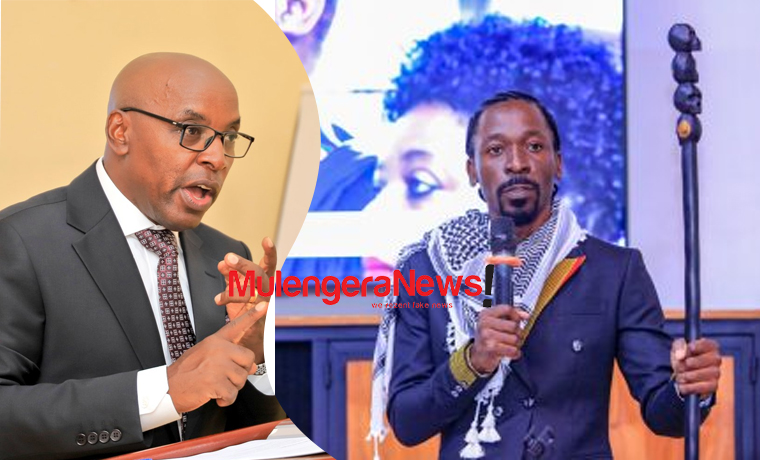
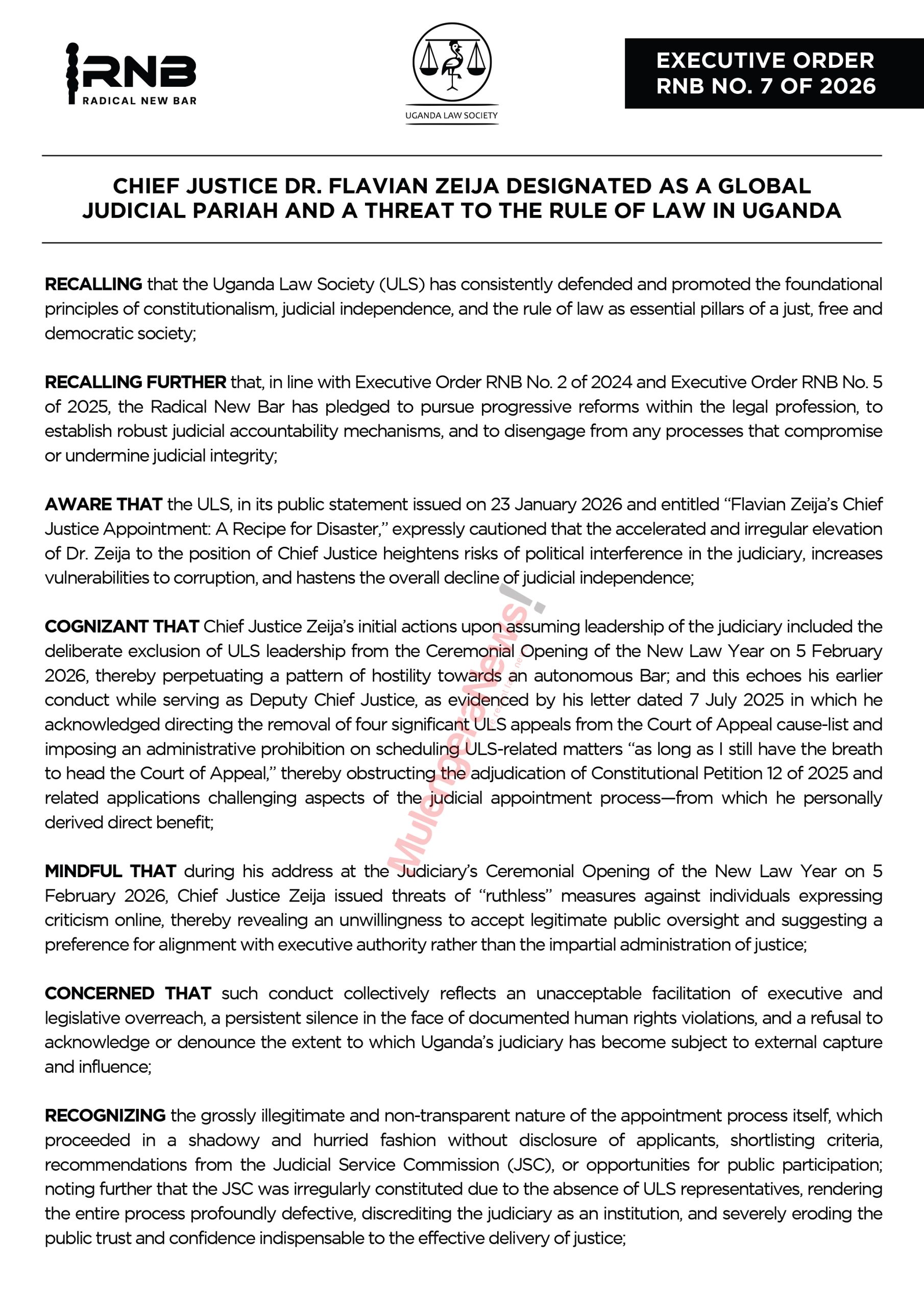
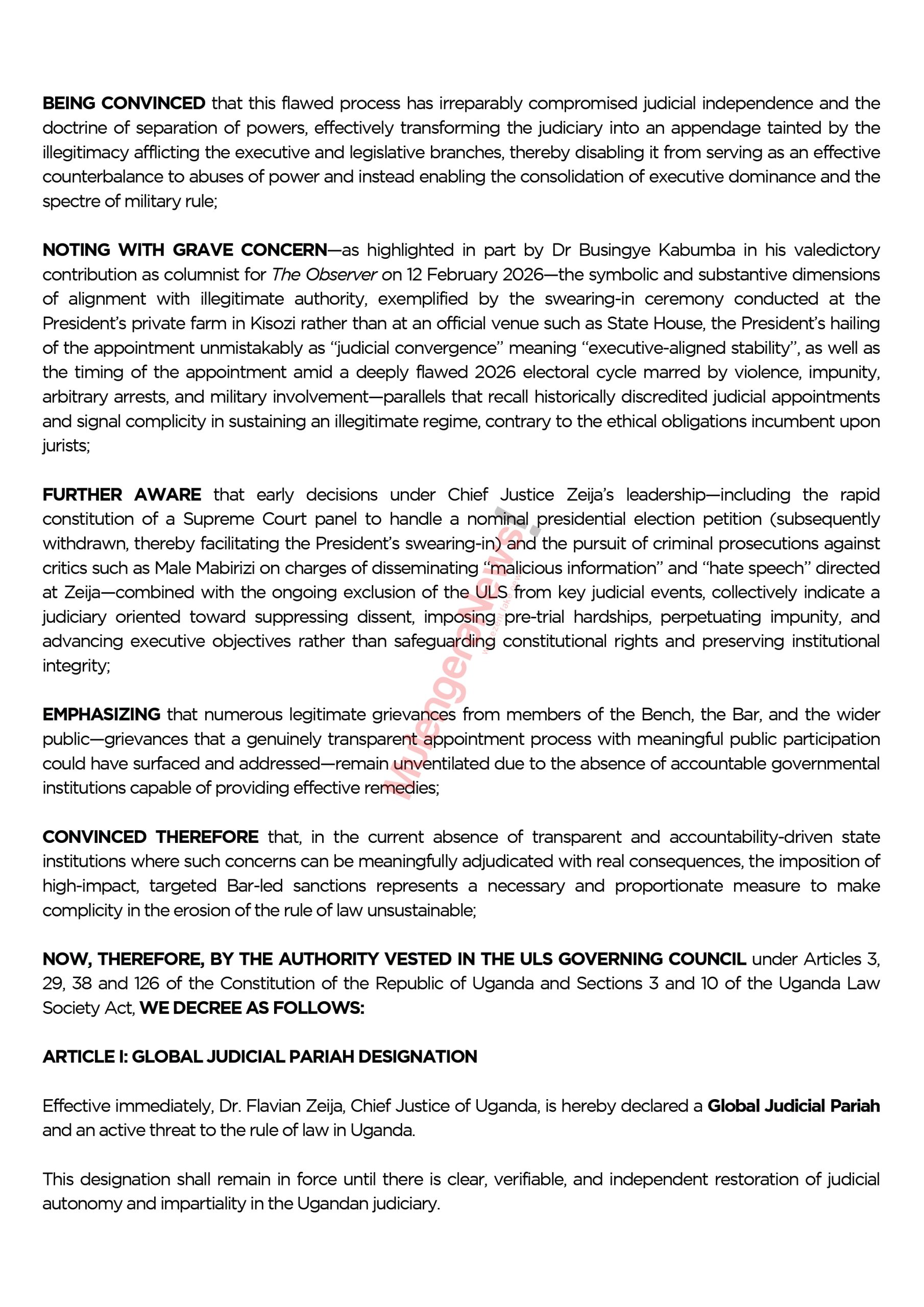
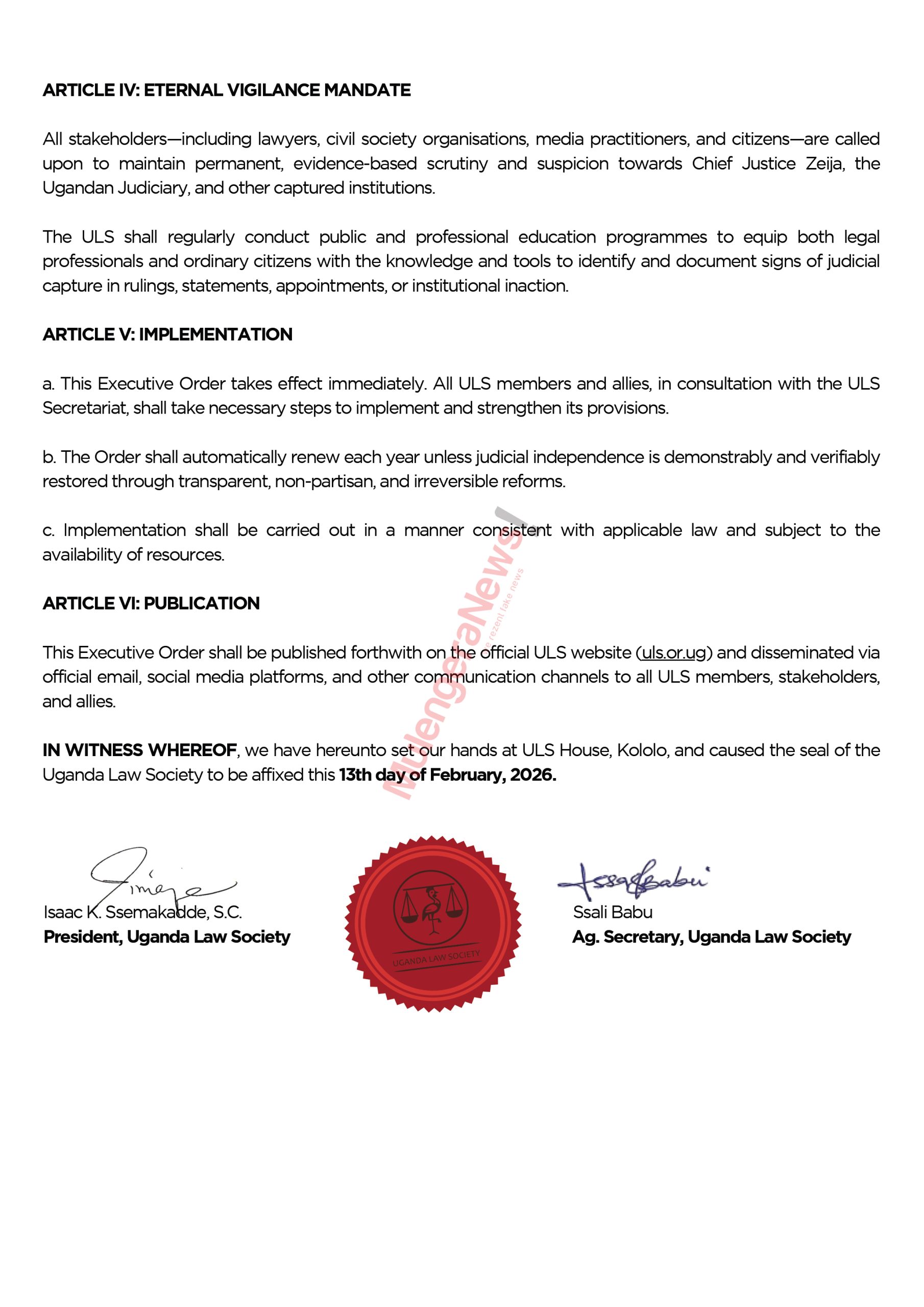
Ugandan Law Society (ULS) President and activist Isaac Ssemakadde has reignited his fierce campaign against what he calls the erosion of judicial independence in Uganda. Marking one year since he went into exile, the outspoken legal figure has issued a sweeping executive order declaring Uganda’s Chief Justice Flavian Zeija a global judicial pariah and a threat to the rule of law.
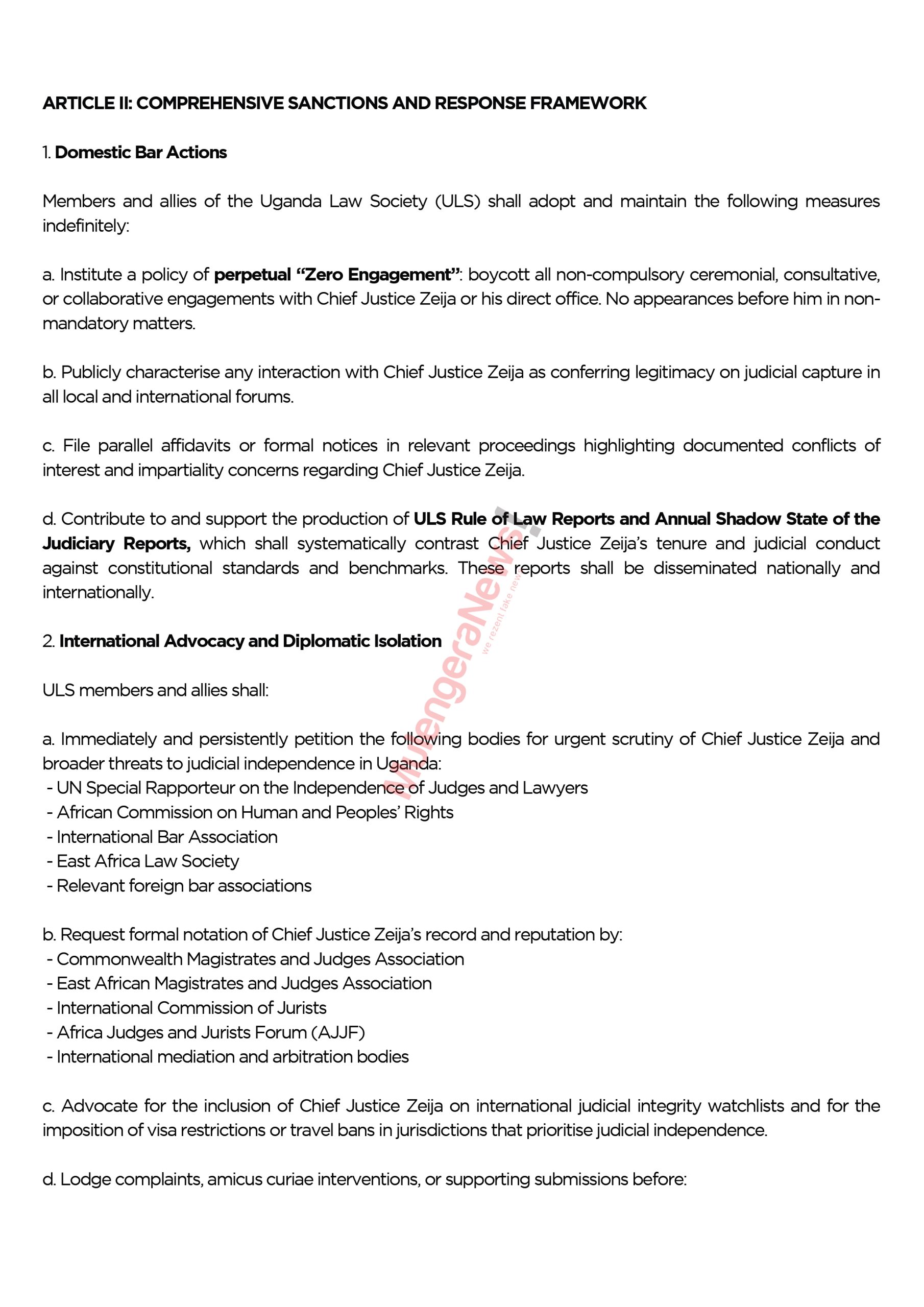
The order, released under what Ssemakadde calls the Radical New Bar reform agenda, outlines a series of actions aimed at isolating Zeija locally and internationally. It calls on lawyers, civil society actors and international legal institutions to subject the Ugandan judiciary to intense scrutiny and to treat any engagement with the Chief Justice as support for a captured judicial system.

Ssemakadde argues that the appointment of Zeija to the country’s top judicial office followed a deeply flawed and non-transparent process that has weakened the credibility of the courts. According to the document, the process moved forward in a rushed and secretive manner without full disclosure of applicants, clear criteria for shortlisting, or meaningful public participation. The criticism echoes concerns previously raised by the Uganda Law Society in a statement earlier in the year that warned the elevation could deepen political interference in the judiciary.

The executive order number seven describes the current situation as a dangerous moment for Uganda’s constitutional order. It claims the judiciary has increasingly failed to serve as an independent check on power and instead risks becoming an institution that enables executive control. The order frames the designation of Zeija as a global judicial pariah as a form of professional and moral sanction designed to draw international attention to the state of the rule of law in the country.
Under the measures proposed, members of the Uganda Law Society and their allies are urged to adopt a policy of zero engagement with the Chief Justice in non-mandatory matters. The directive encourages lawyers to boycott ceremonial events, consultative forums and other engagements linked to his office. It also calls for international advocacy campaigns to alert global legal bodies about the situation.
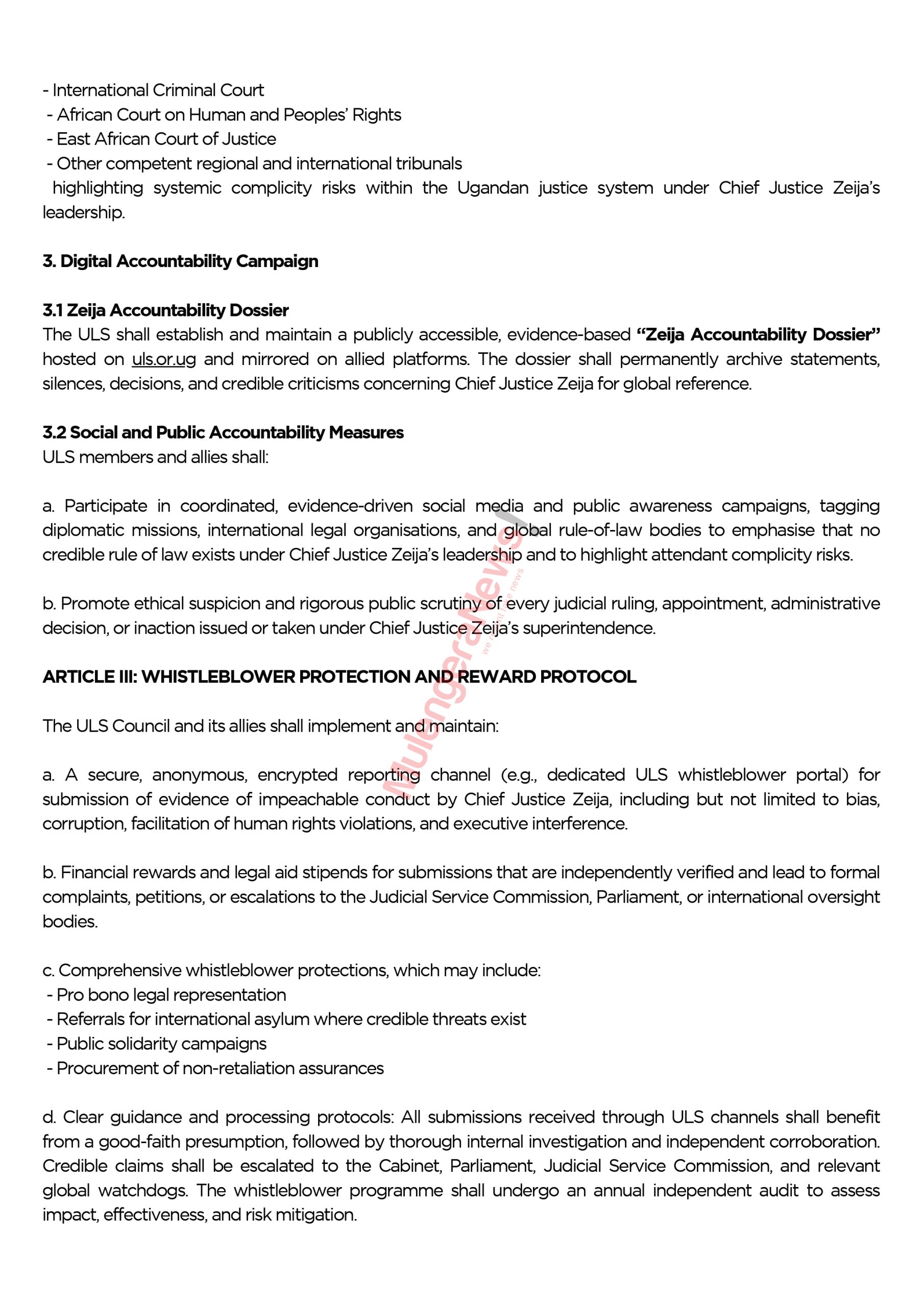
The document lists several institutions that should be petitioned to examine the conduct and leadership of the Chief Justice. Among them are the African Commission on Human and Peoples’ Rights, the International Bar Association and the International Commission of Jurists. Regional judicial institutions such as the East African Court of Justice and the African Court on Human and Peoples’ Rights are also mentioned as possible venues for complaints and legal interventions.

Ssemakadde’s order also proposes the creation of a public accountability record to document decisions, actions and statements connected to Zeija’s leadership of the judiciary. The archive would collect petitions, complaints and other evidence that critics believe demonstrate a pattern of judicial conduct aligned with executive interests rather than constitutional principles.
Another major component of the plan is the establishment of a whistleblower programme. The initiative is designed to allow judges, lawyers and other insiders to submit evidence about alleged misconduct or interference within the judiciary through secure and anonymous channels. Verified submissions could lead to formal complaints before oversight bodies and even trigger international scrutiny.
The dramatic declaration marks the latest escalation in a long-running battle between Ssemakadde and powerful institutions within Uganda’s legal and political establishment. Over the years he has become one of the most controversial voices in the legal profession, known for directly confronting the judiciary, security agencies and political leaders.
His clashes with the establishment have been numerous. As a lawyers’ leader and activist he has often challenged the way judicial appointments are handled and accused senior officials of undermining constitutional principles. He has also led campaigns demanding stronger accountability within the judiciary and has frequently criticized court decisions that he believes favor executive power.
These confrontations have repeatedly placed him in conflict with senior judges including former Chief Justice Alfonse Owiny-Dollo, High Court Jugdge Musa Ssekaana, Former Director of Public Prosecution (DPP) Jane Francis Abodo and state authorities. At different times he has faced disciplinary pressure within professional circles and legal threats linked to his outspoken activism. Supporters say these pressures were meant to silence him, while critics argue that his language and tactics often crossed professional lines.
The tensions eventually reached a point where Ssemakadde left Uganda and entered what he describes as forced exile. From abroad he continued his activism through public commentary, online campaigns and legal advocacy, keeping attention on issues of governance and judicial independence in Uganda.
During his year in exile he remained closely connected to the activities of reform-minded lawyers and activists at home. The Radical New Bar initiative, which he promotes as a movement for transforming the legal profession, became one of the main platforms through which he advanced his ideas for reform.
The anniversary of his departure from Uganda has therefore become both a moment of reflection and a renewed call to action. By issuing the executive order against Chief Justice Zeija, Ssemakadde signals that his confrontation with the country’s legal leadership is far from over.
The development has already stirred debate within Uganda’s legal community. Some lawyers believe the move could intensify divisions between reform advocates and the judiciary. Others argue that strong criticism is necessary to defend the independence of the courts and restore public trust.
For now, the judiciary has largely remained silent about the declaration. Observers say officials may avoid responding directly in order to prevent the dispute from escalating further.
Yet the latest move has once again placed Isaac Ssemakadde at the center of Uganda’s ongoing debate over justice, power and accountability. After a year in exile, the lawyer who built his reputation on confronting authority has returned to the conversation with one of his most dramatic challenges yet. (For comments on this story, get back to us on 0705579994 [WhatsApp line], 0779411734 & 041 4674611 or email us at mulengeranews@gmail.com).