






By Mulengera Reporters
As the global demand for nature-based tourism experiences increases, Rufuha Wetland, a transboundary ecosystem nestled in the heart of Ntungamo district of the southwestern region, remains an untapped opportunity for Uganda’s eco-tourism and rural development. Rufuha traverses three countries, including Uganda, Tanzania, and Rwanda, presenting a unique and untapped opportunity for transformation into an eco-tourism destination that could yield significant environmental, economic, and social benefits. The Tourism sector contributes approximately, 7percent of Uganda’s GDP, annually. In 2024, Tourism contributed 3.2 per cent of the country’s GDP, with the broader sector estimated at around 6.6 per cent of GDP. In 2023, tourism accounted for USD 2.8 billion, or about 5.5 per cent of GDP.
Uganda’s wetlands, therefore, significantly contribute to the tourism sector through offering unique ecotourism opportunities and generating revenue for wetland-dependent communities. These ecosystems, rich in biodiversity and scenic beauty, attract tourists interested in birdwatching, nature trails, boat safaris, and other recreational activities. Wetlands accordingly play a role in nature-based tourism, a growing tourism segment. In so doing, wetlands like Lutembe Bay, Mabamba Swamp, and Lake Bisina have globally become a destination for birdwatching, particularly the rare Shoebill stork, forming part of Uganda’s eco-tourism.
Eco-tourism includes activities such as mountain gorilla trekking (Bwindi), chimp tracking (Kibale), bird‐watching, forest hikes, community-based cultural experiences, and eco‑lodges. Eco-tourism refers to a type of tourism where the environment, local community, and visitors all benefit without imposing a negative impact on the environment. It is a niche that conservationists use as a marketing tool to promote any form of tourism that is related to nature. This form of tourism ensures that natural areas are conserved, while also improving the well-being of local communities and the general public.
Consequently, the Ramsar Convention supports Contracting Parties and other stakeholders in promoting and developing sustainable wetland tourism. As such, the convention recognises ‘Recreational hunting and fishing’ as the most widespread tourism activity, with ‘water-sport activities’ recording the least widespread. Europe, Oceania, and North America have similar tourism activity profiles, with ‘recreational hunting and fishing’ and ‘picnics, outings and touring’ being the most important activities. However, in Africa, ‘recreational hunting and fishing’ is by far the most prevalent activity, and in Asia, ‘ nature observation and nature-based tourism’ is the most important type of tourism in wetlands.
Aware of the immense benefits of wetland tourism, the government of Uganda, through the Ministry of Water and Environment (MWE), with support from the Green Climate Fund and the United Nations Development Programme (UNDP), restored the formerly degraded Rufuha Wetland, which could now enhance community benefits.

The intervention forms part of the government-determined actions to address climate change impacts. The wetland has since regained its critical ecosystem services and functions. This was made possible through awareness creation, provision of alternative livelihoods, particularly wetland-compatible livelihoods, such as Apiary, Poultry, Piggery, Goat rearing, Fisheries, and Mini-irrigation schemes, paving the way for the wetland’s recovery. Previous alterations meant that Rufuha Wetland would lose its biodiversity and ecosystem services.
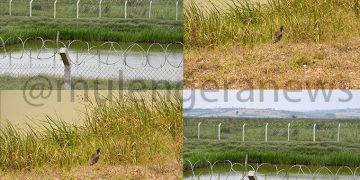
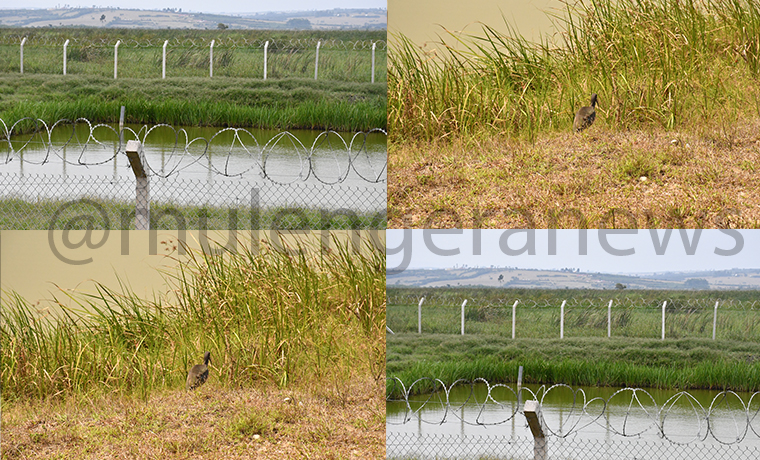
“Now, the wetland is back to normal. The vegetation has returned along with bird life – a sure sign of the revival of the natural biodiversity of the wetland. Water levels in the wetland are showing clear signs of recovery, implying that the ecosystem services of this wetland will soon be fully restored. Already, communities are benefiting from grass to mulch their banana plantations, increasing their productivity and household incomes,” Ms. Dinah Tumwebaze, the District Natural Resources Officer in Ntungamo, who also doubles as the GCF project point, said.
Why Rufuha?
The Rufuuha wetland is one of the largest wetlands in Ntungamo, occupying 20.5 km². It provides
water for domestic use and livestock, food, mulch, thatching material, and grazing land during the dry season, and it controls floods, purifies water and provides income for the people who surround it. Like Lutembe Bay, Mabamba Swamp, and Lake Bisina, Rufuha Wetland (a transboundary wetland) not only provides a unique natural landscape with a biodiversity that could attract tourists interested in activities like birdwatching, nature walks, and wildlife viewing, but its location is strategic and could receive tourists from all its boundaries.
The Crested Cranes, Uganda’s most valued bird, are synonymous with Rufuha. This could generate income for the households dependent on the ecosystem, whilst promoting sustainable wetland uses as visitors turn up to watch birds, scenic beauty, cultural tourism, etc.
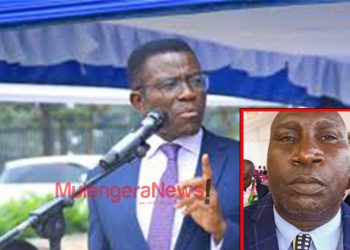
“With the vegetation and bird life returning, Rufuha offers the potential to become an important eco-tourism site, providing communities with another window of employment opportunities. Rufuha is already offering habitat value, water regulation, flood control, and diverse flora and fauna, which are essential attractions for nature‑based tourism,” Mr. David Okurut, the Acting Director, Department of Environmental Affairs (DEA) at MWE, adds.
If only the government could invest in the development of an Eco-tourism park serving the transboundary communities, the sky would be the limit for wetland-dependent communities in Ntungamo and the country as a whole. “Whereas the government would be interested in upgrading Rufuha to an economic venture, MWE lacks the resources to do that.
If we could enter a Public Private Partnership (PPP), it could help cement our conservation efforts further,” Okurut adds. Indeed, strategic investments in protected-area management, infrastructure, marketing of nature-based experiences, and community programs will, therefore, be essential to maximising Rufuha’s environmental, economic, and social benefits.