




By Mulengera Reporters
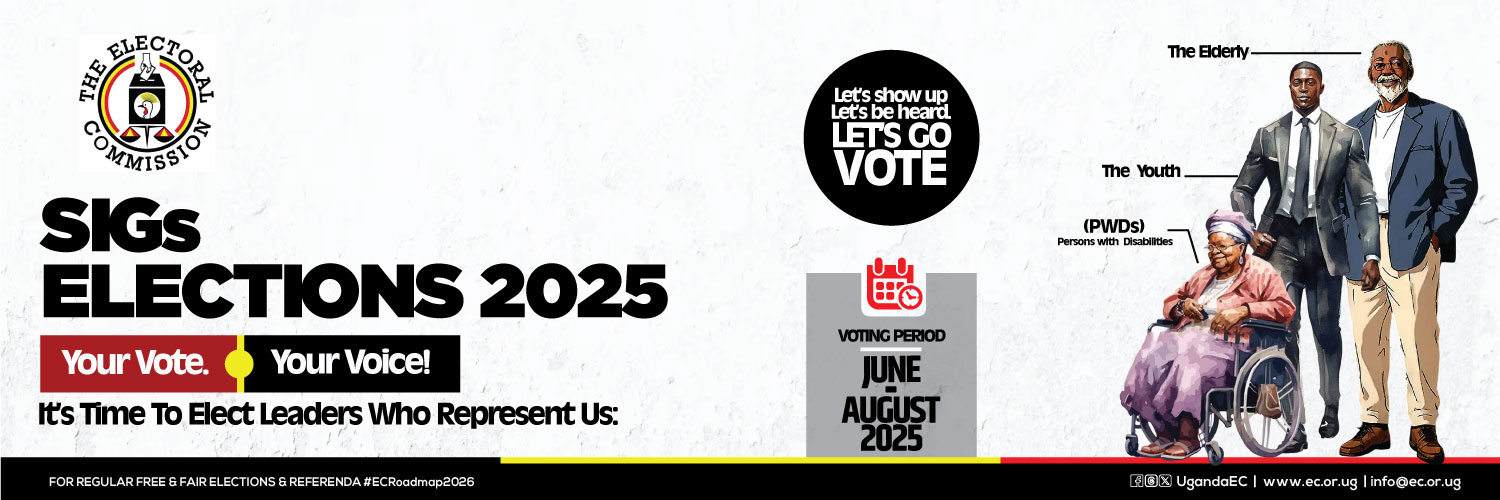
In order to achieve inclusiveness, as commanded under the Constitution, the Electoral Commission has, since 4th November, been working with LC1 Chairpersons to establish the number of PWDs in every village or cell in Uganda. This is being conducted under the identification and mapping exercise for PWDs.
The exercise is aimed at establishing where the PWDs live, stay or vote from; the types of disability faced, the literacy levels of the PWDs and the types of sign language they respectively use. The Constitution of Uganda and other laws require the Electoral Commission to ensure that elections are organized in a manner that enables the PWDs to effectively participate in choosing their leaders, line all the other citizens of Uganda, without hindrance.
Yet to work towards circumventing those hindrances, the Electoral Commission ought to have adequate information regarding the actual number of PWDs that are eligible to participate in elections, among other characteristics, in order to be able to effectively plan and prepare for their inclusion into the electoral process in its entirety.
The ongoing exercise, in which the LC1 leaders naturally have to play a leading role, will enable the EC establish the several categories of disability and how many PWDs fall under which category. The possible categories include physical disability caused by cerebral palsy, amputation, paralysis or deformity; hearing disability including deafness; visual disability including blindness and low vision; deaf & blind disability; mental disability inclusive of psychiatric disability; little people; albinism and multiple disability.
Besides establishing the number of PWDs per village/cell and ward, the identification and mapping exercise is also aimed at enabling the EC to know the proportion of them that is registered for purposes of participating in elections. The ongoing identification exercise is also meant to enable the PWDs who previously registered for NIRA or national ID purposes to ascertain and confirm if their names appear on Uganda’s national voters register.

The mapping and identification exercise is also an opportunity for each Ugandan village to have its PWDs voters roll to be scrutinized and subsequently cleaned up through identifying those who may be ineligible for inclusion potentially because they have no recognizable disability, are dead or left the area. The EC is also optimistic that the exercise can be used to amplify PWDs interest in the 2026 road map-related activities including cleaning up and updating of their own register and subsequently the national voters register.
Through the ongoing exercise, the EC should also be able to identify some of the hitherto unknown factors that tend to hinder many PWDs from fully participating in electoral activities. When it comes to duty-bearing, much of the work has been assigned to the category of EC officials called Parish or Ward Supervisors.
Present in every part of the country, these are the ones to prompt the LC1 Chairperson to convene and chair the village council during which all PWDs resident in that village are supposed to be roll-called for identification, verification and confirmation by all village members present at the meeting. Subsequent to such a village meeting, particulars of all PWDs voters established to be missing on the register are captured by the EC Parish Supervisor for further processing besides taking note or recording down of all ineligible PWDs voters for eventual deletion from the PWDs register.
The same village meeting is a platform to have all complaints and objections relating to disputed inclusion of some PWDs received and documented by the same Supervisor for submission to the EC for further processing and management. During the same meeting, those PWDs who aren’t on the voters’ register and don’t know what to do are to be guided to register with NIRA for national ID registration purposes which subsequently leads them to authenticating their citizenship so as to qualify as voters and for inclusion in the national voters’ register.
The information and data obtained at the end of the exercise will enable the EC to draw up a credible voters register for PWDs, which is essential in facilitating their participation in general elections without much hindrance. The same information enables EC to effectively plan and facilitate all electoral activities as the country counts down for 2026.
The exercise and the resultant information will also help EC develop more inclusive voter education materials in a more accessible format that takes care of the different categories of disability that are prevalent in Uganda as part of the broader voting population for the whole country. The identification and mapping exercise plus the resultant data enables the Electoral Commission to ensure polling stations are situated at locations which will be convenient for all persons with physical disability.
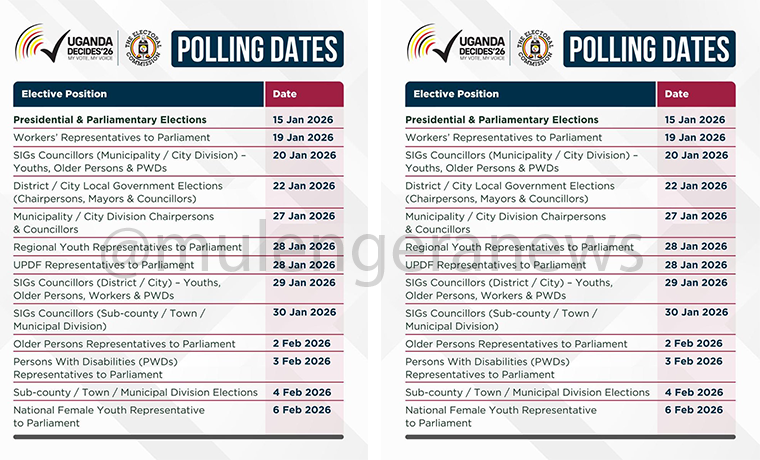
And broadly speaking, the PWDs is just one category of the several Special Interest Groups (SIGs) which inclusion requires the Electoral Commission to take care of when planning, preparing and organizing for 2026 like any other general elections under the 1995 Constitution of Uganda. (For comments on this story, get back to us on 0705579994 [WhatsApp line], 0779411734 & 041 4674611 or email us at mulengeranews@gmail.com).