






By Aggrey Baba
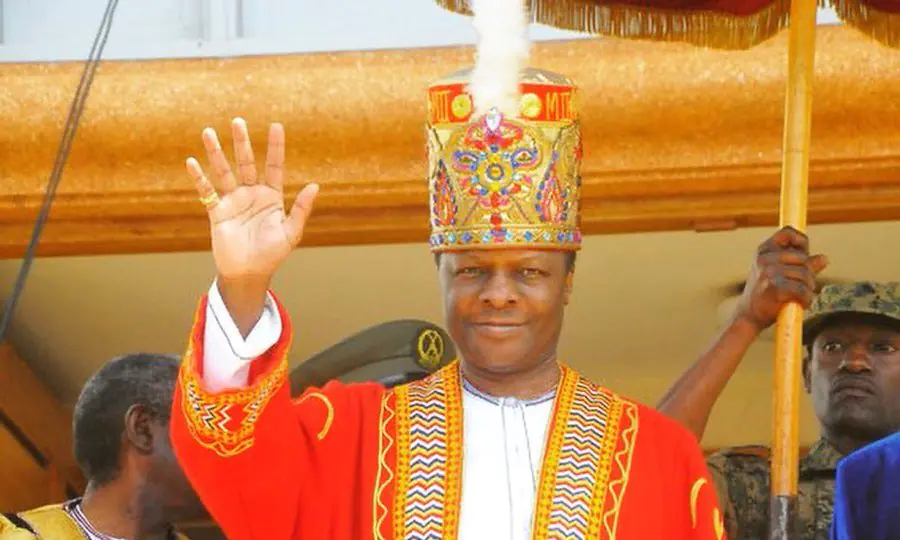
Years before his coronation in 1993, Kabaka Ronald Muwenda Mutebi II reportedly battled a serious medical condition that nearly cost Buganda its royal heir, an episode little known to the public but recounted in historical reflections by writer and researcher Muwonge C.W. Magembe.
Following the 1966 Buganda Crisis and the abolition of traditional institutions, the young prince was sent into exile in the United Kingdom (U.K). At the time, his father, Sir Edward Mutesa II, had been deposed by then-president Milton Obote, forcing much of the royal family and their allies to seek refuge abroad.
The prince, still a child, began schooling in England under the care of close family associates.
In the late 1960s, while studying in London, he reportedly developed a serious illness that required extended hospitalization at St. Theresa’s Hospital. The precise nature of the illness has not been officially documented, but according to Magembe, records indicate that his condition was life-threatening and sparked considerable concern among Buganda loyalists in exile.
At that point in history, Buganda was without a monarch and had only one immediate male heir (Ronald Mutebi). With his father having died in 1969 and the kingdom’s cultural leadership suppressed under the 1967 Constitution, the illness created a quiet succession crisis among Baganda royalists. If the prince had died while in exile, the continuity of the Buganda royal line would have faced severe complications, both culturally and politically.
The young prince’s condition was closely monitored by a circle of devoted caregivers. Among them was Lozaria Kibaya, a Ugandan nurse who had trained in the UK and is believed to have provided round-the-clock clinical and emotional support.

Another key figure was Pumla Kisosonkole, a long-time family friend who maintained a maternal role during this difficult period, ensuring together with other individuals, that the prince received both medical treatment and a stable living environment, which was critical to his recovery.

These events unfolded quietly in the background. While the general public remained unaware of the prince’s condition, exiled members of the Buganda royal community reportedly treated the matter with urgency, with support networks within the diaspora mobilizing resources and offering assistance, ensuring the prince’s survival at a time when the kingdom’s very future depended on it.
After several months of care, the prince eventually recovered and resumed his education. He remained in the UK throughout the 1970s, gradually maturing into a discreet public figure within Ugandan and Buganda circles abroad, with his survival allowing the Buganda royal line to remain intact, even as the monarchy remained constitutionally suspended back home.
When cultural institutions were reinstated in 1993 and Ronald Muwenda Mutebi II was crowned Kabaka, the kingdom celebrated his return and restoration. However, the years spent abroad, particularly the episode of illness, are often overlooked in public accounts of his life.

Other individuals who contributed to his welfare during exile included Edith Nakazana, who later served him upon his return to Uganda, and Joyce Mpanga, a royal family member and political figure who played a strategic role during the transition back to cultural governance.
This little-known period highlights the fragility of Buganda’s royal continuity during exile and the crucial role played by a small network of trusted individuals who safeguarded the future of the monarchy, not through ceremony or politics, but through day-to-day care and unrecorded sacrifice. Magembe notes that the crisis was managed silently, but its outcome proved decisive for the kingdom’s eventual cultural resurgence. (For comments on this story, get back to us on 0705579994 [WhatsApp line], 0779411734 & 041 4674611 or email us at mulengeranews@gmail.com).