




 By BM
By BM
Religious denominations under the Inter-Religious Council of Uganda (IRCU) have expressed plans to conduct comprehensive data collection on their followers, seeking support from the Uganda Bureau of Statistics (UBOS) to equip them for this critical task.
UBOS has pledged to provide IRCU with 5,000 data collection devices, including tablets and computers, to help capture accurate and up-to-date information about religious communities across Uganda.
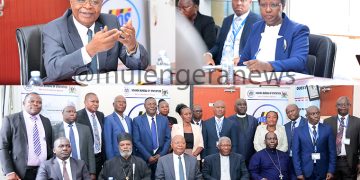
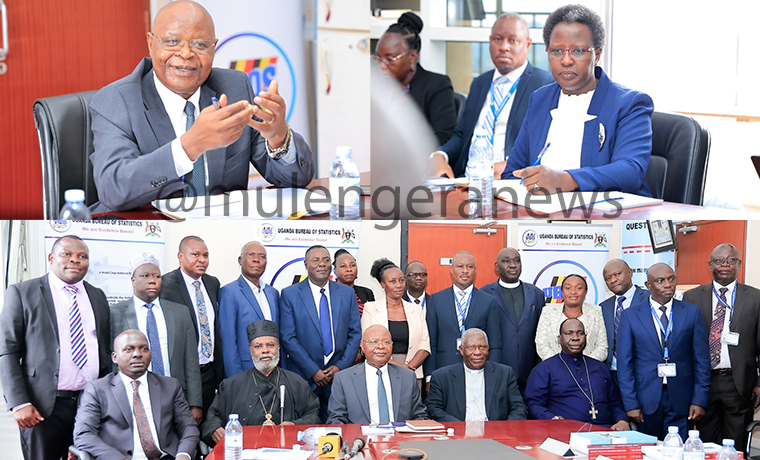
This pledge came in response to a formal request by Metropolitan Jeronymos Muzeeyi, Archbishop of the Uganda Orthodox Church and Co-Chairperson of the IRCU Council of Presidents, during a recent engagement organized by UBOS at its headquarters in Kampala.
The meeting aimed to explain the details of the 2024 National Population and Housing Census report to IRCU leaders and discuss ways the religious bodies can leverage census data for community planning.
Metropolitan Muzeeyi emphasized the need for modern data collection equipment to enable religious leaders to gather detailed information about their followers efficiently.

“As religious leaders, we want to ensure that the data we collect is accurate and comprehensive so that we can plan and allocate resources effectively within our faith communities,” he said.
In response, UBOS Executive Director, Dr. Chris Ndatira Mukiza assured the IRCU leaders that their request for equipment and technical support would be addressed.
However, he urged the council to submit a formal written request to the Bureau to facilitate the procurement process.
Beyond data collection tools, the IRCU has also requested UBOS to widely disseminate the 2024 census report to all relevant government institutions.
This, they argue, will support evidence-based planning and decision-making across multiple sectors including education, health, finance, and social services.
Rt. Rev. Joseph Anthony Zziwa, Bishop of Kiyinda-Mityana and Chairman of the Episcopal Conference, who is also a member of the IRCU Council of Presidents, spoke to the media after the meeting.
He stressed the importance of making the census report widely available to ensure proper understanding and use of the data. “It is crucial that government ministries such as Education, Finance, and others receive this information, as they play a pivotal role in the social and economic development of Uganda,” Bishop Zziwa said.
He further commended UBOS for conducting a thorough census exercise and producing a report that will significantly aid national development.
He called on fellow religious leaders to accept and embrace the statistics related to their faiths, urging unity and collaboration in the use of this data.
Last year, UBOS publicly acknowledged errors in the presentation of religious and tribal population figures in the 2024 census report, following widespread public concern and criticism.
At a media briefing held at Kampala Serena Hotel, UBOS acting Deputy Executive Director Vincent Ssenono explained that the discrepancies arose during the compilation of the final report, particularly affecting tribal data.
Addressing concerns about religious population figures, Ssenono clarified that while the populations of major religious groups such as Roman Catholics, Muslims, and Anglicans have increased in absolute numbers, their growth rates have slowed relative to other religious groups.
“For example, the Roman Catholic population grew from 13,426,520 to 16,612,537. Although this is an increase in actual numbers, the percentage growth compared to the total population is slower,” he explained. “This does not mean that the total population of these faiths is reducing.”
The collaboration between UBOS and IRCU marks an important step toward improving the accuracy and utilization of demographic data within Uganda’s diverse religious communities, ultimately supporting better planning, resource allocation, and national development.