







By BM
The transition of the Uganda Microfinance Regulatory Authority (UMRA) into a department under the Ministry of Finance, Planning and Economic Development has faced delays due to ongoing policy and regulatory adjustments, highlighting challenges in reforming Uganda’s microfinance sector.
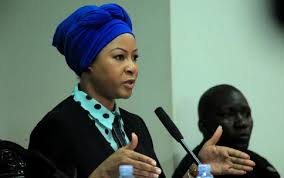
Edith Tusuubira, former Executive Director of UMRA, said that although the authority has officially become the Department of Microfinance and Regulation, some regulatory frameworks are still being finalized.


She noted that these pending regulations caused minor delays in fully operationalizing the department’s oversight responsibilities, particularly in licensing and sector-specific rules.
Parliament’s recent decision to shift licensing authority to the minister further contributed to the adjustment period.

The sector under the department’s oversight includes money lending, savings groups, non-deposit-taking microfinance institutions, and village savings and loan associations.
Tusuubira acknowledged that the delays slowed engagement with stakeholders, including emerging associations in the money lending sector, but confirmed that all 2025 licenses have now been signed off and that licensing requirements remain unchanged.
The challenges reflect broader delays in Uganda’s rationalization of government agencies.
In November 2024, UMRA, the Privatization Unit, and the Non-Performing Assets Recovery Trust were returned to the Ministry of Finance following the approval of three rationalization amendment bills.
During parliamentary debates on the Tier 4 Microfinance Institutions and Money Lenders (Amendment) Bill, Finance Committee Chairperson Hon. Amos Kankunda observed that UMRA had not fully executed its mandate, citing limited resources over its eight years of operation.
He emphasized that newer financial services, including Parish Development Model SACCOS, require stronger regulatory oversight.
Proposals to transfer management of Tier 4 institutions to the Bank of Uganda were raised by Hon. Nathan Nandala-Mafabi, but countered by Hon. Paul Omara, who noted that the central bank would need a dedicated structure to handle the function.
Attorney General Hon. Kiryowa Kiwanuka advised further study as Parliament implements the rationalization process.
In that very year (2024),the Ministry of Public Service indicated that a new Microfinance Tier 4 Management Department would be established within the finance ministry to absorb UMRA’s functions.
Similarly, functions of the dissolved Privatization Unit would be mainstreamed to reduce duplication, and a special audit has been called for the Non-Performing Assets Recovery Trust, with pending cases to be transferred to the Attorney General’s office.
Observers say the delays highlight the need for timely policy formulation and clear institutional mandates to avoid disruptions in microfinance oversight while consolidating government functions. (For comments on this story, get back to us on 0705579994 [WhatsApp line], 0779411734 & 041 4674611 or email us at mulengeranews@gmail.com).