






By BM
PELUM Uganda has called on the government to urgently approve the country’s National Agroecology Strategy, describing it as a critical roadmap for sustainable agriculture, climate resilience, and food security.
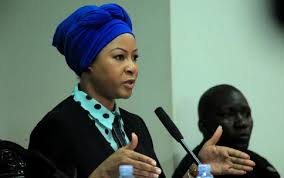
Speaking at a press conference at Hotel Africana on Monday, Moses Onen, Program Manager for Advocacy at Participatory Ecological Land Use Management (PELUM) Uganda, emphasized that while Uganda began developing the strategy in 2023, it has yet to be officially approved.
“This strategy is very critical for Uganda. It provides direction on how resources should be aligned, how government institutions should reform to support the scaling of agroecology, and how financing and research should be directed,” Onen said.
He noted that neighboring countries, including Kenya and Tanzania, have already approved their national agroecology strategies, with Kenya having learned from Uganda’s early efforts.
Onen stressed that agroecology is globally recognized as a solution to the challenges facing agriculture, livestock, and fisheries, including the impacts of climate change, pests, and diseases.

The call comes as Uganda prepares to host the Agroecology Week of Action 2025, the country’s first official week dedicated to promoting agroecology.
Dr. Christopher Kyeswa, PELUM Uganda Board Chairperson, said the event, under the theme “Championing Agroecological Innovations and Approaches for a Sustainable Food System,” will bring together over 1,500 stakeholders, including small-scale farmers, indigenous knowledge holders, private sector actors, policymakers, researchers, and civil society organizations. “The week will showcase achievements, reflect on lessons learned over the past three decades, and renew collective commitment to a resilient and sustainable future,” he said.
The week will feature a series of high-profile events, beginning with the 7th National Agroecology Actors’ Symposium on October 28.

The symposium aims to accelerate agroecology transitions by aligning policy, markets, finance, and practice while facilitating dialogue and collaboration among stakeholders.
On October 29, the 4th Agroecological Market Systems Expo (AMASI) will highlight youth- and women-led agroecology enterprises, entrepreneurship, and market development for sustainable products.
This will be followed by the 15th Indigenous and Traditional Food and Seed Fair on October 30–31, which will showcase the role of indigenous foods in building nutritious and sustainable food systems.
The week will conclude with PELUM Uganda’s 30th Anniversary Celebration on October 31, marking three decades of advocacy for participatory ecological land use and sustainable agriculture.
Josephine Akia Luyimbazi, PELUM Uganda Country Coordinator, highlighted the network’s ongoing work in schools and universities.
Through programs in over seven member organizations, ecological champions are trained to work with teachers and establish agroecological demonstration gardens.
PELUM is also collaborating with institutions including Uganda Martyrs University, Kyambogo University, Mountains of the Moon University, and Makerere University to integrate agroecology into academic programs from certificate to PhD levels.
Luyimbazi further emphasized partnerships with chefs and culinary schools to promote traditional Ugandan foods, linking cultural heritage with sustainable food systems. “Our chef champion, Mr. Wongo, is helping us showcase Ugandan cuisine, which we hope will also engage the Ministry of Tourism in promoting our culture,” she said.
PELUM Uganda urged all stakeholders, from farmers and private sector actors to policymakers, researchers, and the public, to participate in the Agroecology Week of Action.
The organization emphasized that the week offers a unique opportunity to share knowledge, strengthen market linkages, foster partnerships, and advance sustainable, resilient food systems across Uganda. (For comments on this story, get back to us on 0705579994 [WhatsApp line], 0779411734 & 041 4674611 or email us at mulengeranews@gmail.com).