







By BM
Over 432,000 candidates across Uganda began their Uganda Certificate of Education (UCE) examinations today (Monday) in a smooth and coordinated national rollout, according to the Uganda National Examinations Board (UNEB).
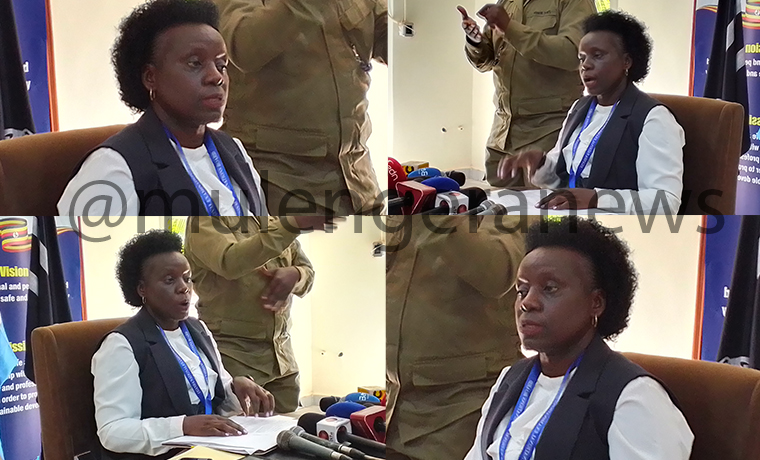
Jennifer Kalule Musamba, the Principal Public Relations Officer at UNEB, confirmed during a press briefing at Police headquarters in Naguru that the examinations had commenced successfully across the country.
She noted that candidates started with Geography Paper 1 in the morning, followed by Biology Theory in the afternoon. Examination papers had been delivered on time to all stations over the weekend, and favorable weather conditions supported smooth operations at examination centres.
The 2025 examination season continues under the theme “Embracing Security and Holistic Assessment of Learners in a Dynamic Environment,” which UNEB says reflects its ongoing commitment to secure, fair, and comprehensive assessments.

Kalule emphasized the importance of examination security, stating that stakeholders must remain vigilant in order to maintain the sanctity and integrity of both the exams and the resulting certificates.

She noted that upholding these standards is essential for ensuring that learners progressing through the education system are evaluated authentically and that their performance accurately reflects their abilities and values.
She explained that UNEB is committed to holistic assessment in line with the objectives of the new lower secondary curriculum. The curriculum emphasizes continuous assessment, project work, and end-of-cycle evaluations.
This year’s UCE candidates are the second group being examined under the revised curriculum, which includes 20 percent of the final grade from continuous assessment, a separate project work component, and 80 percent from the final written examinations.

Kalule confirmed that all registered candidates had submitted their continuous assessment scores, as required for eligibility.
A total of 432,159 candidates were registered for the 2025 UCE examinations. Of these, 52.7 percent are female and 47.3 percent are male.
Among them are 679 candidates with special needs, a number that reflects UNEB’s continued efforts to make the examination process inclusive and accessible.
These include 28 blind students, 60 deaf students, 113 with low vision, and 73 with severe physical disabilities. Others have health conditions such as asthma or challenges sitting for extended periods.
To accommodate them, UNEB has granted an additional 45 minutes per exam. Additional support has also been provided, including braille materials for blind candidates, large print question papers for those with low vision, sign language interpreters for deaf students, and transcribers for those with severe reading and writing difficulties.
To ensure the integrity of the exam process, UNEB has deployed 1,152 scouts, primarily drawn from the teaching profession, alongside 20,000 investigators and 546 security personnel.
This team is tasked with supervising and monitoring the examinations nationwide, a move UNEB believes will help ensure a credible and fair process.
Kalule also expressed UNEB’s appreciation for the teachers who participated in briefing sessions across the country in the week leading up to the exams.
She said their strong turnout was a sign of their readiness to support the process.
During these sessions, UNEB appealed to teachers not to connect the ongoing industrial action to examination supervision.
Kalule noted that the teachers had responded positively to this appeal, and by this morning, all examination centres across the country had adequate staffing, including supervisors, scouts, and investigators.
While expressing sympathy for the teachers’ concerns, she reiterated that examination supervision should remain separate from the industrial action.
She emphasized that these students have been under the care and instruction of their teachers for years, and urged continued collaboration to ensure a successful exam period.
She added that UNEB expects to continue working with teachers not only during the UCE examinations, but also for the upcoming Primary Leaving Examinations (PLE) and Uganda Advanced Certificate of Education (UACE) exams.
Kalule concluded by cautioning the public to remain vigilant against examination malpractice and encouraged communities to support the candidates through this critical academic period. (For comments on this story, get back to us on 0705579994 [WhatsApp line], 0779411734 & 041 4674611 or email us at mulengeranews@gmail.com).