









 By Mulengera Reporters
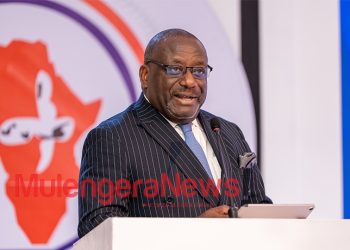
Last Tuesday, the Finance Ministry Under Secretary Dr. Ddamulira Ssengonzi presided over the unveiling function of the team of eminent persons and seasoned professionals who will oversee the implementation and rolling out of the INVITE project which is worth over Shs900bn.
The INVITE project, which in full stands for “Investment for Industrial Transformation & Employment,” is being enabled by funding from the World Bank and it will among other things help the targeted beneficiaries to mitigate value chain-related constraints.
Of the total project money, 80% or $218m (roughly Shs800bn) will be a World Bank loan to the GoU and the rest (namely 20%) is a grant component, which will be managed by the Private Sector Foundation Uganda (PFSU) at whose Nakasero-based Secretariat the entire Project Management Unit will be based.
The aspects of professional project management for the $218m will be handled by Audit & Management firm KPMG whose expert staffers will be housed at PFSU. The INVITE project intervention is basically aimed at strengthening private sector firms (basically the MSMEs) which are involved in the business of manufacturing and exportation of stuff to enable Uganda increase its inflow of the badly needed foreign exchange.

Project officials say that Ugandan firms involved in manufacturing and export promotion will be generously funded to access patient capital for long term investments and to also comply with pending loan obligations which couldn’t be promptly discharged or settled largely because of cash flow and other repayment complications that resulted from the Coronavirus pandemic and restrictions on business operations that resulted from the countrywide lockdown which the GoU imposed.

While the grant element of the INVITE project will specifically go into supporting private sector manufacturers and exporters with business training, capacity development services and the like, the rest of the money will go into availing patient capital to accelerate private sector operations specifically benefiting those involved in manufacturing and export promotion businesses.
The INVITE project benefiting MSMEs business firms will also be hand-held and deliberately supported to accomplish value-addition and go into standardization while complying with certification requirements and thereby increasing acceptability of Uganda’s export products in foreign markets.
Local firms involved in manufacturing and exportation have also had resilience challenges and have often been victims of high attrition rate (collapsing before 5th anniversary) whose major causes are also going to be deliberately mitigated to ensure that they last for generations.


Patient capital has, for decades, been hard to come by in Uganda which has forced the business community (seeking to go into long term investments) to borrow from commercial banks at commercial terms, which isn’t suitable for long term investment undertakings which manufacturing and sustainable exportation are synonymous with.
Under the INVITE project intervention, beneficiaries (who will have to be thoroughly vetted and assessed before being certified as suitable) will be able to access patient capital through the Partner Financial Institutions (PFIs).
This will be borrowed money coming with longer repayment period, costed at lower interest and given at more reasonable grace period than can currently be availed by any of the commercial banks. The unrealistic impatient credit that optionless manufacturers have had to be rely upon for a long time explains why businesses fail to pay bank loans and end up collapsing into foreclosure processes which is responsible for growing cases of non-performing loans, which isn’t good for Uganda’s banking industry.
The INVITE project intervention has been designed to help mitigate and overcome such long-term financial access-related complications. The intervention will greatly help amplify the GoU efforts to increase access to patient capital to enable the private sector firms finance long term projects, which commercial banks are not suited to fund.
The same intervention is informed by the realization that for President Museveni’s 10-fold growth agenda (growing Uganda’s GDP to $500bn) to be accomplished, the private sector must be incentivized to go into Agro-industrialisation for export projects. The government must enable the private sector to massively invest in manufacturing and export-promoting sectors.
Through the INVITE project intervention, the GoU (which among other things seeks to promote women entrepreneurs & refugee hosting communities’ participation in manufacturing & export-promoting business activities) will also be incentivising commercial banks (the PFIs) to lend to more private sector players involved in manufacturing & export sectors.
This will be done through mechanisms like subordinated lending and operationalisation of the Credit Guarantee Facility. The commercial bank (a PFI) could diminish its risk exposure by advancing up to 50% of the desired loan as the other 50% is covered by the GoU through the INVITE project funds.
Some of the would-be successful entrepreneurs (e.g female ones) get impeded by lack of collateral since they tend not to have documented or registered property ownership of say land because of negative cultural practices. The GoU, through the INVITE project, intends to come in to guarantee a loan taken out by such a disadvantaged but promising private sector borrower.
The concerned decision makers in the government (at BoU, Finance Ministry & PSFU) are convinced that, that way the INVITE project intervention will be leveraged to complement what is being accomplished through (the inadequately capitalized) Uganda Development Bank and go a long way in strengthening private sector capacity to invest and have impact in amplifying the performance of the country’s manufacturing and export sectors.
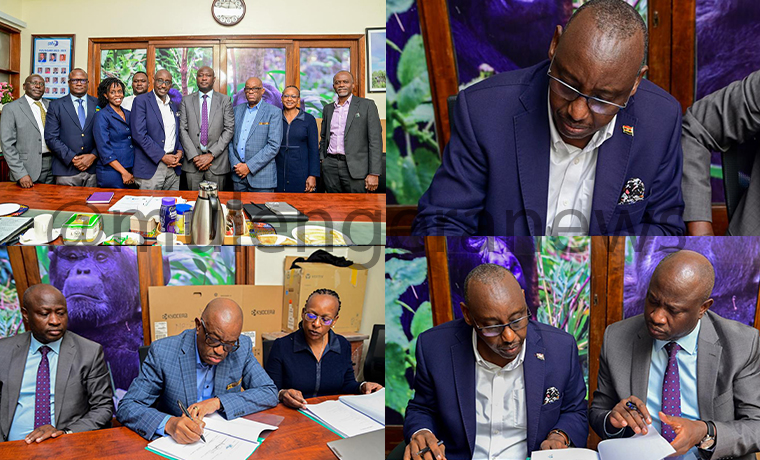
And to ensure that everything goes well and that the resultant impact is sustainable, the INVITE project owners or Trustees (namely the PSST and Central Bank governor) have put in place a robust governance structure comprising of the INVITE Trust Board at the very apex.
This will be an equivalent of the governing board whose five carefully-selected members will be charged with overseeing the performance of the project management function. The members are Dr. Tom Buringuriza (chairperson), legal expert Philip Aliker, governance expert Keith Kalyegira, veteran banker Mathias Katamba and financial expert Zabian Kikokurize. These will be answerable to both the Finance Ministry/PSST and the Central Bank Governor. (For comments on this story, get back to us on 0705579994 [WhatsApp line], 0779411734 & 041 4674611 or email us at mulengeranews@gmail.com).