





By BM
Only a fraction of Ugandans in need of palliative care just 10 to 11 percent are currently able to access it, a figure that has raised concern among public health leaders, civil society, and survivors alike.
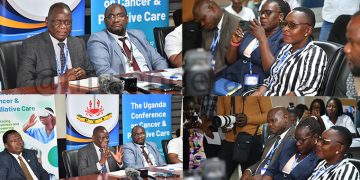
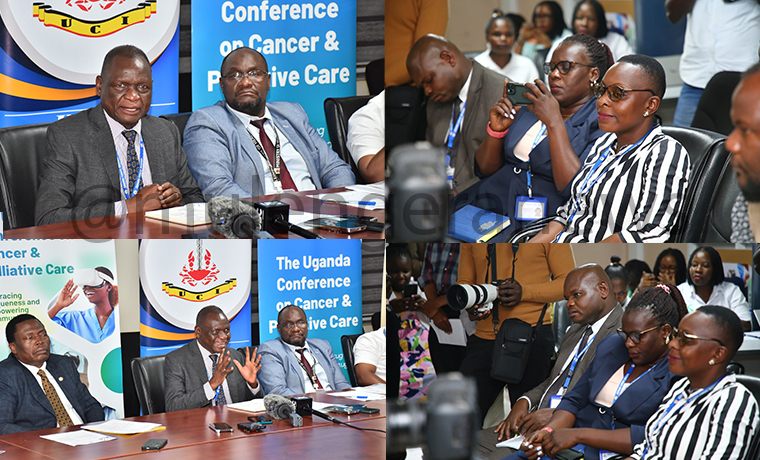
The sobering statistic took center stage at the launch of the 5th Uganda Conference on Cancer and Palliative Care, held at the Ministry of Health headquarters in Kampala.
Dr. Charles Olaro, Director General of Health Services, described the low access rate as “unfortunate” given the available infrastructure.
Uganda has over 230 accredited palliative care centers spread across 107 districts, yet public awareness and understanding of palliative care remain critically low.

An estimated 500,000 Ugandans require this form of care annually care that focuses on relieving pain and improving quality of life for people with life-threatening illnesses.
Dr. Olaro highlighted the role of this year’s conference, scheduled for September 10th to 12th at Speke Resort Munyonyo, as a platform to close that gap through education, research, and community empowerment.
Themed “Embracing Uniqueness and Empowering Communities”, the event is designed to spark dialogue and share strategies to improve early detection, expand care access, and promotes more integrated healthcare systems.
Despite government investments including free oral morphine at accredited facilities, the expansion of cancer treatment infrastructure, and the ongoing decentralization of services many patients are still unaware that palliative care is both available and free. Dr. Olaro called on the media to help amplify awareness, especially in rural communities, and urged Ugandans to take preventive action and seek early care.
Dr. Jackson Orem, Executive Director of the Uganda Cancer Institute, echoed the urgency of improving access.
He acknowledged the strong partnership with the Palliative Care Association of Uganda (PCAU) and praised the government for prioritizing cancer and palliative care in both policy and funding.
However, he noted that unless awareness and information-sharing efforts improve, investments alone won’t translate into better outcomes for patients.
Dr. Orem emphasized that Uganda is unique in the region for offering free cancer care an achievement backed by a steady 85–90 percent availability of essential anti-cancer drugs.
He stressed that if palliative care can work effectively for cancer, it must also be extended to those battling other life-limiting conditions such as diabetes, HIV, and chronic respiratory illnesses.
The upcoming conference, he said, will provide space to examine how care can be better coordinated and made accessible.
Representing civil society, Mark Donald Mwesiga of PCAU described Uganda’s progress in policy and institutional capacity as commendable but acknowledged that implementation and community engagement still lag behind.
PCAU, which brings together 30 organizations and over 1,800 individual members, continues to promote palliative care beyond cancer.
Mwesiga emphasized that palliative care must not be seen as only a cancer-related service it is essential across a broad range of conditions.
He noted that even though accredited palliative care centers are well distributed geographically, the gap in usage is driven by limited public knowledge and persistent misconceptions.
He urged media professionals to help shift the narrative and make palliative care a topic of national relevance, not one restricted to health sector discussions.
Gertrude Nakigudde, a 23-year breast cancer survivor and Executive Director of the Uganda Women Cancer Survivors Association, offered a deeply personal reminder of why access to care matters.
She spoke on behalf of the growing number of survivors currently estimated at over 77,000 Ugandans who have lived through cancer and now face long-term recovery needs, including psychosocial support.
Nakigudde applauded the inclusion of a survivorship session in this year’s conference, a first in its history.
She noted that many survivors navigate stigma, financial burdens, and a lack of coordinated support. Her call to action was clear: the health system must not only treat but also follow up and support survivors and their families.
As the conference was officially launched, Dr. Olaro reaffirmed the Ministry of Health’s commitment to expanding high-quality cancer and palliative care across Uganda.
He urged all stakeholders from government to grassroots to work together to ensure that every Ugandan in need receives the compassionate, timely care they deserve.
The challenge now lies in bridging the wide gap between service availability and access tasks that will require not only investment but also a shift in how Ugandans understand, talk about, and seek palliative care.