






By Aggrey Baba
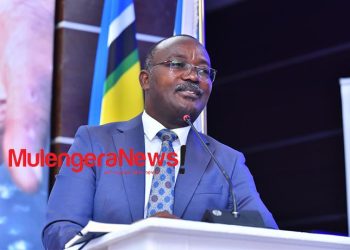
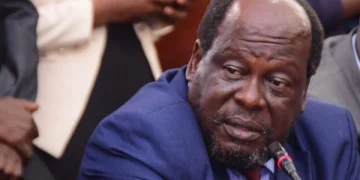
Former Leader of Opposition in Parliament (LoP) Prof. Morris Ogenga Latigo, has weighed in on the NRM’s recent Central Executive Committee (CEC) shake-up, saying President Yoweri Museveni’s treatment of long-serving vice chairperson, Al-Hajj Moses Kigongo, exposes how power is carefully managed in the yellow bus.
According to Latigo, as written in today’s Weekend Vision, Museveni’s decision to caveat Kigongo’s position is rooted in the reality that Kigongo poses no threat to the presidency. While other seasoned politicians such as Rebecca Kadaga were swept aside in the Kololo elections, Kigongo retained his seat unopposed, just like Museveni himself. For Latigo, this was a classic case of knowing which side your bread is buttered on.
Latigo argued that unlike many political heavyweights who harbour ambitions or create competing centres of influence, Kigongo has never shown interest in pursuing state power, which for Museveni, makes him a safe and loyal figure to keep close. Kigongo’s value, Latigo added, also lies in his identity as a respected Muslim and a Muganda, groups that carry strategic weight within the NRM, and Kigongo bridges the gap between the NRM and the two factions.
The remarks come in the wake of Kadaga’s crushing loss to Speaker Anita Among in the contest for the second national vice chairperson (female) slot, where Kadaga had reportedly asked why her case could not be treated like Kigongo’s, but Latigo explained that the two leaders occupy different places in Museveni’s political calculations, bringing to life an African prover that the axe forgets but the tree remembers, meaning Kadaga may never forget this political cut.
Her fall, Latigo said, reveals the broader lesson that in NRM, nobody is untouchable except Museveni himself, as delegates’ voting pattern sent a warning shot to long-serving figures who once saw themselves as indispensable pillars. Yet, Kigongo’s exemption highlights the difference between loyalty without ambition and influence that may one day challenge the center of power. In short, he who does not rock the boat is allowed to stay on board.
Many note that the Kololo conference was more than just an internal election but a reset of the the NRM’s power map, where younger leaders tied to new mobilisation networks outmaneuvered established figures.
For many, the humiliation of political veterans was a message that NRM is renewing itself for 2026. But Latigo’s caution reminds observers that such renewal is tightly managed [Museveni allows space for those who do not threaten his seat, while those who accumulate independent influence face political storms].
Kigongo’s quiet survival, therefore, underscores Museveni’s long-tested formula of rewarding loyalty that does not disturb him. Meanwhile, figures like Kadaga face a future where their survival depends not on past legacies but on whether they can remain useful to the yellow-bus-driver’s project. (For comments on this story, get back to us on 0705579994 [WhatsApp line], 0779411734 & 041 4674611 or email us at mulengeranews@gmail.com).