




 By Kassim Ssematimba
After years of shifting timelines and rising public doubt, government has launched a fact-finding mission to verify the true progress of Uganda’s oil projects in the Albertine region, a move officials say will finally put speculation to rest.
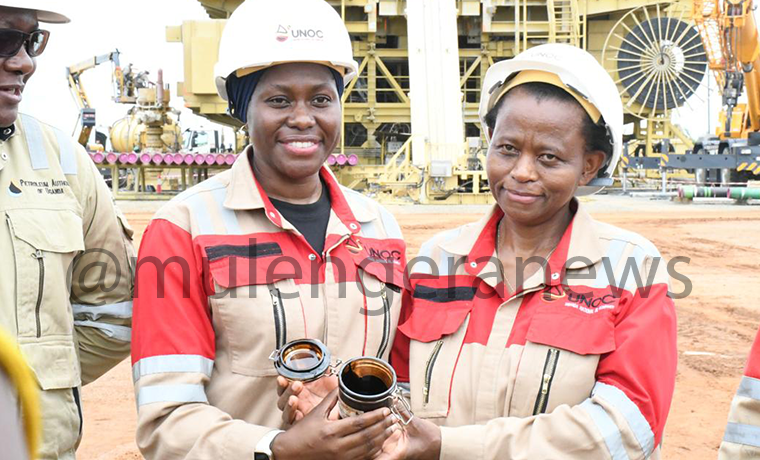
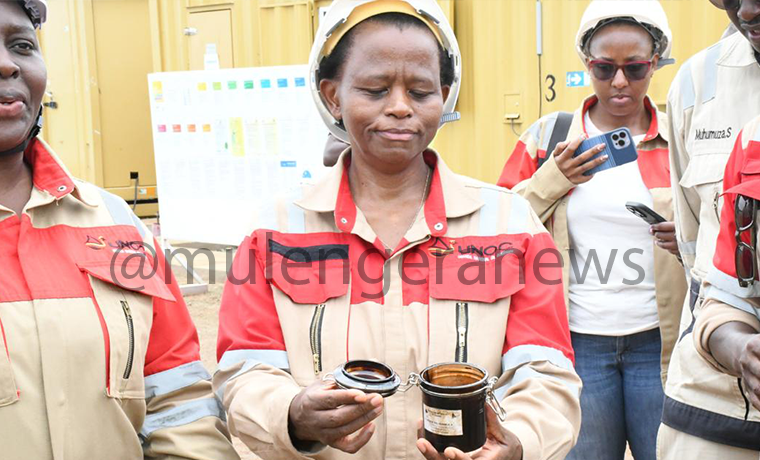
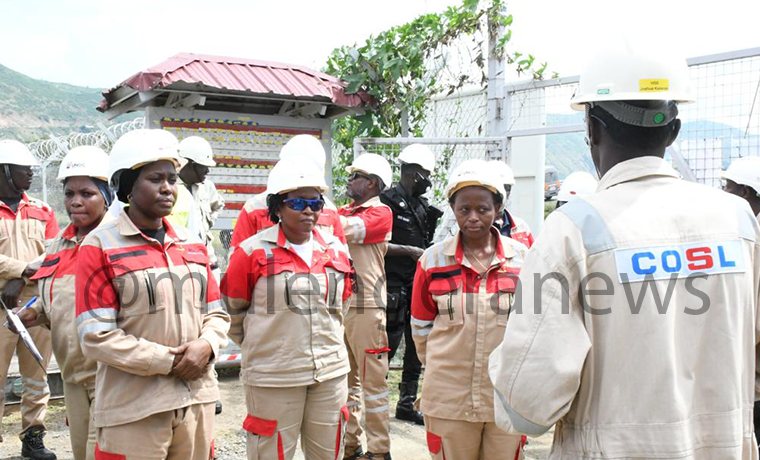
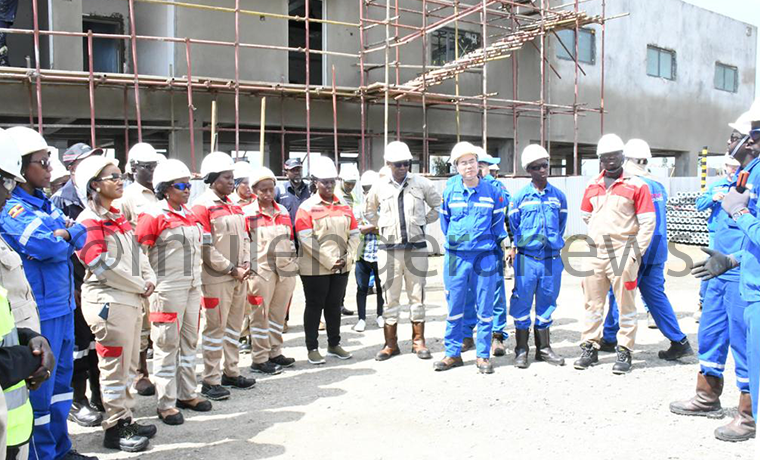
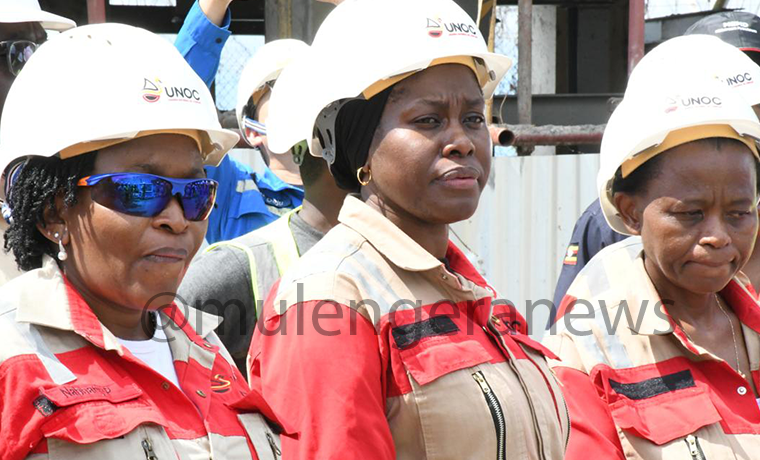
The two-day (29-30th, October 2025) mission, led by Head of Public Service and Secretary to Cabinet Lucy Nakyobe, brought together key government technocrats, including Permanent Secretary of the Ministry of Energy, Irene Batebe, and Permanent Secretary for ICT, Amina Zawedde, in a visit was coordinated by the Uganda National Oil Company (UNOC) and the Petroleum Authority of Uganda (PAU), to assess how close Uganda is to producing its first drop of oil.
According to officials, the team’s mandate was not ceremonial but an on-the-ground inspection to gather facts on project readiness, identify bottlenecks, and verify the long-standing government pledge that oil will flow soon.
The delegation visited two critical sites, the Kingfisher Development Area operated by China National Offshore Oil Corporation (CNOOC) and the Tilenga Project under TotalEnergies.
Kingfisher, located in Kikuube District, is expected to produce 40,000 barrels of oil per day, with 31 wells drilled. PAU Executive Director Alex Nyombi told the visiting officials that Kingfisher is 90% complete and will be ready by December 2025.

Tilenga, on the other hand, dwarfs Kingfisher in scale, being twice the size and will produce 190,000 barrels daily once its 420 wells are drilled and fully operational.

Nakyobe said the visit was motivated by one central question, of “When exactly will Uganda’s first oil come out?” She noted that government has made the same promise for years, always saying “next year,” yet that year never seemed to arrive.
“Ugandans are tired of waiting,” she told the officials, urging them to give a factual, evidence-based timeline.
In response, the technical team briefed her that all major components, including the East African Crude Oil Pipeline (EACOP), Kabalega International Airport, and access roads, are nearly complete, assuring her that Uganda’s first oil drop is now expected by July 2026, not beyond.

Energy PS Irene Batebe emphasized that Uganda’s oil journey has already attracted $7.5 billion (UGX 28.6 trillion) in foreign direct investment, money that has built new infrastructure, boosted local employment, and strengthened regulatory frameworks.
However, PAU’s Alex Nyombi admitted that progress hasn’t come without hurdles. He pointed to relocation of affected communities, pushback from civil society organizations, and logistical delays as some of the biggest challenges that slowed the project’s initial phases.
At UNOC, officials cited another major concern, a serious staffing shortage. The UNOC CEO told Nakyobe that the company is operating with a 48% personnel deficit, employing only 251 staff out of the required workforce. Despite this, she said, the oil discovery has spurred industrial development, new road networks and the construction of Kabalega International Airport, which will serve as a major logistics hub for oil exports.
Nakyobe commended the Ministry of Energy, PAU and UNOC for their dedication, saying the progress she witnessed was undeniable, further praising UPDF officers deployed at the oil sites for their role in environmental protection and waste management, calling their discipline and innovation a model of patriotic service.
The inspection team’s findings have rekindled optimism that Uganda’s first oil will indeed flow soon, marking a new chapter in the country’s economic story. (For comments on this story, get back to us on 0705579994 [WhatsApp line], 0779411734 & 041 4674611 or email us at mulengeranews@gmail.com).