






By Ben Musanje
A major legal showdown is unfolding in Kampala after the Uganda Law Society moved to block a controversial exercise of trying a murder suspect at the very scene of the crime.
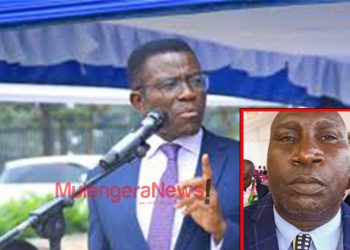
In an urgent protest letter dated April 13, 2026, Anthony Asiimwe, Vice President of the Uganda Law Society, wrote to Justice Dr Flavian Zeija, the Chief Justice of Uganda, Lady Justice Jane Frances Abodo, the Principal Judge and Alice Komuhangi Khaukha, Presiding Judge of the Criminal Division of the High Court demanding the immediate cancellation of the “mobile High Court session” at Ggaba Community Church grounds.
The trial involves Christopher Okello Onyum, the suspect in the shocking killing of four toddlers in Ggaba, a case that has stirred national anger and grief.

However, what has been presented as a move to deliver speedy justice is now facing fierce resistance from the country’s top legal body, which warns that the process could undermine the very foundation of justice.

In a strongly worded position paper issued under the leadership of Isaac K. Ssemakadde, alongside his Vice Anthony Asiimwe and other officials including Treasurer Arthur Isiko, Acting Secretary Ssali Babu and Council Members Eddie Nangulu (Eastern Region), Alexander Lule (Acting Council Member Central region), Emmanuel Egaru (Northern Region) and Samuel Muhumuza (Western Region), the Society condemned the planned court session as dangerous and unprecedented.
The lawyers argue that holding the trial at the crime scene, in a highly emotional environment, risks turning justice into a public spectacle rather than a fair legal process. They warn that such conditions could compromise the presumption of innocence and the independence of the Judiciary.
The controversy intensified following remarks attributed to the State Minister for Youth and Children Affairs Balaam Barugahara, who publicly described the suspect as a criminal and called for severe punishment even before the trial begins. The Society says such statements, combined with the planned venue, create a perception that the outcome of the case has already been decided.
Further concern was raised over comments by the Principal Judge Jane Frances Abodo, who reportedly referenced directives to test the mobile court system using this very case, fueling fears of executive influence over judicial processes.
According to the Uganda Law Society, the planned session that features live broadcasts, large crowds, and controlled public access risks placing intense pressure on judicial officers and defense lawyers alike.
They argue that trying the accused in a setting surrounded by grieving families, religious leaders, and an emotionally charged public could make it impossible to guarantee a fair hearing.
At the center of the dispute is Justice Khaukha, who is presiding over the case. According to ULS, the Society questions whether a truly independent decision can be made when the trial venue was announced before court proceedings even began.
The lawyers insist that the case should instead be heard at the High Court in Kampala under normal procedures, where constitutional safeguards can be fully upheld.
They have also called for an emergency meeting with the leadership of the Judiciary, warning that the matter is of urgent national importance and could set a far-reaching precedent. (For comments on this story, get back to us on 0705579994 [WhatsApp line], 0779411734 & 041 4674611 or email us at mulengeranews@gmail.com).