





By Atwemereireho Alex (alexatweme@gmail.com)
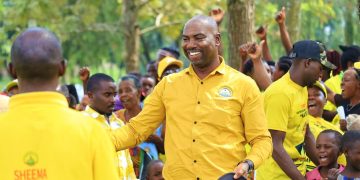
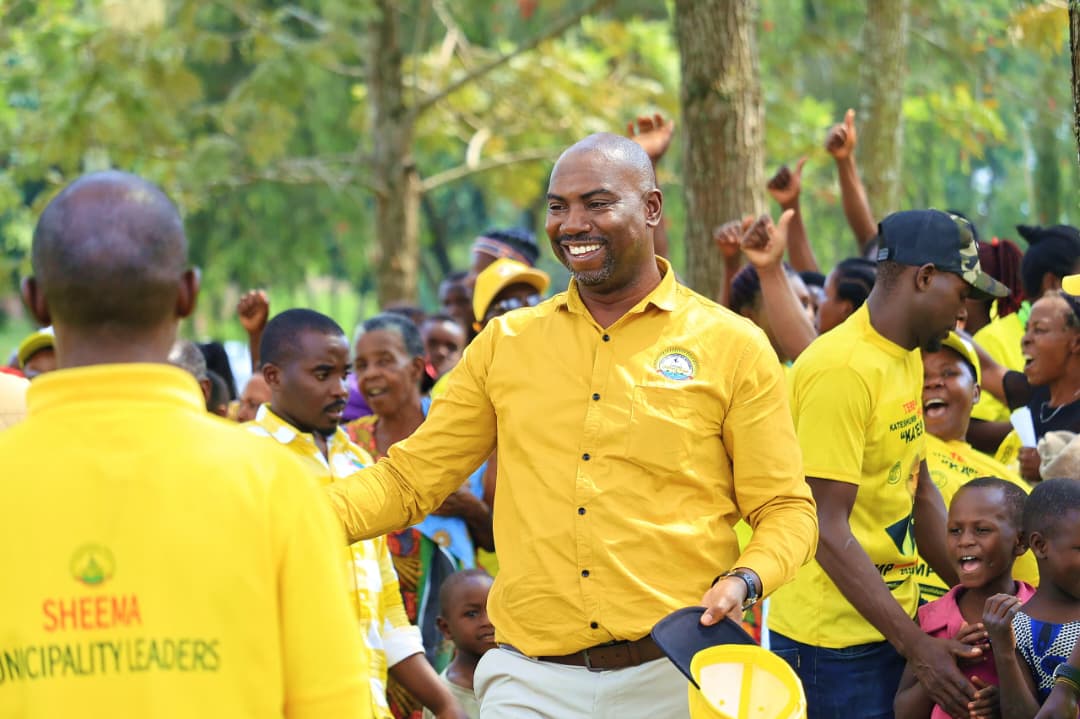
There comes a time in the life of a people when gratitude must meet foresight, when a community must pause to measure the fruits of leadership against the weight of promises, and when the future must be secured not by gamble but by tested stewardship. For Sheema Municipality, that time is now, and the name on every lip should be Hon. Dicksons Kateshumbwa, a man whose vision, patriotism, and delivery has not only restored confidence in representation but have set Sheema Municipality on an irreversible path to transformation. To give him another term is neither indulgence nor sentiment; it is the most rational, patriotic, and necessary decision for a people whose destiny demands continuity of tested progress.
From the outset of his term, Kateshumbwa approached leadership not as a privilege but as a full-time covenant with the people. His performance record is not confined to token gestures or ceremonial donations; it is a tangible architecture of progress, etched in stone, steel, water, electricity, institutions, and above all, in lives touched and transformed. He has proved that politics is not about rhetoric but results, not about empty speeches but structural reform, not about self-interest but selfless service.
Nowhere has this been more evident than in the health sector. Under his stewardship, Kabwohe Health Centre IV was not only resuscitated with new equipment but upgraded towards hospital status, ensuring that mothers, children, and the sick need not be condemned to the cruelty of long journeys for treatment. He lobbied and secured a brand-new ambulance for the municipality, procured an ultrasound scan, hospital beds, autoclaves, and solar power systems for health centers, and supported medical staff with essential supplies. He did not stop there. He oversaw the construction of new Health Centre IIIs in Migina, Kitojo, and Kashozi, expanding healthcare access to corners of the municipality long ignored. Through annual medical camps, thousands have received free treatment. The construction of a Non-Communicable Diseases (NCD) ward at Kabwohe HCIV, partly funded by the Sheema Run initiative which raised UGX 230 million, stands as a testament to his genius in mobilizing collective effort for public good. Such achievements can not be trivialized; they are the stuff of nation-building on a municipal scale.

Education, that fountain of opportunity, has not been neglected. Kateshumbwa has championed Sheema’s return to academic glory. Through the Sheema Municipality Education Advisory Committee, he enlisted retired teachers and experts to diagnose and improve school performance. He has donated solar systems to schools, built classrooms, supported Ankole Western University with construction materials, and lobbied scholarships for some students, alongside facilitating dozens more to access government loan schemes. Where others politicize education, Kateshumbwa has invested in it, understanding that to build a classroom is to build a generation, and to fund a scholarship is to emancipate a family from poverty’s grip.

The provision of water, that most basic human right, has also received his deliberate attention. Over 110 kilometers of piped water have been connected across the municipality, with projects in Rushozi and repairs of traditional water sources like water springs and boreholes, safeguarding both modern access and cultural heritage. Where 74 percent of households once lived without water connections, communities now turn taps where once they carried jerrycans. This is more than development; it is restoring dignity to daily life.
Equally, his imprint on infrastructure and energy is indisputable. He has commissioned 45 electricity transformers, initiated a 1,200-pole power expansion project, and regularized illegal connections, shielding residents from exploitation. Villages long left in darkness now radiate with light, powering businesses, schools, and homes. On roads, he has supervised works, lobbied UNRA for repairs and tarmacking projects, and provided culverts to communities. His lobbying secured the construction of a new Sheema Police Headquarters, a new Court, a new Municipal Administration Block, and facilities for the district. These are not promises; they are brick-and-mortar testaments of advocacy delivered.
Agriculture, the lifeblood of Sheema, has equally flourished under his leadership. Over 200,000 coffee seedlings, 6 tons of maize seeds, and 12.5 tons of fertilizers have been distributed to farmers. He has piloted commercial poultry with 5,000 Kuroiler chicks, introduced free pigs, goats, and beehives through presidential projects in Rushozi, and organized farmers into associations to access government funding. In doing so, he has transformed farming from subsistence to enterprise, from survival to sustainability. He has attracted Rotary International to invest in Sheema’s development, with projects at Nganwa Junior School, Kabwohe HCIV, and Rwabutura Primary School. The results are clear: agriculture is no longer a burden; it is becoming an industry.
What makes him unique, however, is that he does not confine development to material infrastructure. He understands the power of social capital and human empowerment. He organized the Sheema Show, a platform for innovation, agriculture, and talent. He has supported sports across all divisions, established Sheema Broadcasting Services (SBS) to give the municipality a voice, and provided disabled cycles and walking canes for persons with disabilities. He has supported bodaboda riders, journalists, teachers, and women through SACCOs, and lobbied funds for elderly groups. He has secured jobs for over 50 individuals and nurtured talent in music, drama, and athletics. Where many leaders overlook the intangible aspects of unity, identity, and opportunity, he has invested in them with the same seriousness as roads and hospitals.
Even beyond Sheema, his national role can not be ignored. As a member of the Budget Committee, the Finance Committee, and PACOB, he has spoken with clarity and authority on issues of fiscal discipline, domestic borrowing, tax reform, innovation, and regional integration. He has been a strong and articulate voice for Uganda in Parliament, ranked among the most active legislators of the 11th Parliament. His interventions are not partisan noise; they are intellectually grounded, technically sound, and nationally relevant.
The future he envisions is equally compelling: a smart Kabwohe Town with modern waste management, lighting, and e-governance; an industrialized agricultural economy with processing plants and irrigation systems; digital innovation hubs for youth; tourism branding to position Sheema as an oasis of culture and ecology. This is not idle dreaming; it is the logical next phase of the foundation he has already laid.
To deny him, another term would be to punish excellence, to suffocate momentum, and to risk Sheema’s future on the altar of uncertainty. His record is unassailable, his vision unmatched, his patriotism unquestionable. He has united Sheema, delivered development, and dignified representation. In him, Sheema has not just a politician but a statesman; not just a representative but a builder; not just a leader but an architect of destiny.
The people of Sheema must, therefore, answer history’s call with clarity and courage. Let the ballot speak with one voice: For Sheema. For Progress. For Katesh. The writer is a lawyer, researcher, governance analyst, and an LLM Student in Natural Resources Law at Kampala International University. (For comments on this story, get back to us on 0705579994 [WhatsApp line], 0779411734 & 041 4674611 or email us at mulengeranews@gmail.com).